




01. Edit your accident format online
Type text, add images, blackout confidential details, add comments, highlights and more.

Type text, add images, blackout confidential details, add comments, highlights and more.

Draw your signature, type it, upload its image, or use your mobile device as a signature pad.

Send accident format for client via email, link, or fax. You can also download it, export it or print it out.
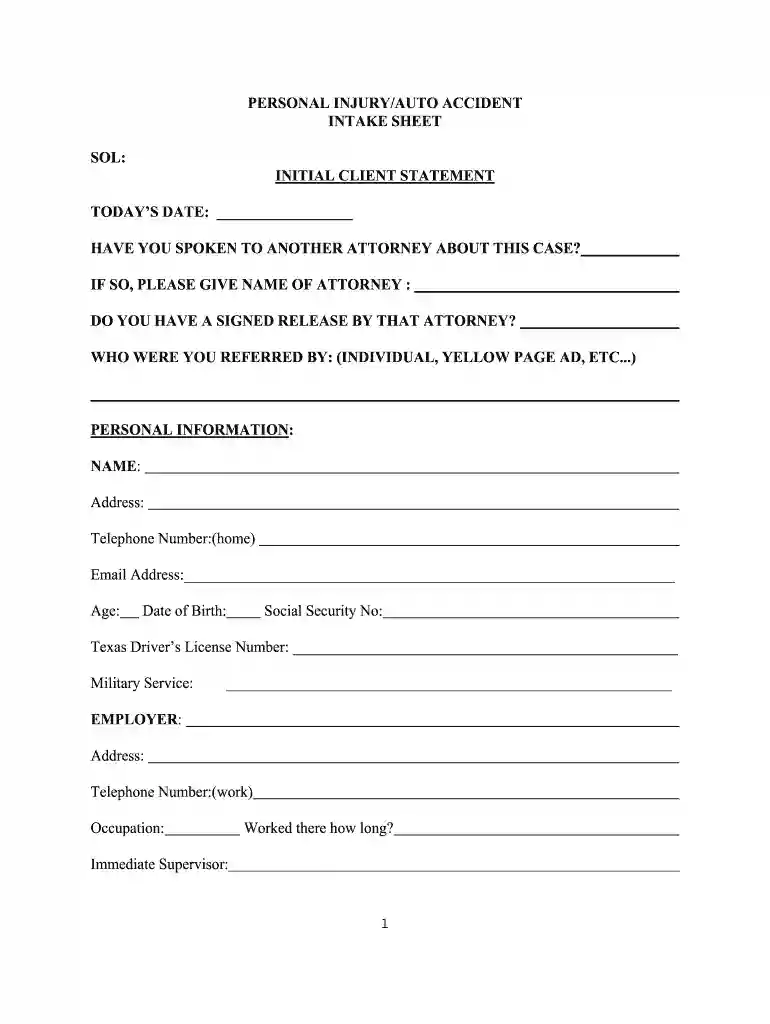
The accident format for client is a structured document used primarily in legal and insurance settings to gather critical information from individuals involved in auto accidents. This format is essential for attorneys, insurance adjusters, and healthcare providers as it provides a comprehensive overview of the accident details, injuries, and pertinent documentation required for claims and legal representation.
Personal Information: Includes details such as the client's name, contact information, and driver’s license number. This section is vital for identifying the involved parties and facilitating communication.
Accident Details: Captures the time, date, and location of the incident. It may also include descriptions of the vehicles involved, weather conditions, and any contributing factors, such as road debris or traffic signals.
Medical History and Injury Documentation: Clients are prompted to provide a summary of their injuries, treatments received, and any medical history relevant to their claims. This is important for understanding the impact of the accident on their health.
Witness Information: Recording the names and contact details of witnesses is crucial. Witness statements can substantiate a client’s account of the accident when providing evidence for insurance claims or legal cases.
Insurance Coverage Details: This section requests information about the insurance companies and policies that cover the parties involved in the accident. Understanding coverage is essential for determining liability and potential settlements.
The accident format can vary depending on the context in which it is used. For instance:
Car Accident Format for Client: Usually includes specific questions tailored to motor vehicle accidents, such as vehicle identification numbers and insurance policy numbers.
Truck Accident Format for Client: May require additional details like cargo specifics, commercial vehicle registration, and information about trucking company liability.
Accident Billing Format: Involves the documentation of medical expenses resulting from the accident. This format must clearly itemize the services provided, the costs incurred, and the relevant dates, making it crucial for insurance claims processing.
Gather Necessary Information: Before starting the form, collect essential documents such as accident reports, photos, and medical records.
Fill Out Personal Information: Ensure all relevant personal data is accurately reported in the designated sections.
Complete Accident Details: Describe the incident comprehensively, including visual depictions if applicable.
Document Medical History: Provide a detailed history of any injuries and treatments to aid in claims.
List Witnesses: Ensure that all potential witnesses are documented for subsequent follow-up.
Review Insurance Details: Include all insurance information accurately to clarify coverage.
Final Review: Double-check that all fields are completed and that information is accurate to avoid delays in processing.
Personal Injury Claims: The accident format is frequently used by law firms handling personal injury cases resulting from car crashes. It helps in quickly assembling a case and ensuring that all necessary information is available for litigation or settlements.
Insurance Claims: Insurers often utilize the accident format to expedite the claims process. The information collected is crucial for determining fault and processing payments.
Healthcare Providers: Medical professionals may use a variation of the form to document injuries and treatments provided to the clients, facilitating billing and insurance claims.
When utilizing the accident format, it is essential to adhere to the relevant legal regulations. For example, personal injury claims must comply with state statutes governing accident reporting and insurance claims. Understanding local laws ensures that documents are completed correctly and are legally binding when submitted to courts or insurance entities.
Culturally, the format must reflect the expectations of U.S.-based clients, ensuring sensitivity and respect for the individuals involved in an accident. Appropriate language and detailed explanations should be used to support clients who may be distressed or unfamiliar with the documentation process.
Overall, the accident format for client serves as a pivotal tool in managing the aftermath of accidents, providing clear and comprehensive avenues for legal representation and insurance claims processing.
We've got more versions of the accident format form. Select the right accident format version from the list and start editing it straight away!
At DocHub, your data security is our priority. We follow HIPAA, SOC2, GDPR, and other standards, so you can work on your documents with confidence.
What were the causal factors of the accident? What were the injuries? What was the person doing when injured? What had the person been instructed to do?Read more
an example of a statement viewed with one of the Content Manager OnDemand client programs. accident, a set of rules has been established to determineRead more
Title: Accident/Incident (Visitor/Client) Post Analysis Reporting Form (Form DA 3000) Summary: Form used for accidents involving VISITORS to the College


