




01. Edit your ambetter pharmacy prior authorization form online
Type text, add images, blackout confidential details, add comments, highlights and more.

Type text, add images, blackout confidential details, add comments, highlights and more.

Draw your signature, type it, upload its image, or use your mobile device as a signature pad.

Send ambetter prior authorization forms via email, link, or fax. You can also download it, export it or print it out.
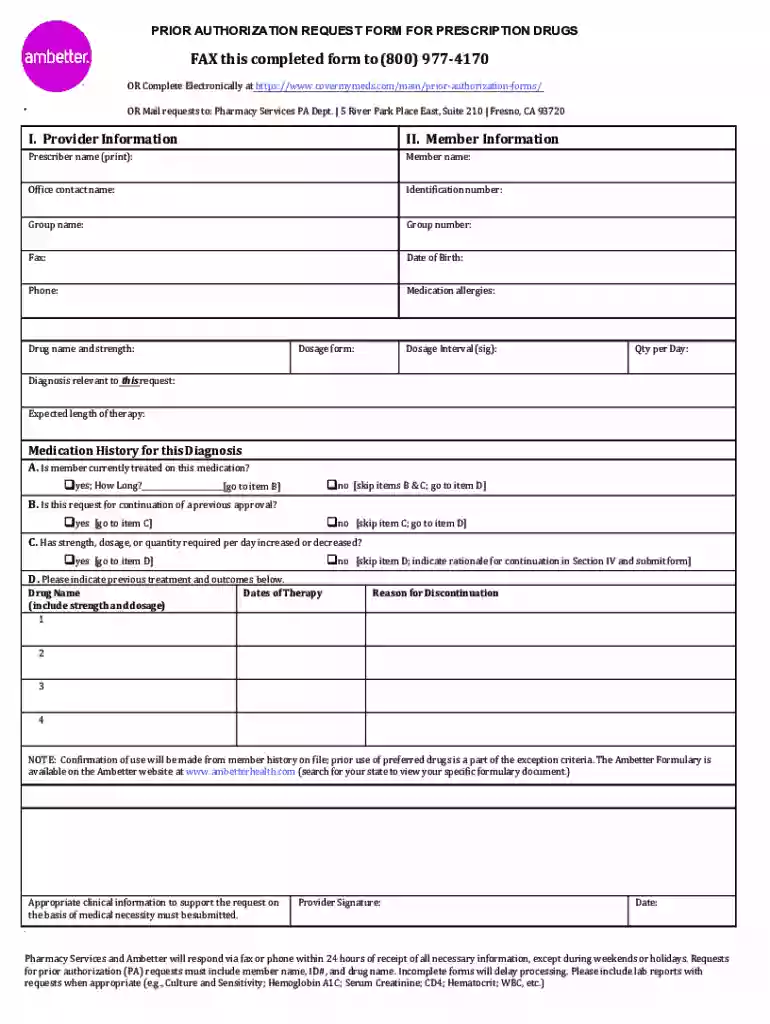
The Ambetter - Prior Authorization Request Form for Prescription Drugs is essential for healthcare providers seeking to obtain medication approval on behalf of their patients. This form outlines the necessary information that doctors must provide to justify the need for specific prescription drugs. In the evolving landscape of healthcare, prior authorization has become a crucial aspect of resource management and patient care.
The form includes several critical sections that must be filled out thoroughly to prevent delays in processing. These sections typically include:
Provider Information: Details about the healthcare provider submitting the request, including name, contact information, and National Provider Identifier (NPI) number.
Member Information: Patient details, including name, member ID, date of birth, and insurance coverage specifics.
Medication Details: Information about the prescribed medication, including the drug name, dosage, and frequency.
Treatment History: A comprehensive summary of the patient's medical history related to the condition being treated, previous medications tried, and their effectiveness.
Clinical Justification: A detailed explanation supporting the necessity of the requested medication, including relevant clinical data and treatment guidelines.
The completeness of these sections is vital, as any missing information can lead to processing delays or outright denials, adversely affecting patient care.
Properly completing the Ambetter Prior Authorization Request Form involves several systematic steps. Providers should follow this process to ensure accuracy and efficiency:
Gather Required Information: Assemble all necessary data about the provider, patient, and prescribed medication before starting the form.
Fill Out the Provider Section: Clearly enter the healthcare provider's information. Ensure that the NPI number is accurately listed as it is critical for the submission.
Complete the Member Section: Fill in the patient's details carefully. Accurate member IDs and insurance information are essential for correct processing.
Detail Medication Information: Specify the prescribed medication, including dosage and quantity. This section should align with the physician's treatment plan.
Outline Treatment History: Describe the patient's previous treatments and their outcomes. This information helps the reviewers understand the patient's medical background and the rationale for the new prescription.
Provide Clinical Justification: Write a concise yet comprehensive justification for the requested medication. Reference clinical guidelines or studies that support the therapy choice.
Review for Completeness: Double-check all entries for accuracy and completeness. Ensure that every section is filled as required to minimize the risk of delays.
Submit the Form: Depending on Ambetter's specifications, submit the completed form electronically, by fax, or through traditional mail.
The Ambetter Prior Authorization Request Form is commonly utilized by a variety of professionals and stakeholders in the healthcare sector, including:
Healthcare Providers: Physicians and specialists who prescribe medication and need to obtain approval from Ambetter for specific drugs on behalf of their patients.
Pharmacists: Pharmacists may utilize the form when they encounter medications requiring prior authorization to fill prescriptions.
Healthcare Facilities: Hospitals and clinics may submit requests for medications prescribed during inpatient stays or outpatient treatments.
Understanding the primary users of this form is crucial for streamlining communications between patients, healthcare providers, and insurance companies.


The Ambetter Prior Authorization Request Form plays a significant role in ensuring that patients receive necessary medications while also managing healthcare costs effectively. It helps insurance companies determine:
Medical Necessity: The form provides evidence that the prescribed treatment aligns with clinical guidelines for the patient's specific condition.
Cost Management: By requiring prior authorization, Ambetter ensures the appropriateness of expensive medications before approving coverage, affecting overall healthcare spending.
This is particularly important in a U.S. healthcare context, where insurance providers must balance patient needs with their financial responsibilities.
The Ambetter Prior Authorization Request Form is subject to regulations governing health insurance and patient care. Key legal points to consider include:
Compliance with HIPAA: All patient information must be handled following HIPAA guidelines, ensuring confidentiality and security of patient data.
Adherence to State Regulations: Different states may have specific requirements or additional documentation necessary when dealing with prior authorizations.
Liability Issues: Incorrectly filled forms can lead to claim denials, adherence to protocols is essential to mitigate potential liability for healthcare providers.
Understanding the legal framework surrounding this form aids healthcare providers in navigating potential complexities associated with privacy and compliance.
Healthcare providers may encounter various scenarios requiring the Ambetter Prior Authorization Request Form. Examples include:
A patient prescribed a novel therapy: A patient with chronic migraine may be prescribed a new injectable medication not covered without prior authorization, necessitating the form for approval.
An oncology patient needing specialized drugs: Patients undergoing chemotherapy often require medications that are not typically covered under standard policies, thus needing thorough clinical justification through the form.
Pediatric patients with specialized needs: Doctors prescribing medications for children may face additional scrutiny, requiring detailed documentation submitted via this form to substantiate their choices.
These examples highlight the necessity for precise documentation and thorough justification when seeking prior authorization for prescription drugs.
Different states may have unique regulations impacting how the Ambetter Prior Authorization Request Form is used. Providers should be aware of the following potential variances:
Submission Guidelines: States may specify different submission methods or additional forms that must accompany the request.
Timelines for Processing: Each state may have mandated time frames within which insurance companies must respond to prior authorization requests.
Appeals Process: Understanding the appeals process in the event of a denial is crucial, as state laws may dictate different procedures or rights for challenged decisions.
Awareness of these state-specific rules equips healthcare providers with the necessary knowledge to navigate the prior authorization landscape efficiently.
We've got more versions of the ambetter pharmacy prior authorization form form. Select the right ambetter pharmacy prior authorization form version from the list and start editing it straight away!
At DocHub, your data security is our priority. We follow HIPAA, SOC2, GDPR, and other standards, so you can work on your documents with confidence.
This form is made available for use by prescribing providers to initiate a prior authorization request with a commercial health insurance issuer (insurer)
Aug 5, 2024 Prior authorization is a way for insurance companies to review the medical service, procedure, item, or medication requested and make sure thatRead more


