




Here's how it works

01. Edit your scaffolding form online
Type text, add images, blackout confidential details, add comments, highlights and more.

02. Sign it in a few clicks
Draw your signature, type it, upload its image, or use your mobile device as a signature pad.

03. Share your form with others
Send scaffold request form via email, link, or fax. You can also download it, export it or print it out.
How to use or fill out scaffolding request form with our platform

- Click ‘Get Form’ to open the scaffolding request form in the editor.
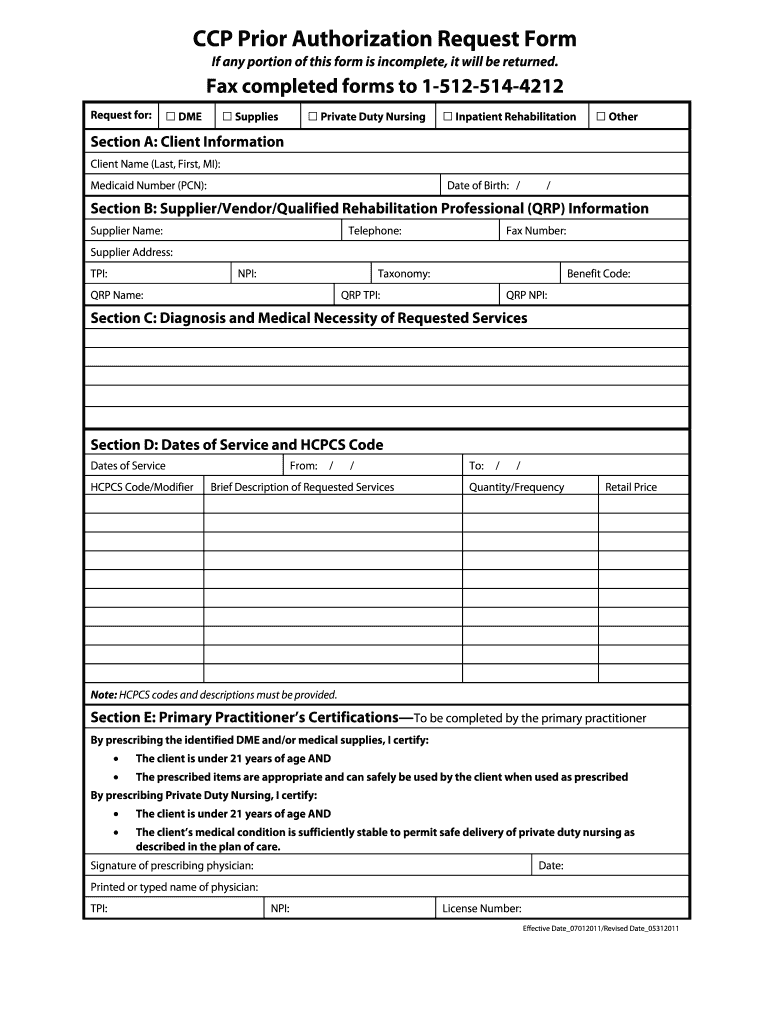
- Begin with Section A: Client Information. Fill in the client's name, Medicaid number, and date of birth accurately to ensure proper identification.
- Move to Section B: Supplier/Vendor/Qualified Rehabilitation Professional (QRP) Information. Enter the supplier's name, contact details, and relevant identifiers such as TPI and NPI.
- In Section C, provide a clear diagnosis and explain the medical necessity for the requested services. This section is crucial for approval.
- Proceed to Section D: Dates of Service and HCPCS Code. Specify the service dates, HCPCS codes, and a brief description of requested services along with quantity/frequency.
- Finally, complete Section E by having the primary practitioner certify the request. Ensure their signature, printed name, TPI, NPI, and license number are included.
Start filling out your scaffolding request form online for free today!
Fill out scaffolding request form online
It's free
It's free
See more scaffolding request form versions
We've got more versions of the scaffolding request form form. Select the right scaffolding request form version from the list and start editing it straight away!
Got questions?
We have answers to the most popular questions from our customers. If you can't find an answer to your question, please contact us.
Contact us
What is the 3 to 1 rule for scaffolding?
In its simplest form, the 3-to-1 rule states that for every 3 feet (or 1 meter) of vertical height, a freestanding scaffold should have at least 1 foot (or 0.3 meters) of base width in its narrowest dimension. Think of it like a pyramid the wider the base, the more stable the structure.
What is the OSHA rule on scaffolding?
Each scaffold and scaffold component must support without failure its own weight and at least 4 times the maximum intended load applied or transmitted to it. [ 29 CFR 1926.451(a)(1)] A qualified person must design the scaffolds, which are loaded in accordance with that design. [
How high can scaffolding go without outriggers?
OSHA Model (not using outriggers)Total height* at which restraint is required 4-foot (26 inches wide) over 8.668 feet 6-foot (29 inches wide) over 9.668 feet 7-foot (40 inches wide) over 13.332 feet * including vertical posts, guardrails, casters, etc.
What is the formula for calculating scaffolding?
To calculate the load-bearing capacity of a scaffold, you need to consider the material strength, scaffold design, and safety margins. A formula like C0 = (P0 / F0) x C can help, where P0 is the applied load, F0 is the original capacity, and C is the safety factor.
What is a checklist for scaffolding?
The scaffolding checklist will include: Making sure all the components are all present, intact and not damaged. If the area around it is secured and cordoned off. Checking the competency and training of contractors using the structure. Checking the integrity of the structure and looking for any defects.
Security and compliance
At DocHub, your data security is our priority. We follow HIPAA, SOC2, GDPR, and other standards, so you can work on your documents with confidence.
Learn more


People also ask
What is the ISO standard for scaffolding?
The ISO 9001 and ISO 1461 standards cover scaffolding materials, design, and maintenance, ensuring quality and safety, particularly in international construction projects that require adherence to global guidelines.
What is the OSHA ratio for scaffolding?
The top guy, tie or brace of completed scaffolds shall be placed no further than the 4:1 height from the top. Such guys, ties and braces shall be installed at each end of the scaffold and at horizontal intervals not to exceed 30 feet (9.1 m) (measured from one end [not both] towards the other).
What is the scaffolding procedure?
The purpose of this procedure is to ensure scaffolding is adequate for the work to be performed and properly erected and dismantled. It covers selecting, erecting, and dismantling all types of scaffolds. It applies to workers, supervisors, scaffold qualified persons, scaffold custodians, and Facilities.


