
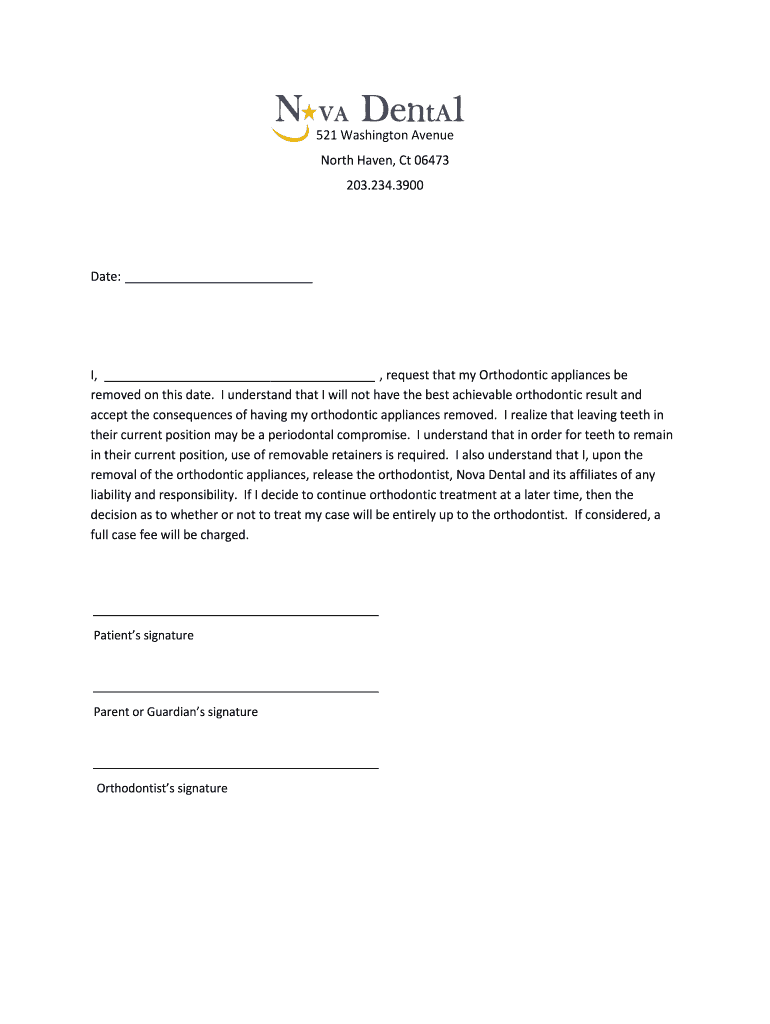







Definition and Purpose of the Early Removal of Braces Consent Form
The early removal of braces consent form is a crucial document in orthodontic treatment management. It serves both as a consent tool and a liability waiver for orthodontic practitioners. Patients are required to acknowledge understanding when they choose to remove their braces before the completion of the prescribed treatment plan.
This form outlines potential consequences, which can include:
- Suboptimal orthodontic results: Patients risk not achieving the desired tooth positioning if braces are taken off prematurely.
- Need for retainers: Even after early removal, patients may need to wear retainers to maintain the position of their teeth.
It specifically states that any future orthodontic treatment necessary to correct potential issues will be at the discretion of the orthodontist. This legally binds patients to the understanding that they are opting out of the recommended treatment path.
Key Elements of the Consent Form
Understanding the key elements facilitates both completion and thorough comprehension of the early removal of braces consent form. Here are the essential components included in this document:
- Patient Information: This section collects fundamental details such as the patient's name, contact information, and the orthodontist's name.
- Acknowledgment of Risks: Patients are informed of the risks associated with premature removal, positioning both patient and orthodontist on the same page concerning outcomes.
- Liability Release: A statement releases the orthodontist from liability regarding the results of the early removal of braces.
- Future Treatment Clause: This clause specifies that any subsequent orthodontic care will be at the orthodontist's discretion and may incur additional costs.
Each element collectively ensures that patients are adequately informed and agree to the conditions surrounding their decision to remove braces early.
Steps for Completing the Consent Form
Completing the early removal of braces consent form requires careful attention to detail to ensure validity. Here are systematic steps for patients and caregivers to follow:
- Review the Form: Thoroughly go through all sections and understand the implications of the decision.
- Fill in Patient Information: Provide all required personal details accurately, ensuring there are no typographical errors.
- Read Terms: Understand the acknowledgment of risks and the liability release clause fully before signing.
- Consult with the Orthodontist: Discuss any concerns or questions with your orthodontic provider to clarify doubts regarding potential consequences.
- Sign and Date the Form: Ensure that signatures are placed where required, along with the date to validate the agreement.
Taking these steps helps minimize confusion and miscommunication, assuring all parties are informed.
Legal Considerations of Early Braces Removal
When signing the early removal of braces consent form, several legal considerations come into play. It is important to comprehend these aspects to avoid complications in future treatment or liabilities:
- Informed Consent: The form stands as an informed consent document whereby patients recognize they understand the ramifications of early removal.
- Legal Release of Liability: By signing, patients agree not to hold their orthodontist accountable for any adverse outcomes resulting from discontinuing treatment prematurely.
- Regulatory Compliance: The form complies with state and federal regulations governing patient consent, protecting both patient and provider rights.
These legal properties provide clarity and protection essential in orthodontics.
Recommendations for Patients Considering Early Removal
Patients considering the early removal of braces should evaluate their options diligently. Here are some recommendations:
- Communicate with Your Orthodontist: Open dialogue can lead to better understanding and may even alleviate concerns leading to the desire for premature removal.
- Discuss Retainers: Confirm with your orthodontist the type of retainers you might require post-removal to maintain teeth position.
- Understand the Financial Implications: Acknowledge any potential costs for corrective procedures if the premature removal leads to less-than-desirable outcomes.
- Set Realistic Expectations: Understand that while early removal may seem appealing, it could lead to extended treatment time or additional procedures.
By considering these recommendations, patients can make informed decisions that align with their long-term dental health goals.
Common Scenarios and Considerations for Early Removal
Different patients have varying reasons for seeking early removal of braces, and understanding these scenarios is crucial for proper decision-making:
- Discomfort or Pain: Some patients may find wearing braces uncomfortable, leading them to consider early removal. Orthodontists can often adjust braces to relieve pressure instead of resorting to early removal.
- Aesthetic Concerns: Patients in high-visibility social situations may prefer not to wear braces. It can be beneficial to explore alternative aesthetic treatments such as clear aligners.
- Life Changes: Changes in a patient’s life circumstances, such as relocation, may prompt consideration of altering their orthodontic treatment plan.
Addressing each of these common situations through the consent form process ensures that all parties understand the context and implications associated with early removal.
By taking into account the definition, key elements, steps for completion, legal considerations, recommendations, and common scenarios surrounding the early removal of braces consent form, patients can navigate their orthodontic journeys more effectively while ensuring they are sufficiently informed.




