




01. Edit your dnr form florida online
Type text, add images, blackout confidential details, add comments, highlights and more.

Type text, add images, blackout confidential details, add comments, highlights and more.

Draw your signature, type it, upload its image, or use your mobile device as a signature pad.

Send florida dnr form via email, link, or fax. You can also download it, export it or print it out.
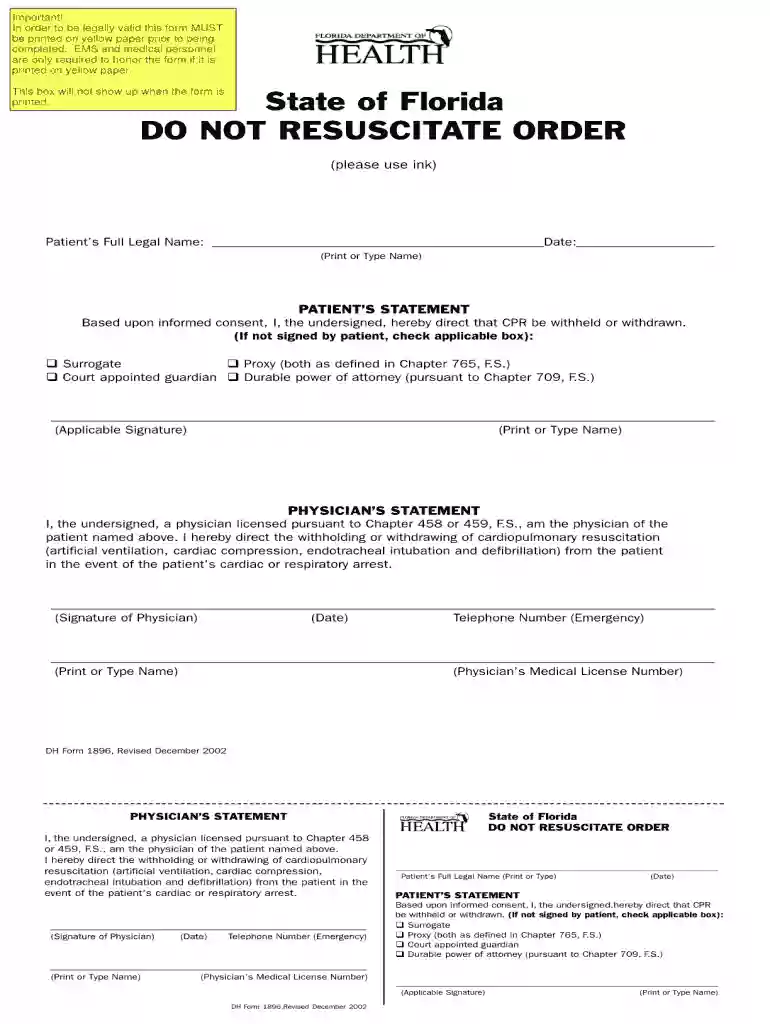
The Do Not Resuscitate (DNR) form in Florida is a legal document that specifies a patient's wish to forgo resuscitation in the event of a cardiac arrest or respiratory failure. By completing this form, individuals can communicate their preferences regarding emergency medical interventions, thereby ensuring that healthcare providers respect their choices during a critical situation. The Florida DNR form is officially designated as the “State of Florida Do Not Resuscitate Order” and is recognized under Florida law as a binding and enforceable directive.
The DNR form is essential in aligning medical intervention with the patient's values, particularly for those with terminal illnesses or advanced chronic conditions. It is important to understand that the DNR does not affect other medical treatments; it specifically addresses resuscitation efforts. Patients can still receive comfort care and pain management, even if they opt for a DNR.
Acquiring the DNR form in Florida is a straightforward process. Here are the primary methods:
Online Access: The Florida Department of Health provides downloadable versions of the DNR form on its official website. The forms are easily accessible and printable.
Healthcare Providers: Many hospitals, clinics, and physician’s offices have copies of the DNR form available for patients. Healthcare providers can provide guidance on how to fill out the form correctly.
Legal Services: Legal aid organizations and elder law attorneys can help individuals understand the implications of the DNR form and assist in obtaining one.
It is important to ensure that the correct and most current version of the form is used, as outdated forms may not be honored by medical personnel.
Completing the DNR form involves several critical steps:
Download or Obtain the Form: Ensure you have the official State of Florida DNR form.
Patient Details: Fill in the patient’s full name, date of birth, and any other identifying information.
Decision Maker: If applicable, the person completing the form on behalf of a patient must identify their relationship to the patient.
Signature Requirement: The form must be signed and dated by the patient or, if the patient is unable, by an authorized person. The signature should include printed names for clarity.
Witness Signatures: The form requires two witness signatures who certify that the patient or the decision-maker signed the form voluntarily.
Distribution: Once completed, provide copies of the DNR form to healthcare providers, family members, and ensure that a copy is placed in the patient’s medical records.
Using a DNR form is important for several reasons:
Patient Autonomy: A DNR form reinforces the right of patients to make decisions about their medical care, reflecting their personal values and health care preferences.
Clarity in Emergencies: In emergencies, medical personnel can often be overwhelmed. A clearly signed DNR form eliminates any confusion and ensures that the patient’s wishes are respected.
Relief for Families: The DNR form can provide peace of mind for family members, ensuring their loved one's end-of-life wishes are known and honored rather than leaving them to navigate difficult decisions during stressful moments.
Longevity of Comfort Care: A DNR does not prevent individuals from receiving palliative care, which focuses on comfort and quality of life, thereby allowing patients to focus on spending quality time with their loved ones.
The DNR form is typically used by:
Elderly Patients: Those living with significant health conditions who may wish to avoid invasive resuscitation efforts.
Individuals with Terminal Illnesses: Patients diagnosed with conditions such as advanced cancer, end-stage organ disease, or other severe debilitating illnesses may opt for a DNR to align their medical care with their end-of-life wishes.
Patients in Palliative Care: Individuals receiving hospice or palliative care often choose to establish a DNR to ensure that their focus remains on comfort rather than aggressive treatments.


Understanding the different demographics that use the DNR form can help healthcare providers tailor discussions and provide appropriate resources.
We've got more versions of the dnr form florida form. Select the right dnr form florida version from the list and start editing it straight away!
At DocHub, your data security is our priority. We follow HIPAA, SOC2, GDPR, and other standards, so you can work on your documents with confidence.
A do not resuscitate order (DNRO) is a form or patient identification device developed by the Florida Department of Health to identify people who do.
on a close out form supplied by the Department in accordance with NR 726.09 (Wisconsin DNR Florida Petroleum Cleanup Programs RNA Tool Kit Guidance Manual.Read more
An emergency medical technician (EMT) or paramedic shall withhold or withdraw cardiopulmonary resuscitation from a patient:Read more


