




01. Edit your social security card replacement online
Type text, add images, blackout confidential details, add comments, highlights and more.

Type text, add images, blackout confidential details, add comments, highlights and more.

Draw your signature, type it, upload its image, or use your mobile device as a signature pad.

Send my social security account log in via email, link, or fax. You can also download it, export it or print it out.
Social Security in the United States is a government program designed to provide financial assistance to individuals in specific circumstances, such as retirement or disability. Managed by the Social Security Administration (SSA), the system plays a crucial role in the economic stability of retirees, the disabled, and other eligible beneficiaries. Social Security is funded through payroll taxes under the Federal Insurance Contributions Act (FICA).
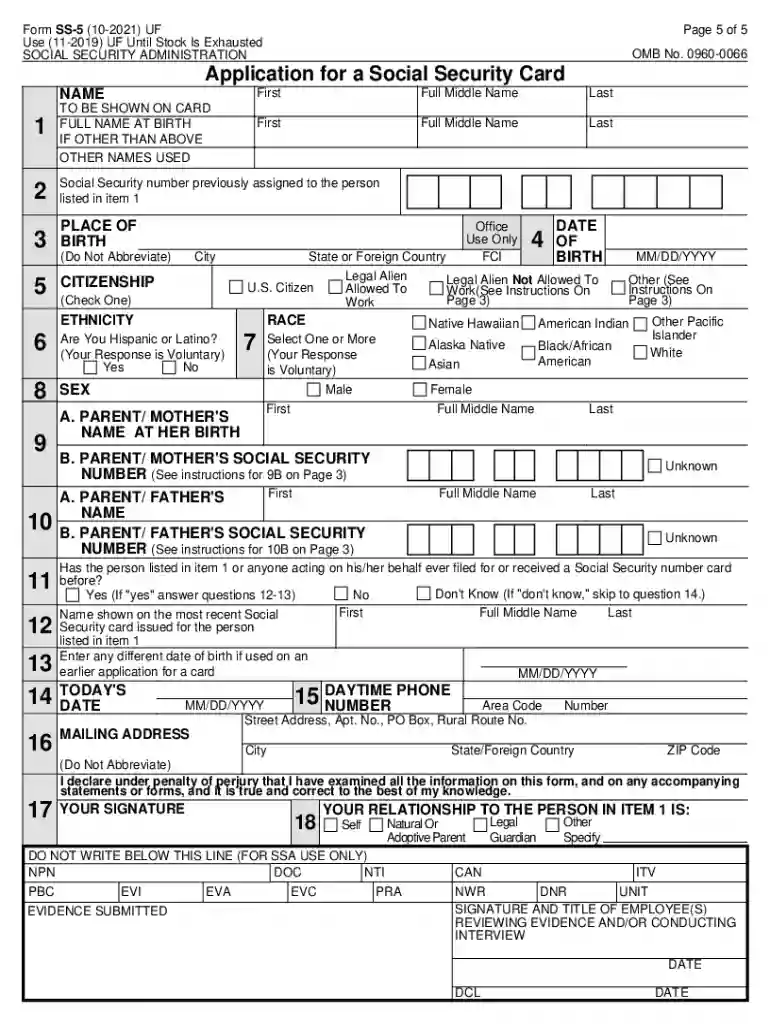
To obtain a Social Security card, individuals must complete the Form SS-5, the official application used by the SSA. This form can be used whether you're applying for an original card, replacing a lost card, or updating information on an existing record. Applications can be submitted either in person at an SSA office or via mail. Certain sites allow you to start the application online, but the process must be completed through direct submission to the SSA.
The application requires specific documentation to verify identity, age, and citizenship or immigration status. Accepted documents include birth certificates, U.S. passports, and permanent resident cards. It's important to provide originals or certified copies, as photocopies or notarized documents are generally not accepted.
Social Security primarily consists of several benefit programs, including retirement, disability, and survivor benefits. These programs aim to protect eligible individuals from income loss due to retirement, disability, or the death of a family breadwinner.
Social Security Number (SSN): A nine-digit number issued to U.S. citizens, permanent residents, and temporary (working) residents under SSA authority. An SSN is used for tracking earnings and employee benefits.
SSI (Supplemental Security Income): A program that pays benefits to disabled adults and children who have limited income and resources.
OASI (Old-Age and Survivors Insurance): This refers to the portion of the Social Security taxes that go towards pensions for retirees and their survivors.
Social Security is governed by a series of laws ensuring the provision’s integrity, including the Social Security Act. Adhering to these laws is crucial for both beneficiaries and employers, who must ensure accurate reporting and tax contributions.
Misuse or fraudulent acquisition of Social Security benefits can lead to severe penalties, including fines or imprisonment. Employers face penalties for incorrect employee wage reports or failure to pay Social Security taxes.
Digital options facilitate a more streamlined process for people with an established SSA account. Although documents still need to be submitted physically, digital applications can initiate the process.
While more traditional, paper-based applications are comprehensive and mandatory for those who cannot complete or submit online applications.
While the Social Security program is federally managed, state regulations can influence certain aspects, such as additional benefits or health coverage that may affect eligibility and benefit levels. It's crucial for applicants to understand both federal and state-regulated benefits to maximize their entitlements.
Retirement Planning: Jane, age 67, applies for Social Security retirement benefits after working for over 40 years in the U.S. This allows her to receive a stable monthly payment post-retirement.
Disability Claims: John, a 45-year-old factory worker, becomes unable to continue his job due to a medical condition. He files for Social Security Disability Insurance (SSDI) and receives benefits upon approval after showing sufficient work history and condition severity.
Understanding the extensive yet straightforward processes associated with Social Security ensures individuals are well-prepared to manage and optimize their benefits effectively.
We've got more versions of the social security card replacement form. Select the right social security card replacement version from the list and start editing it straight away!
| Versions | Form popularity | Fillable & printable |
|---|---|---|
| 2024 | 4.5 Satisfied (52 Votes) | |
| 2021 | 4.8 Satisfied (49 Votes) | |
| 2019 | 4.3 Satisfied (95 Votes) | |
| 2011 | 4.3 Satisfied (149 Votes) | |
| 2009 | 4.3 Satisfied (72 Votes) | |
| 2006 | 4.4 Satisfied (45 Votes) | |
| 2005 | 4 Satisfied (44 Votes) | |
| 2003 | 4 Satisfied (25 Votes) | |
| 2002 | 4 Satisfied (60 Votes) | |
| 2001 | 4.4 Satisfied (38 Votes) | |
| 1998 | 4 Satisfied (36 Votes) |
Most eSignature services require users to have a paid subscription. With DocHub, there are two options for you to add an electronic signature to your create ssn card online at no cost:
The second option, however, has restrictions on the number of signatures, sign requests, emails, and documents for adjusting available per month. You can check for full details here.
Document editing with DocHub is equally convenient on desktop and mobile devices. You only need an internet browser to modify your free copy of social security card on Android. Open our website and sign in to access the tools you need. Add your document and introduce your intended modifications. After that, you can keep your form in your document storage or send it out instantly.
At DocHub, your data security is our priority. We follow HIPAA, SOC2, GDPR, and other standards, so you can work on your documents with confidence.




Jun 17, 2022 — Social Security is a program run by the federal government. The program works by using taxes paid into a trust fund to provide benefits to ...
You can get information online and by phone about Social Security, Disability, or Supplemental Security Income benefits, including how to apply for benefits.
Social Security wants to be sure that every decision made about your disability or Supplemental Security Income. (SSI) application is correct.


