




01. Edit your food stamp application online
Type text, add images, blackout confidential details, add comments, highlights and more.

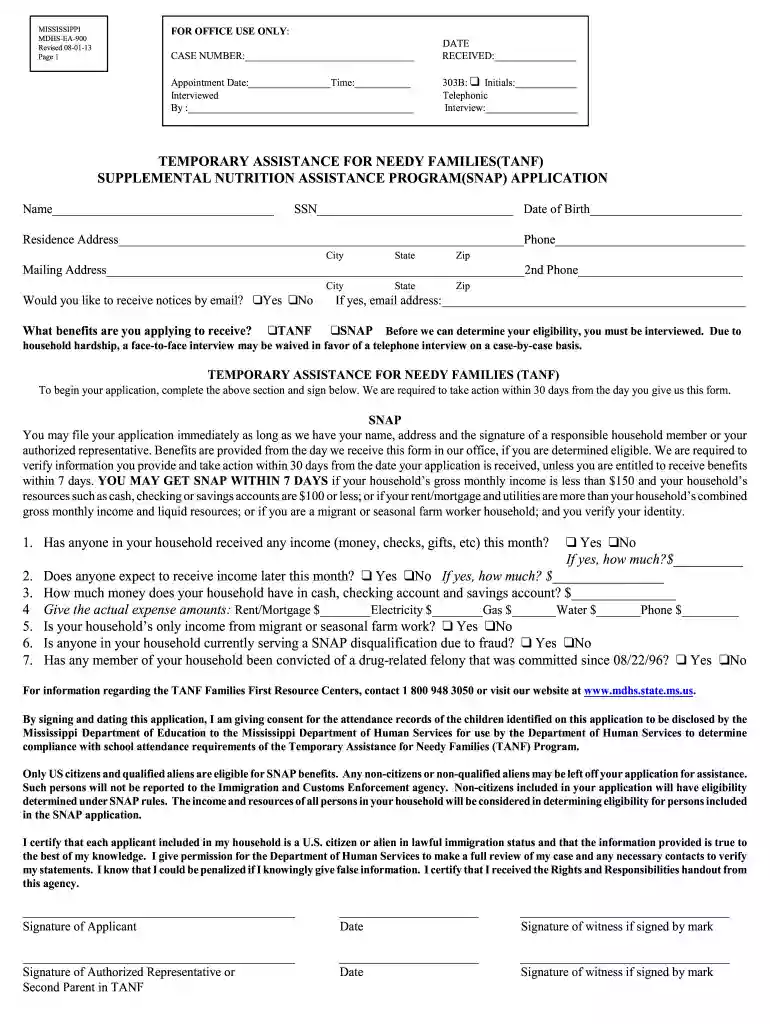
Type text, add images, blackout confidential details, add comments, highlights and more.

Draw your signature, type it, upload its image, or use your mobile device as a signature pad.

Send mdhs ms gov recertification application via email, link, or fax. You can also download it, export it or print it out.
The SNAP application in Mississippi, commonly referred to as the food stamp application, is designed to assess the eligibility of individuals and families for accessing financial assistance to purchase food. The program aims to alleviate hunger and improve nutrition among low-income households by providing them with Electronic Benefits Transfer (EBT) cards, which can be used like debit cards at authorized grocery stores and farmer’s markets.
To qualify for SNAP, applicants must meet specific income and resource limits established by the U.S. Department of Agriculture. The following criteria generally apply:


The application process can be completed online, via mail, or in person at local offices. The steps include:
Gather Required Documents:
Complete the Application:
Submit the Application:
Interview:
Receive Notification:
To successfully apply for SNAP, several documents are necessary:
Applicants may face various situations that can affect their SNAP application:
Once approved for SNAP, beneficiaries must recertify to maintain their benefits. Recertification typically occurs every six or twelve months, depending on household circumstances. Applicants will need to:
We've got more versions of the food stamp application form. Select the right food stamp application version from the list and start editing it straight away!
At DocHub, your data security is our priority. We follow HIPAA, SOC2, GDPR, and other standards, so you can work on your documents with confidence.



Acronis Snap Deploy is a flexible, efficient software solution for deployment of a fully configured operating system (with or without application software and
Applying for SNAP ; 1 Check Eligibility ; 2 Gather Documents ; 3 Apply ; 4 Complete an Interview ; 5 Return Any Additional Needed Information.
If you are currently not a recipient of SNAP benefits and wish to apply, you may submit an application online on the Mississippi Department of Human Services


