







Definition & Meaning of Customer Set Up Forms
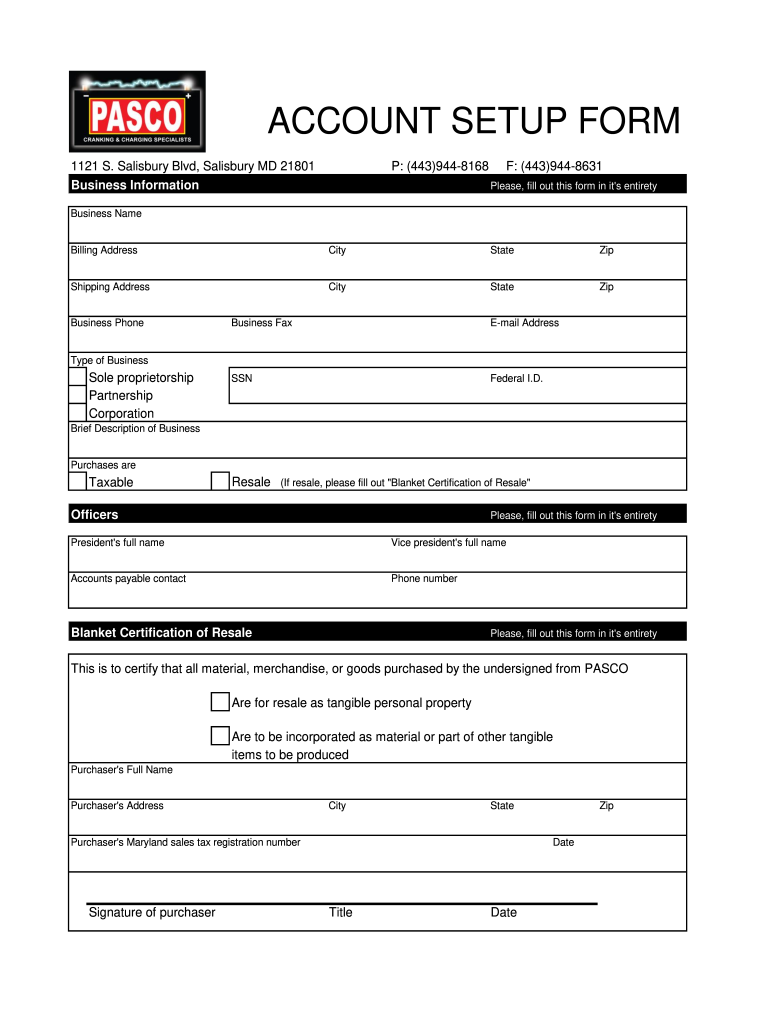
Customer set up forms, often referred to as account set up forms or new customer setup forms, are essential documents used by businesses to gather important information about clients or customers. These forms collect a variety of details including the business's name and address, primary contacts, business structure, and any necessary tax identification numbers. By standardizing the collection of customer information, these forms streamline the process of onboarding new clients, ensuring that all necessary data is available for service delivery. Typically utilized in industries such as retail, services, and manufacturing, these forms play a crucial role in facilitating customer interactions and maintaining accurate records.
The importance of customer set up forms extends beyond mere data collection. They also establish a formal agreement between the business and its clients, outlining expectations and responsibilities. For example, when a form includes a section for the Blanket Certification of Resale, it specifies that the purchases made are intended for resale, which is critical for compliance with tax regulations. This clarity benefits both parties and fosters a trusting relationship from the outset.
Steps to Complete the Customer Set Up Forms
Completing a customer set up form involves several straightforward steps to ensure accuracy and compliance. Below is a step-by-step guide to effectively fill out these forms:
-
Gather Required Information:
- Collect all necessary information such as business name, address, and tax identification numbers.
- Ensure you have proper documentation, such as business licenses or identification, readily available.
-
Fill in Business Details:
- Input the legal name of the business and any DBAs (Doing Business As).
- Provide the business address, phone number, and email to facilitate communication.
-
Identify Contacts:
- List key business contacts, including the owner, manager, and billing contact if applicable.
- Include their phone numbers and email addresses for easy reference.
-
Specify Business Structure:
- Indicate whether the business is a sole proprietorship, partnership, LLC, or corporation. This helps in determining tax obligations.
-
Review and Certify:
- Double-check all entries for accuracy to avoid potential issues later.
- Sign and date the form to validate the information provided.
- If applicable, ensure that any required certifications, such as a Blanket Certification of Resale, are complete.
-
Submission:
- Depending on the requirements, submit the completed form either online, via email, or by physical mail.
- Confirm receipt with your contact to ensure that the form has been processed.
Following these steps can enhance the accuracy and efficiency of customer onboarding, ensuring a smoother business relationship.
Important Terms Related to Customer Set Up Forms
Understanding the language associated with customer set up forms is crucial to effectively navigate the process. Below are some key terms frequently encountered:
-
Tax Identification Number (TIN): A unique number assigned by the IRS for the purpose of tax reporting. It's essential for businesses and self-employed individuals.
-
Business Entity: The legal structure of a business, such as LLC, corporation, or sole proprietorship, which affects tax treatment and liability.
-
Blanket Certification of Resale: A declaration that purchases made by the business are intended for resale, which can exempt the buyer from sales tax.
-
Contact Person: An individual designated to handle communications regarding the account, crucial for maintaining a clear line of contact.
-
Account Status: Indicates whether an account is active, pending, or inactive, providing insight into the current relationship with the customer.
Familiarity with these terms can aid in both filling out customer set up forms and engaging in further discussions about business relationships.
Legal Use of the Customer Set Up Forms
Customer set up forms serve several legal purposes, ensuring that both businesses and customers adhere to necessary regulations. These forms can legally bind both parties to the terms outlined, such as payment obligations and service standards.
-
Compliance with Tax Laws: Accurate reporting of tax identification numbers and business structure ensures adherence to local, state, and federal tax regulations, reducing the risk of penalties.
-
Documentation of Agreements: The information collected serves as a record of the agreement between the customer and the business, which can be crucial in case of disputes or audits.
-
Consumer Protection Laws: Customer set up forms often include disclaimers and privacy notices, protecting both the business and the consumer in compliance with consumer protection laws.
Businesses should retain completed forms securely, as they can be necessary for audits, legal reviews, or when applying for credit.
Examples of Using the Customer Set Up Forms
Customer set up forms are versatile and can be used in various contexts. Here are specific examples that demonstrate their application across different scenarios:
-
Retail Industry: A clothing store uses customer set up forms to register individuals who wish to open a store credit account. The details collected include personal information and credit history, allowing the store to evaluate credit risk.
-
Service Providers: A plumbing service requires new customers to fill out a customer setup form that gathers information about property ownership and service requirements, ensuring that the right services are provided.
-
B2B Transactions: A software company implements a customer set up form for businesses seeking software solutions. The form collects data that helps tailor the software to specific needs, ensuring efficient service delivery.
-
Healthcare Providers: A clinic employs customer set up forms to gather patient information, including insurance details and medical history, facilitating streamlined patient care and billing processes.
Using customer set up forms effectively in these scenarios enhances the operations of diverse businesses, ensuring structured customer management.




