




01. Edit your punomoc online
Type text, add images, blackout confidential details, add comments, highlights and more.

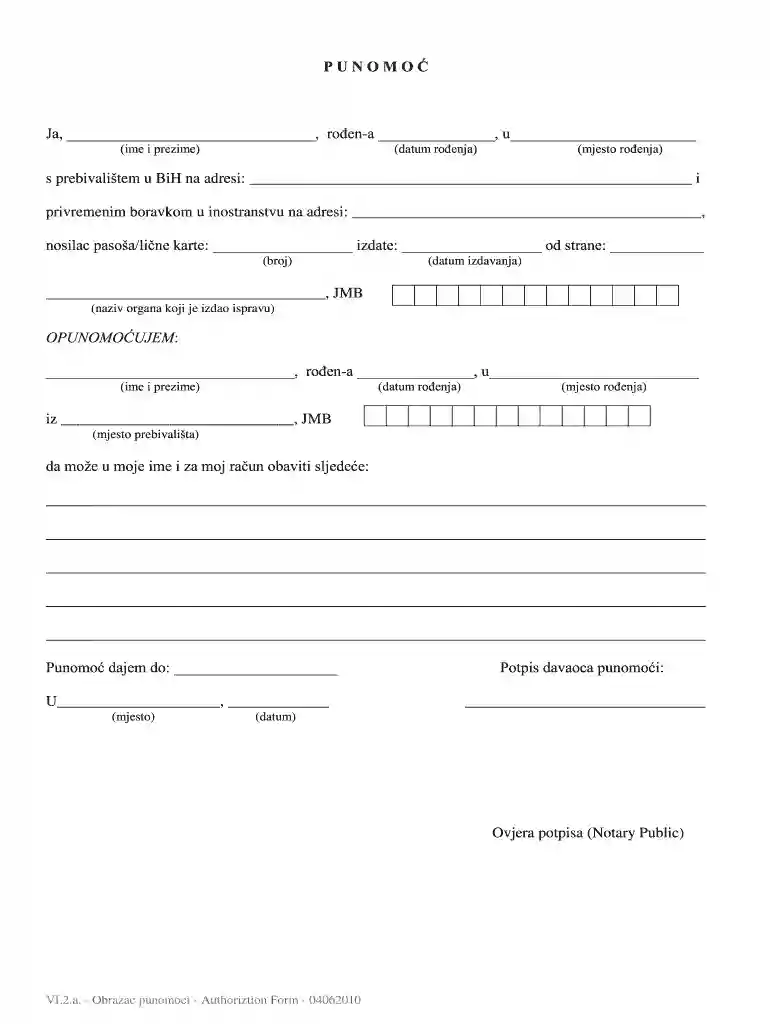
Type text, add images, blackout confidential details, add comments, highlights and more.

Draw your signature, type it, upload its image, or use your mobile device as a signature pad.

Send punomoć na engleskom via email, link, or fax. You can also download it, export it or print it out.
Punomoc, often referred to as a power of attorney, is a legal document that authorizes one individual, known as the agent or attorney-in-fact, to act on behalf of another person, known as the principal, in specific legal or financial matters. This document is typically used to grant authority for actions related to property, financial transactions, or medical decisions, depending on the scope defined within the form.
The clarity in defining the specific powers given is paramount, ensuring that the document accurately reflects the principal's intentions.
To create a valid punomoc, several essential elements must be included in its layout:
Each of these elements plays a critical role in ensuring that the punomoc operates effectively and legally.
Creating a punomoc is a systematic process involving several clear steps to ensure its legal validity:
This structured approach helps create a robust punomoc that meets all legal requirements.
In the United States, punomoc is governed by state laws, which can vary significantly. Understanding these legal frameworks is essential for proper execution:
Navigating these legal aspects ensures the punomoc operates smoothly within the legal system.
Punomoc is often employed in various practical situations, making it a versatile tool:
This diversity in usage highlights the importance of having a punomoc readily available for various life circumstances.
Several templates and examples exist for punomoc that cater to different needs. Key formats include:
These examples provide a reference point for individuals looking to draft their punomoc with clarity and specificity.
By understanding the elements, legal implications, and practical applications of punomoc, individuals can confidently create and utilize this essential document to delegate authority effectively. This understanding facilitates the navigation of both personal and legal affairs with greater ease and assurance.
We've got more versions of the punomoc form. Select the right punomoc version from the list and start editing it straight away!
| Versions | Form popularity | Fillable & printable |
|---|---|---|
| 2010 | 4.8 Satisfied (121 Votes) |
At DocHub, your data security is our priority. We follow HIPAA, SOC2, GDPR, and other standards, so you can work on your documents with confidence.





U slučaju da ponude dostavljaju grupe ponuđača, uz ponudu se mora dostaviti i punomoć prije otvaranja ponuda Komisiji dostaviti punomoć ponuđača zaRead more
punomoć (literally commercial power of attorney) under Croatian law. A conceptual comparison reveals that attorney in fact is a broader term, referring toRead more
Imenovanje nekog lica za opunomoćenika u skladu sa punomoći može učiniti samo osoba koja u potpunosti razumije i shvata radnju koja se preduzima.Read more


