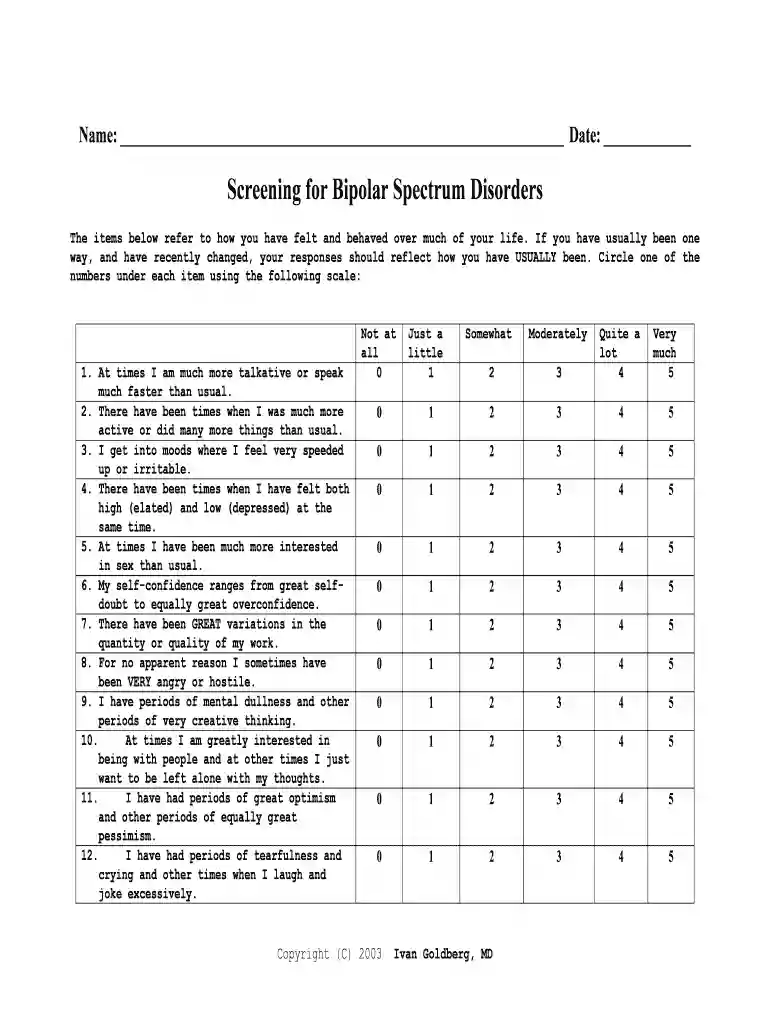
Screening for Bipolar Spectrum Disorders 2026

Get Form
bipolar assessment tool pdf Preview on Page 1

Here's how it works

01. Edit your bipolar assessment tool pdf online
Type text, add images, blackout confidential details, add comments, highlights and more.

02. Sign it in a few clicks
Draw your signature, type it, upload its image, or use your mobile device as a signature pad.

03. Share your form with others
Send bipolar spectrum screening via email, link, or fax. You can also download it, export it or print it out.

Definition and Meaning of Screening for Bipolar Spectrum Disorders

Screening for Bipolar Spectrum Disorders refers to the process of evaluating individuals for potential mood disorders that fall within the bipolar spectrum. This screening aims to identify symptoms related to mood swings, ranging from disruptive mania to debilitating depression. It typically employs a structured questionnaire or assessment tool tailored to gather comprehensive insights into an individual’s emotional history, cognitive patterns, and behavioral tendencies.

The questionnaire commonly consists of a series of questions that individuals rate based on their experiences, often employing a scale from zero to five. This quantitative assessment provides mental health professionals with critical data that can forecast the likelihood of disorders such as major depressive disorder or bipolar disorder. The screening process is essential not only for diagnosis but also for guiding further assessment and treatment planning.

Important Terms Related to Screening for Bipolar Spectrum Disorders

Understanding essential terminology related to the screening process can enhance comprehension and application. Below are key terms:

  • Bipolar Disorder: A mental health condition marked by extreme mood swings that include emotional highs (mania or hypomania) and lows (depression).
  • Mood Episodes: Refers to distinct periods of mood disturbance, recognized as mania, hypomania, or major depressive episodes.
  • Mood Variability: The extent and frequency of mood fluctuations that can impact a person's daily functioning and behavior.
  • Screening Tool: A structured set of questions or a form designed to identify signs and symptoms of mental health disorders, in this case, bipolar spectrum disorders.

These terms contribute to a better understanding of the scope and implications of screening for mental health conditions.

How to Use the Screening for Bipolar Spectrum Disorders

Utilizing the screening for bipolar spectrum disorders is a straightforward process designed for implementation in clinical or self-assessment settings. The following steps outline the usage:

  1. Access the Tool: Obtain the bipolar assessment tool, often available in PDF format, to ensure accessible use across devices.
  2. Complete the Questionnaire: Answer each of the twelve questions critically, rating feelings and behaviors from zero (not at all) to five (very much).
  3. Score the Responses: Tally the scores to categorize the results into probable mood disorders based on established scoring protocols.
  4. Seek Professional Guidance: Use the results as a conversation starter with a mental health professional for further evaluation and potential diagnosis.
  5. Follow-Up Assessments: Consider follow-up screenings to monitor mood changes over time and assess the effectiveness of any interventions.

This methodical approach helps individuals and clinicians alike in recognizing potential mental health concerns systematically.

Who Typically Uses the Screening for Bipolar Spectrum Disorders

The screening for bipolar spectrum disorders is utilized by a variety of individuals across different demographics and professional sectors:

  • Mental Health Professionals: Psychologists, psychiatrists, and counselors utilize the screening to assess patients during initial evaluations or follow-up visits.
  • Primary Care Providers: Family physicians may incorporate mood disorder screenings as part of routine check-ups, particularly for patients presenting with mood-related complaints.
  • Educational Institutions: School counselors often use screening tools to identify students who may benefit from psychological support due to mood instability.
  • Individuals Seeking Help: The assessment can also serve individuals who suspect they may experience symptoms of bipolar disorder and want to evaluate their mental health proactively.

This tool is beneficial in various settings, ensuring that individuals receiving mental health services are adequately screened for mood disorders.


decoration image ratings of Dochub

Key Elements of the Screening for Bipolar Spectrum Disorders

Understanding the essential components of the screening process is crucial for effective implementation. The following key elements define the screening for bipolar spectrum disorders:

  • Structured Questionnaire: Comprises specific and clear questions that focus on different symptoms associated with mood disorders.
  • Scoring System: Utilizes a numerical rating scale that facilitates categorizing the severity of symptoms and risks for various mood conditions.
  • Historical Context: Assesses an individual's emotional history and past behavior patterns, providing context for current symptoms.
  • Comprehensive Coverage: Examines different aspects of mood stability, cognitive functioning, and their impact on daily life.

These elements collectively enhance the accuracy and reliability of the screening, leading to informed clinical decisions.

Steps to Complete the Screening for Bipolar Spectrum Disorders

The process of completing the screening for bipolar spectrum disorders consists of several precise steps to ensure thorough evaluation:

  1. Gather Materials: Ensure you have a quiet space to concentrate and access the bipolar assessment tool PDF.
  2. Read Instructions: Review any introductory information related to the questionnaire to grasp the purpose and importance of each question.
  3. Respond Thoughtfully: Answer each item honestly, reflecting on your past experiences regarding mood variation and its effects on your life.
  4. Calculate the Score: After completing the questionnaire, sum the scores to acquire an overall metric reflecting mood disorder risk.
  5. Review Outcomes: Based on the scoring criteria, analyze the results to understand whether further professional assessment is warranted.

Following this structured approach ensures that individuals can accurately complete the screening, yielding meaningful insights into their mental health status.

See more Screening for Bipolar Spectrum Disorders versions

We've got more versions of the Screening for Bipolar Spectrum Disorders form. Select the right Screening for Bipolar Spectrum Disorders version from the list and start editing it straight away!
Versions Form popularity Fillable & printable
2003 4.2 Satisfied (26 Votes)
be ready to get more

Complete this form in 5 minutes or less

Get form

Got questions?

We have answers to the most popular questions from our customers. If you can't find an answer to your question, please contact us.
Contact us

A lot of software applications are available on the market for document modifying and signing. DocHub is one of the most in-demand online solutions that comply with all security and compliance standards and guarantees your eSigned documentation is legally enforceable. All you need to give it a try is to register an account, add your bipolar assessment scale pdf, fill out the required information, and click Sign. Create your eSignature by typing, drawing it, uploading its image to your form, or scanning a unique QR code.

In case your go-to email service is Gmail, you can easily integrate your DocHub editor into your work. Modify your bipolar assessment pdf with DocHub tools and attach it to your drafts in Gmail. See how straightforward it is to exchange papers and work together having a swift PDF editing solution at hand.

Timely identification is crucial for managing bipolar disorder effectively. Look out for these early symptoms: 1. Mood Swings: Experiencing intense highs to extreme lows, which are more frequent and interfere with daily activities and sleep.
The gold standard for diagnosis of bipolar disorder is a structured clinical interview, or so-called SCID.
Another screening tool is the Mood Disorder Questionnaire (MDQ; Hirschfeld et al., 2000). The first 13 items of the MDQ ask about the DSM-IV manic symptoms using a yesno format. To achieve a positive screen, seven items must be endorsed.

Security and compliance

At DocHub, your data security is our priority. We follow HIPAA, SOC2, GDPR, and other standards, so you can work on your documents with confidence.

Learn more
ccpa2
pci-dss
gdpr-compliance
hipaa
soc-compliance

People also ask

Bipolar Disorder DSM-5 Diagnostic Criteria To be diagnosed with bipolar disorder, a person must have experienced at least one episode of mania or hypomania. To be considered mania, the elevated, expansive, or irritable mood must last for at least one week and be present most of the day, nearly every day.

Related links