




01. Edit your soc 839 online
Type text, add images, blackout confidential details, add comments, highlights and more.

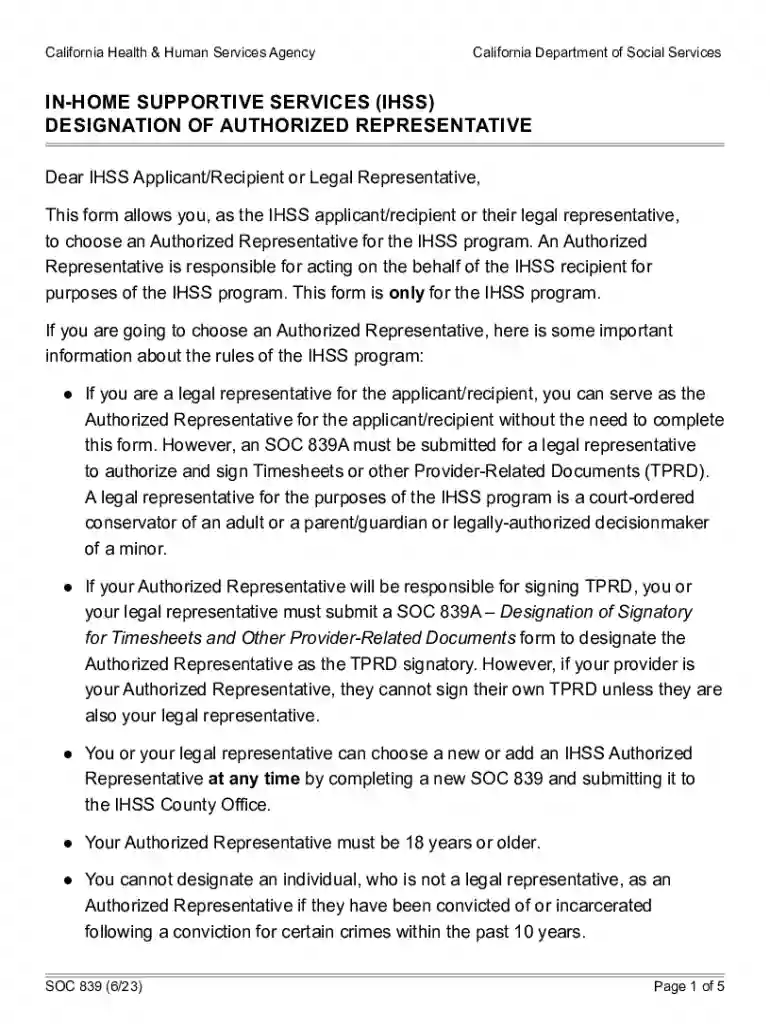
Type text, add images, blackout confidential details, add comments, highlights and more.

Draw your signature, type it, upload its image, or use your mobile device as a signature pad.

Send ihss in home supportive services via email, link, or fax. You can also download it, export it or print it out.
The SOC 839 (6 23) form is a crucial document for applicants or recipients of In-Home Supportive Services (IHSS) in California, allowing individuals to designate an Authorized Representative. This representative can act on behalf of the IHSS recipient, ensuring that their care needs and preferences are effectively communicated and managed. The form is essential for those needing assistance in navigating the application and management process, enhancing the accessibility and responsiveness of the services provided.
To properly utilize the SOC 839 (6 23) form, recipients or applicants must first ensure they understand its purpose. The form allows them to appoint a trusted individual to handle their IHSS affairs, such as communications with service providers and the management of care-related tasks. When filling out the form, clear identification of both the recipient and the Authorized Representative is necessary to facilitate smooth transactions.
This ensures that the Authorized Representative has the legal authority to act on the recipient's behalf without ambiguity about the relationship.
Completing the SOC 839 (6 23) form involves several simple steps that ensure the information is accurate and complete. Carefully following these guidelines can expedite the service delivery process.
By adhering to these steps, recipients can ensure that their request for representation is processed without complications.
Understanding the terminology associated with the SOC 839 (6 23) is vital for its effective use. Some key terms include:
Being familiar with these terms can facilitate a smoother process when interacting with the IHSS system.
The SOC 839 (6 23) form holds legal significance within the framework of IHSS in California. It formally recognizes the relationship between the recipient and their Authorized Representative, granting necessary authority for service management.
Using this form effectively protects both the rights of the recipient and the responsibilities of the Authorized Representative.
The SOC 839 (6 23) form is utilized in various real-world scenarios to enhance the IHSS recipient's experience. For instance:
These examples emphasize the flexibility and utility of the SOC 839 (6 23) form in facilitation of care.
The SOC 839 (6 23) form is subject to specific state regulations and guidelines unique to California. These provisions ensure that the rights of IHSS recipients are upheld and that the form is executed correctly.
Understanding these regulations helps ensure compliance and promotes awareness of rights concerning the IHSS program.
The SOC 839 (6 23) form is primarily utilized by:
This widespread usage underscores the form's importance in ensuring that the needs of vulnerable populations are prioritized and met.


We've got more versions of the soc 839 form. Select the right soc 839 version from the list and start editing it straight away!
At DocHub, your data security is our priority. We follow HIPAA, SOC2, GDPR, and other standards, so you can work on your documents with confidence.
No information is available for this page.
by SL Hughes Cited by 6 nection with the designation. The first form, the Inde-. pendentChoices Designation of Authorized Representative, is signed by both the consumer and the


