




Here's how it works
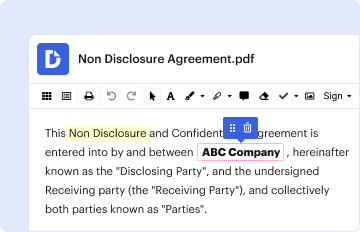
01. Edit your form online
Type text, add images, blackout confidential details, add comments, highlights and more.
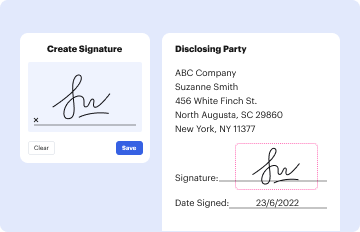
02. Sign it in a few clicks
Draw your signature, type it, upload its image, or use your mobile device as a signature pad.
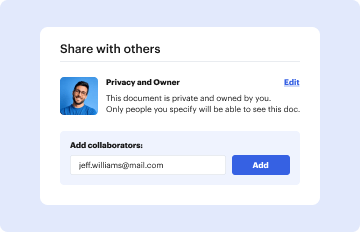
03. Share your form with others
Send it via email, link, or fax. You can also download it, export it or print it out.
How to use or fill out Quit Claim Deed Oklahoma: Pre-built template with our platform

- Click ‘Get Form’ to open the Quit Claim Deed Oklahoma template in the editor.
- Begin by filling in the names and addresses of the Grantor(s) and Grantee(s) in the designated fields. Ensure that all information is accurate to avoid any legal issues.
- Enter the consideration amount (the sum paid for the property) in US Dollars. This is a crucial part of the deed, as it signifies the transaction's value.
- Provide a complete legal description of the real estate being conveyed. This can be found on page 4 as EXHIBIT A; make sure to attach this document if necessary.
- Fill out any tax information required, including whether the property is registered as a homestead. This section helps clarify tax responsibilities.
- Have all Grantors sign and date the document where indicated. Ensure that printed names are also included for clarity.
- Complete the Notary Acknowledgment section by having a notary public verify your signatures, which adds legal validity to your deed.
Start using our platform today to easily fill out your Quit Claim Deed Oklahoma template for free!
Fill out Quit Claim Deed Oklahoma: Pre-built template online
It's free
It's free
See more Quit Claim Deed Oklahoma: Pre-built template versions
We've got more versions of the Quit Claim Deed Oklahoma: Pre-built template form. Select the right Quit Claim Deed Oklahoma: Pre-built template version from the list and start editing it straight away!
| Versions | Form popularity | Fillable & printable |
|---|---|---|
| 2023 | 4.2 Satisfied (51 Votes) |
Got questions?
We have answers to the most popular questions from our customers. If you can't find an answer to your question, please contact us.
Contact us
Can I transfer a deed without an attorney?
Self-filing the deed without an attorney is the most economical option for transferring real property title. However, it requires careful attention to detail. The Registers Office wont provide assistance or highlight mistakes in the paperwork.
Can I make a quitclaim deed myself?
An attorney would not be necessary, you could potentially execute the quit claim deed on your own. It needs to be signed by the grantor in the presence of a notary, and would need to be filed with your local Office of the County Recorder in the county where the property itself is located. I hope that information helps!
Why would you do a quitclaim deed to yourself?
The deed then adds beneficiaries upon your death. You might also do something like this if you are adding or removing property from a trust, although in that case, you are referencing a trustee, on one side or the other. So you might, for example, as an individual, quit claim to yourself, as trustee of your trust.
How much does it cost for a lawyer to prepare a quitclaim deed?
The average cost (i.e., legal fees) for a lawyer to prepare and file a quitclaim deed is $520.00. This cost point come from recent quitclaim projects on the ContractsCounsel platform across all US states. Note, this does not include any fees to file at the county clerks office, which can range from $10 to $100.
Can you draft a deed yourself?
A deed, of course, is a legal document representing property ownership. But you might be wondering if an owner can transfer a deed to another person without a real estate lawyer. The answer is yes. Parties to a transaction are always free to prepare their own deeds.
Security and compliance
At DocHub, your data security is our priority. We follow HIPAA, SOC2, GDPR, and other standards, so you can work on your documents with confidence.
Learn more


People also ask
How much does a quit claim deed cost in Oklahoma?
Oklahoma establishes recording fees for official documents, including quitclaim deeds: $18.00 for the first page. $2.00 for each additional page. For documents not conforming to requirements, $25.00 for the first page and $10.00 for each additional page.
What is required on a quit claim deed in Oklahoma?
A lawful quitclaim deed includes the grantors full name, mailing address, and marital status; the consideration paid for the transfer; and the grantees full name, mailing address, marital status, and vesting. Vesting describes how the grantee holds title to the property.