






Definition and Meaning of the DCF Work Calendar
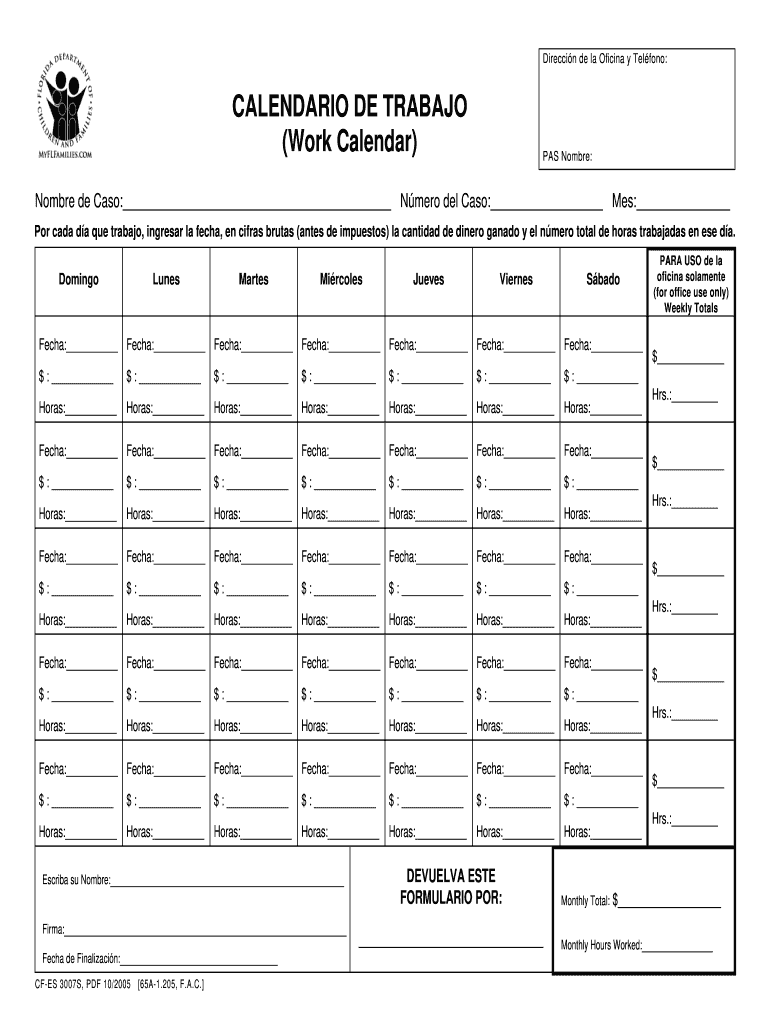
The DCF work calendar is a vital document utilized primarily in the context of the Florida Department of Children and Families (DCF) programs. It serves as a record-keeping tool specifically designed for individuals who are self-employed or receiving assistance through DCF. This calendar tracks daily work hours and earnings, ensuring that recipients can accurately report their income, which is crucial for determining eligibility for various assistance programs.
Typical elements of the DCF work calendar include:
- Dates: Entries for each day of the week to document work activity.
- Gross Earnings: Sections to record gross income earned per day.
- Total Hours Worked: Space for capturing the hours worked each day, with monthly total calculations to provide an overview of income and activity.
Understanding the DCF work calendar's significance is essential for recipients, as it directly affects benefits eligibility and compliance with state assistance programs.
How to Use the DCF Work Calendar Effectively
Utilizing the DCF work calendar involves several straightforward steps to ensure accurate and complete documentation of work activities. Here are key guidelines for effective usage:
- Daily Tracking: Each day, record the number of hours worked and the gross earnings. This can help illustrate income fluctuations over the month.
- Monthly Overview: At the end of each month, ensure all totals are calculated clearly. This summary will aid in understanding trends in earnings and hours worked.
- Legibility and Accuracy: Maintain neat handwriting or utilize a digital version to avoid errors that could lead to complications in benefit calculations.
- Documentation: Frequently back up records, especially if using a digital version. Save your completed calendars to ensure easy access during DCF reviews.
Using the DCF work calendar accurately can facilitate seamless reporting to DCF and assist in maintaining good standing within state programs.
Steps to Complete the DCF Work Calendar
Completing the DCF work calendar requires attention to detail and systematic entry of information. Here's a breakdown of the steps involved:
-
Start with Basic Information: At the top of the calendar, enter personal information, such as your name and case number. This helps associate the calendar with your DCF account.
-
Daily Entries:
- For each day, record the date.
- Enter the total hours worked.
- Document gross earnings for that day.
-
Monthly Totals:
- Sum all recorded hours to calculate the monthly total.
- Add all gross earnings to find the total income for the month.
-
Review for Accuracy: Before finalizing your calendar, go through each entry to ensure that there are no discrepancies or errors.
-
Submission: After completing the calendar, submit it to DCF as per the required submission guidelines—either digitally, by mail, or in person.
By following these outlined steps, users can ensure that their DCF work calendar is accurately completed and ready for submission.
Important Terms Related to the DCF Work Calendar
Familiarity with specific terms related to the DCF work calendar can enhance understanding and usability of the document. Notable terms include:
- Gross Earnings: The total income before any deductions or expenses are applied, crucial for calculating benefits.
- Self-Employment: A working arrangement where individuals are their own bosses, requiring accurate reporting of income to maintain assistance eligibility.
- DCF: The Department of Children and Families, which oversees various assistance programs, including those for low-income families and individuals.
- Eligibility Criteria: Standards that must be met to qualify for DCF assistance programs, often linked to reported income and work activity.
Understanding these terms helps clarify the procedures and requirements involved with utilizing the DCF work calendar effectively.
Legal Use of the DCF Work Calendar
The DCF work calendar is recognized legally within the framework of state assistance programs. Proper use of this document supports compliance with state regulations regarding income reporting for benefit determination. Key legal aspects include:
- Document Accuracy: Ensuring that all entries are truthful and accurate helps avoid penalties or disqualification from programs.
- Retention of Records: Recipients are often advised to keep copies of submitted calendars and related documentation for personal records and potential audits.
- Timeliness: Submitting work calendars on time is essential for maintaining continuous eligibility for benefits, adhering to legal deadlines set by DCF.
The work calendar not only serves as a tracking tool but also fulfills legal obligations to report earnings and work status accurately.
Examples of Using the DCF Work Calendar
Practical scenarios can provide insight into how the DCF work calendar is utilized effectively. Here are some common examples:
-
Self-Employed Individuals: A freelance graphic designer tracks daily projects, recording hours and revenue. This data supports applications for financial assistance and enhances budgeting efforts.
-
Part-Time Workers: A retail employee updating the calendar weekly to reflect fluctuating hours, ensuring that gross earnings are recorded accurately to comply with DCF requirements.
-
Assistance Seekers with Multiple Jobs: Individuals juggling several part-time jobs can use the calendar to aggregate hours and income effectively, facilitating compliance with assistance program criteria.
In these cases, the DCF work calendar acts as a comprehensive tool for tracking income and reporting it to DCF, thus ensuring assistance eligibility.