







Definition and Purpose of the Backflow Report Asset Form
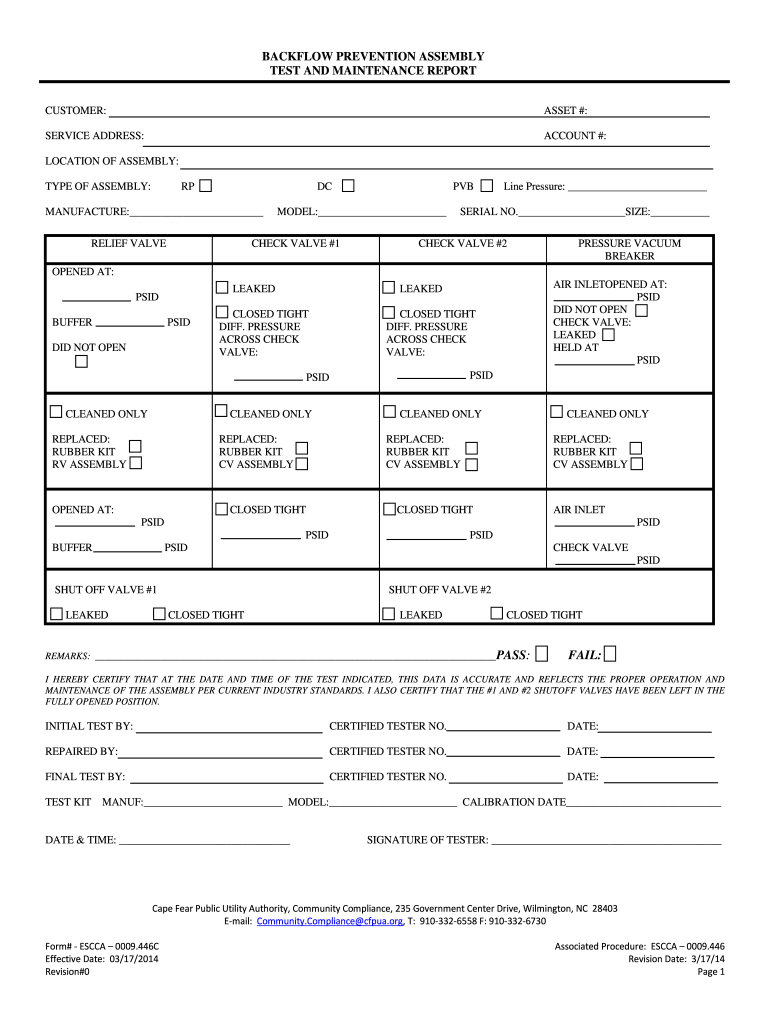
The backflow report asset form is a crucial document in the realm of water safety and public health. It provides detailed information regarding the testing and maintenance of backflow prevention assemblies, which are critical in preventing the reverse flow of contaminants into potable water supplies. This form typically includes specific sections for customer details, the type of backflow prevention assembly, and test results for numerous components, such as check valves and shut-off valves. By ensuring accurate reporting of these components, the form plays a vital role in regulatory compliance and public safety.
It is commonly utilized by various stakeholders, including water utility companies, property owners, and certified testers. For instance, if a commercial property undergoes regular inspections, the form facilitates transparency between the property owner and the public utility authority. Furthermore, it typically requires a certification area where a licensed tester confirms that the assembly is functioning correctly, ensuring that health standards are consistently met.
Relevant Terminology
Understanding the relevant terminology associated with the backflow report asset form is essential to its effective use:
- Backflow Prevention Assembly: A device that prevents contaminated water from flowing back into the clean water supply.
- Certified Tester: A qualified individual who performs inspections and tests on backflow prevention assemblies to ensure compliance with state regulations.
- Test Results: Data collected during inspections that indicate the operational status of each component within the backflow assembly.
Having a clear grasp of these terms helps ensure that the form is accurately filled out and aligns with industry standards.
How to Use the Backflow Report Asset Form
Using the backflow report asset form effectively involves several well-defined steps that ensure accurate completion and submission. The goal is to capture crucial testing data surrounding backflow prevention assemblies thoroughly.
Step-by-Step Process
-
Gather Required Information:
- Obtain the specifics of the testing site including the address and water service account information.
- Collect the model and serial number of the backflow prevention assembly being tested.
-
Enter Customer Information:
- Clearly document the customer’s name, address, and contact details.
- Verify that the servicing company's details are included to maintain accountability.
-
Detail Assembly Type and Installation:
- Fill in information regarding the type of assembly, its installation date, and location.
- Include notes on any previous maintenance problems or repairs made.
-
Record Test Results:
- Fill out the test results for various components, including check valves, shut-off valves, and relief valves.
- Ensure that all results are certified and signed by a licensed tester.
-
Submit the Form:
- Once completed, submit the form to the appropriate public utility authority or regulatory body. Keep copies for your records.
Following these steps helps ensure that the form is not only filled out correctly but also complies with any local regulations regarding backflow testing.
Importance of the Backflow Report Asset Form
The backflow report asset form serves multiple critical functions that contribute to public health and safety.
Ensures Compliance with Regulations
Complying with local and state regulations is paramount for water utilities and properties utilizing backflow prevention assemblies. Failure to submit accurate backflow reports can result in penalties or administrative actions, highlighting the need for meticulous record-keeping.
Protects Public Health
By monitoring and maintaining backflow prevention systems, the form helps shield public drinking water supplies from contamination. This is especially important in residential and commercial areas where multiple backflow assemblies are in active use.
Facilitates Accountability
The form provides a historical record of testing, repairs, and maintenance. This accountability is crucial for regulatory inspections and can help to identify potential issues before they pose a risk to public safety.
Key Elements of the Backflow Report Asset Form
Understanding the key elements of the backflow report asset form is essential for accurate and thorough completion. Each section serves a specific function.
Customer and Property Information
- Customer Name and Address: Essential for identifying the property under inspection.
- Contact Information: Facilitates communication for any follow-up needed.
Assembly Details
- Assembly Type: Specifies the type of backflow prevention assembly installed.
- Model and Serial Number: Helps track and identify each individual assembly efficiently.
Test Results and Certification
- Component Test Results: Include detailed outcomes for the check valves and other assembly parts to ensure safe and efficient operation.
- Tester Certification: Signature of a certified tester who verifies that the assembly has been correctly tested and functions properly.
Compliance Check
- Date of Inspection: Indicates when the testing was performed.
- Signature of Property Owner: Confirms that the report is acknowledged and accurate.
This structured format not only promotes clarity but also enables regulatory agencies to process and review the reports efficiently.
Legal Use and Compliance Considerations
The backflow report asset form also has legal implications that need to be considered by property managers and utility companies.
Regulatory Framework
- Most states have specific regulations governing the use of backflow prevention assemblies and the necessary reporting procedures. Having a comprehensive understanding of these regulations ensures that the form is completed in alignment with legal requirements.
Documentation for Inspections
When certified testers fill out the backflow report asset form, they are documenting their findings which may be subject to scrutiny during compliance audits. Therefore, it is vital that all data entered is precise and reflects true conditions observed on-site.
Consequences of Non-Compliance
Failing to submit accurate backflow reports can result in fines, the inability to pass health inspections, and increased scrutiny from regulatory authorities. This underscoring the importance of maintaining meticulous records and ensuring full compliance with local legislation.
Being informed about these legal considerations can provide peace of mind and establish a routine that prioritizes safety and regulatory adherence.




