
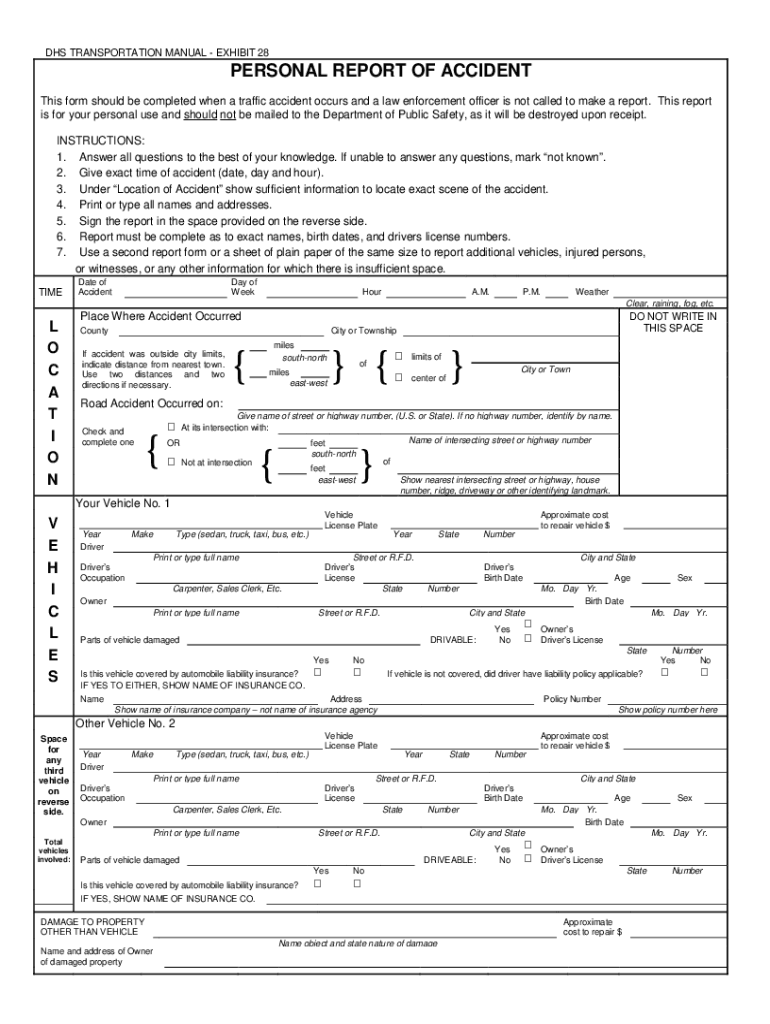







Definition & Meaning of the SR13 Form in Georgia
The SR13 form, also known as the Georgia Self-Report Accident Form, is utilized to report accidents that do not involve law enforcement intervention. This form is particularly relevant for individuals who need to document incidents for insurance purposes or personal records. The SR13 serves as a comprehensive report that captures essential details about an accident without filing a police report, making it a valuable tool for individuals involved in minor collisions or incidents where law enforcement is not present.
Key Elements of the SR13 Form
The SR13 form includes several key components designed to ensure thorough documentation of an incident:
- Accident Details: This section outlines the time, date, and location of the accident. It's vital to be as precise as possible to avoid discrepancies.
- Driver and Vehicle Information: Contributors must provide their names, addresses, and contact information, along with the vehicle's make, model, and license plate number.
- Witness Accounts: This area allows individuals to include contact information for any witnesses to the accident, offering additional support for the information submitted.
- Injury Reports: It’s critical to detail any injuries sustained during the accident. This contributes to insurance claims and potential medical documentation later.
- Insurance Information: The form requires the details of all involved parties' insurance providers, important for processing claims.
Completing these sections accurately is essential for the effective use of the form.
Steps to Complete the SR13 Form
Filling out the SR13 form can be straightforward if you follow these steps:
- Gather Information: Start by collecting all necessary information regarding the accident, including details of all parties involved.
- Fill in Accident Details: Clearly indicate the time, date, and location of the accident. Be mindful of accuracy as this details how the incident unfolded.
- Provide Driver and Vehicle Information: Input your information as well as others involved, ensuring you have the correct vehicle registrations.
- Document Witness Information: If there were any witnesses, list their details so that insurance providers can contact them if necessary.
- Describe Injuries and Damage: Specify any injuries and the extent of damage to vehicles involved. This is crucial for insurance assessments.
- Review and Sign: Finally, review the completed form for any inaccuracies before signing it to validate the reported information.
Following these steps can help ensure that all pertinent information is captured for your records and any potential claims.
Who Typically Uses the SR13 Form
The SR13 form is predominantly utilized by drivers involved in minor vehicle accidents without the presence of law enforcement. Typical users include:
- Private Vehicle Owners: Individuals involved in minor collisions often complete the form to document events for their insurance companies.
- Commercial Drivers: Employees operating commercial vehicles may use the SR13 when accidents occur that do not warrant police involvement.
- Insurance Adjusters: Professionals may request the form from clients to process claims efficiently.
- Legal Representatives: Attorneys may refer clients to use the SR13 for documenting accidents pertinent to legal cases.
This form serves as a critical document for individuals who frequently find themselves involved in vehicle accidents.


Importance of the SR13 Form for Insurance Purposes
The SR13 form holds significant value for insurance-related matters:
- Documentation for Claims: Insurance providers often require this form to process any claims resulting from accidents. It provides a clear account of what transpired.
- Proof of Incident: The form serves as written evidence of the accident, assisting in any disputes about the details or circumstances.
- Injury Claims: It can be useful in supporting personal injury claims, as it records injuries at the time of the accident.
Using the SR13 form can significantly streamline the process of filing insurance claims and resolving any disputes from an accident.
Legal Use of the SR13 Form
The SR13 form is recognized legally in the state of Georgia for the documentation of non-reportable accidents. Key legal considerations include:
- Compliance with State Regulations: Using the form correctly complies with Georgia law regarding vehicle accidents. It is advisable to understand any specific requirements for self-reporting.
- Preservation of Evidence: The form helps preserve the facts of an incident, which can be crucial in potential litigation.
- Non-Submission to Law Enforcement: Since this form is utilized when police involvement is not necessary, it must be understood that it is intended for personal documentation and insurance reporting, not as an official police report.
Understanding the legal context of the SR13 form enables users to make informed decisions regarding documentation and claims processing.




