




Here's how it works

01. Edit your form online
Type text, add images, blackout confidential details, add comments, highlights and more.

02. Sign it in a few clicks
Draw your signature, type it, upload its image, or use your mobile device as a signature pad.

03. Share your form with others
Send it via email, link, or fax. You can also download it, export it or print it out.
How to use or fill out Child Registration Form - Sleep medicine with our platform

- Click ‘Get Form’ to open the Child Registration Form - Sleep medicine in the editor.
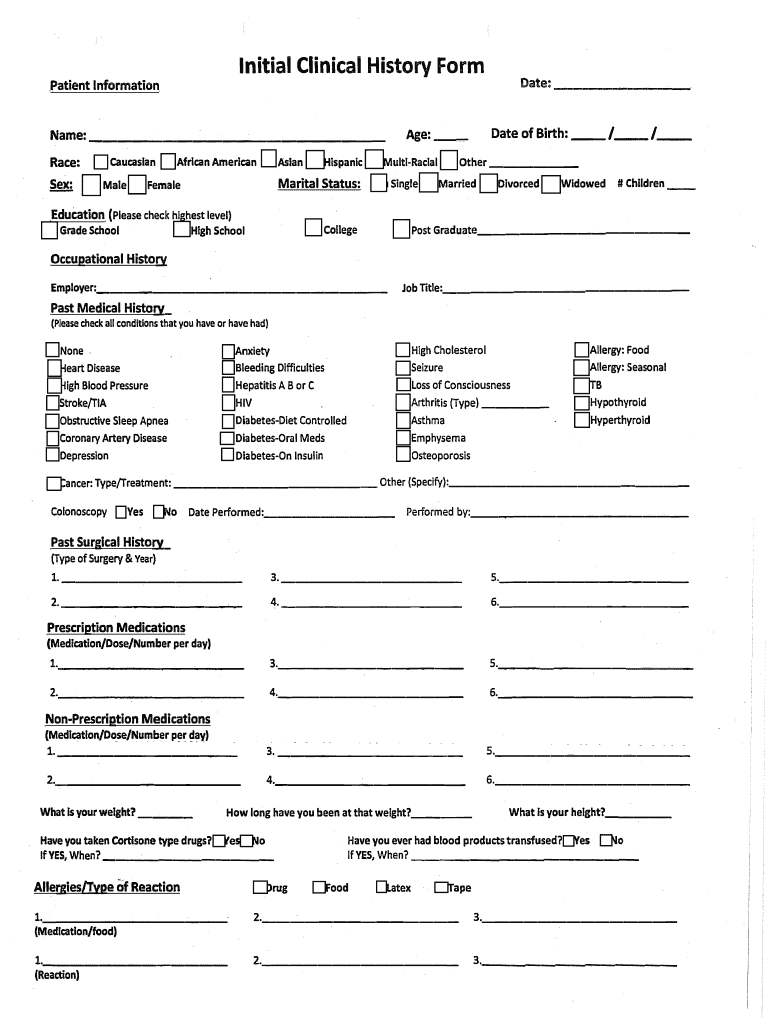
- Begin by entering the child's name and date of birth in the designated fields. Ensure accuracy as this information is crucial for identification.
- Fill out the sections regarding medical history. Check all relevant conditions that apply, such as sleep apnea or allergies, to provide a comprehensive overview of the child's health.
- Complete the occupational history if applicable, detailing any relevant information about the child’s environment that may affect their sleep.
- In the social history section, indicate any tobacco or alcohol exposure and exercise habits. This helps in understanding lifestyle factors impacting sleep.
- Review all entered information for accuracy before submitting. Use our platform's features to save your progress or share it with healthcare providers directly.
Start filling out your Child Registration Form - Sleep medicine today for free and streamline your documentation process!
Fill out Child Registration Form - Sleep medicine online
It's free
It's free
See more Child Registration Form - Sleep medicine versions
We've got more versions of the Child Registration Form - Sleep medicine form. Select the right Child Registration Form - Sleep medicine version from the list and start editing it straight away!
| Versions | Form popularity | Fillable & printable |
|---|---|---|
| 2020 | 4 Satisfied (45 Votes) |
Got questions?
We have answers to the most popular questions from our customers. If you can't find an answer to your question, please contact us.
Contact us
What are the five most common sleep disorders?
There are several different types of sleep-wake disorders, of which insomnia is the most common. Other sleep-wake disorders include obstructive sleep apnea, parasomnias, narcolepsy, and restless leg syndrome. Sleep difficulties are linked to both physical and emotional problems.
How to get approved for a sleep study?
A healthcare provider, usually a pulmonologist (a physician specializing in lung and breathing conditions) or a sleep medicine specialist, will recommend a sleep study based on your symptoms and health history.
What do you need to qualify for a sleep study?
Your healthcare professional may recommend a sleep study if its suspected that you have: Sleep apnea or another sleep-related breathing disorder. Periodic limb movement disorder. Narcolepsy. REM sleep behavior disorder. Behaviors during sleep. Long-lasting insomnia.
What diagnosis qualifies for a sleep study?
Sleep tests can help your doctor diagnose sleep-related breathing disorders such as sleep apnea, sleep-related seizure disorders, sleep-related movement disorders, and sleep disorders that cause extreme daytime tiredness such as narcolepsy.
What diagnosis covers a sleep study?
Diagnostic sleep studies are covered as an outpatient visit and only for the following conditions: Narcolepsy (If the patient has had documented episodes of cataplexy, diagnostic testing for narcolepsy wouldnt be necessary and wouldnt be covered.) Obstructive sleep apnea syndrome. Impotence.
Security and compliance
At DocHub, your data security is our priority. We follow HIPAA, SOC2, GDPR, and other standards, so you can work on your documents with confidence.
Learn more


People also ask
What is a sleep medicine referral?
A direct referral is defined as, all patients not seen in consultation by a sleep facility staff physician prior to or within three months following an in-laboratory sleep study or a portable monitoring study originally ordered by the patients referring physician.
What makes a sleep study medically necessary?
Healthcare providers usually recommend this test when you have symptoms of conditions that affect sleep, to determine how to treat those conditions or to see if completed treatments worked. These are generally conditions that affect or disrupt your brain, nervous system, breathing and heart function.
What are the requirements for sleep medicine certification?
General Requirements Demonstrate clinical competence, procedural skills, and moral and ethical behavior in the clinical setting; Hold a valid, unrestricted and unchallenged license to practice medicine; and. Pass the Sleep Medicine Certification Examination.


