




01. Edit your dofe bitesize planner online
Type text, add images, blackout confidential details, add comments, highlights and more.

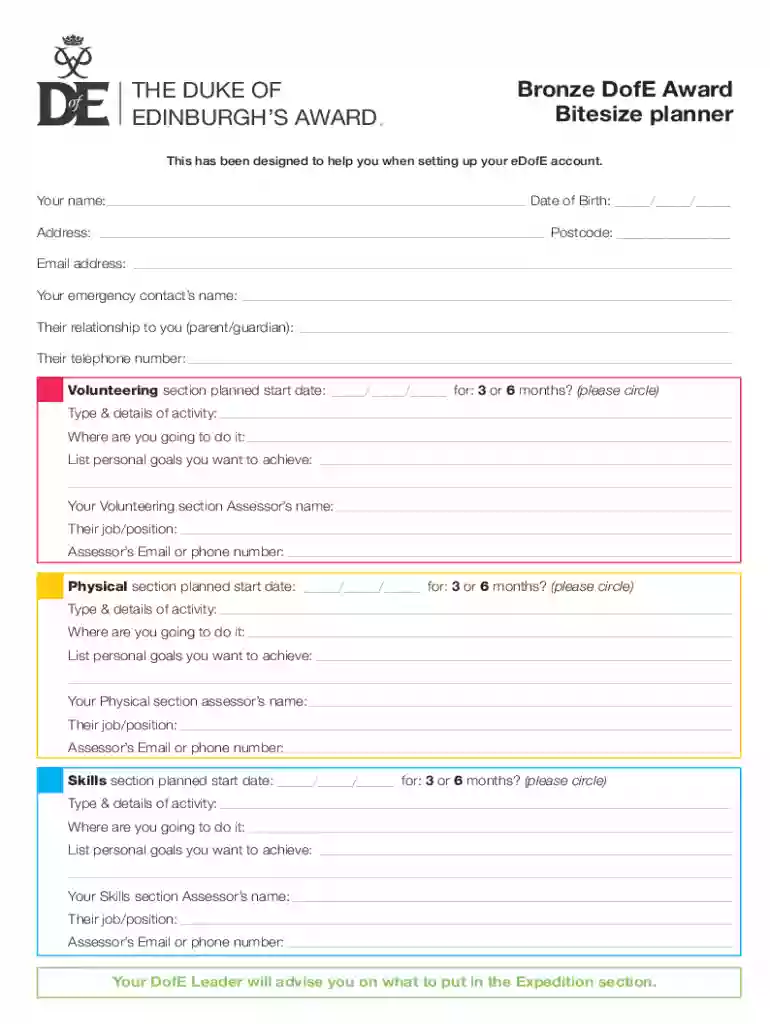
Type text, add images, blackout confidential details, add comments, highlights and more.

Draw your signature, type it, upload its image, or use your mobile device as a signature pad.

Send uk duke of edinburghs award via email, link, or fax. You can also download it, export it or print it out.
The Duke of Edinburgh's Award (DofE) is a well-respected program that encourages personal development and community engagement among young people. It’s structured into three levels: Bronze, Silver, and Gold, each offering a progression of challenges and experiences. This award's framework is designed to help participants develop essential life skills, build resilience, and gain a sense of achievement through various activities, including volunteering, learning new skills, and engaging in physical challenges.
Bronze Level: This is the entry-level award suited for those aged fourteen and older. It requires participants to complete a series of activities in volunteering, physical fitness, and skills development, along with a qualifying expedition.
Silver Level: Designed for participants aged fifteen and older, the Silver level builds on the skills developed at the Bronze level, requiring more hours of participation and introducing a longer expedition component.
Gold Level: Accessible to those aged sixteen and above, the Gold award is the most challenging. It involves a commitment to longer expeditions, additional activities in a chosen area, and a focus on leadership and personal development.
Engagement in each level is aimed at advancing not just skills but also personal growth through challenges and experiences.
The Duke of Edinburgh's Award comprises four main sections that participants must complete at all levels, with specific requirements based on the level they are pursuing.
Volunteering: Engaging in a cause or community initiative helps participants make a positive impact while learning about responsibility and the importance of giving back.
Physical: A commitment to improving physical fitness through various activities promotes health, discipline, and goal-setting.
Skills: Developing new skills fosters personal interests and talents, encouraging participants to pursue learning in areas they are passionate about.
Expedition: Participants undertake an adventurous journey to enhance teamwork and navigation skills while understanding the importance of outdoor safety and environmental awareness.
To get started with the DofE program, participants need to set up an eDofE account, which is a digital platform for managing their award journey. The following steps are typically involved:
Account Creation: Participants create an account by providing personal details and selecting the level of the award they wish to pursue.
Planning Activities: Users must outline their chosen activities for each section, including details like duration and assessors.
Monitoring Progress: The platform allows participants to track their ongoing progress by logging hours spent on each section and receiving feedback from assessors.
Submitting for Approval: Once participants complete the required activities, they submit their records for approval through the eDofE system, which streamlines the verification process.
Participating in the DofE program offers numerous benefits that extend beyond the completion of the award itself:
Skill Development: Participants enhance both hard and soft skills that are highly valued by employers, including teamwork, communication, and problem-solving abilities.
Increased Confidence: Overcoming challenges and achieving set goals contributes to greater self-esteem and a sense of accomplishment.
Networking Opportunities: Engaging with other participants provides a chance to build relationships, share experiences, and create a supportive community.
Recognition: The award is recognized globally, making it a notable addition to any personal resume or college application, showcasing dedication and personal growth.
Completing the Duke of Edinburgh's Award requires commitment and careful planning. Participants must:
Set Realistic Goals: Each section should have achievable targets that consider personal interests and time availability.
Regularly Review Progress: Maintaining a consistent routine helps ensure participants stay on track with their activities.
Engage with Assessors: Regular communication with assessors aids in receiving guidance and feedback, improving the overall experience.
Prepare for Expeditions: Adequate preparation ensures readiness for the challenges posed during the expedition, including physical fitness, navigation skills, and safety awareness.
By understanding these components and actively engaging, participants can make the most of their DofE journey, leading to personal growth and enriching life experiences.
We've got more versions of the dofe bitesize planner form. Select the right dofe bitesize planner version from the list and start editing it straight away!
| Versions | Form popularity | Fillable & printable |
|---|---|---|
| 2015 | 4.8 Satisfied (110 Votes) |
At DocHub, your data security is our priority. We follow HIPAA, SOC2, GDPR, and other standards, so you can work on your documents with confidence.
by R White 2001 The Duke of Edinburghs Award adopted flexible and creative strategies for delivering the expeditions section since the UK countryside was severely restricted
by E van Baren 2015 Cited by 7 The Duke of Edinburghs International Award is a youth achievement Award program that aims to engage young people in purposeful activities focused on gaining


