





Here's how it works
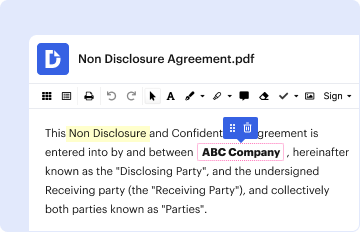
01. Edit your inuka membership registration online
Type text, add images, blackout confidential details, add comments, highlights and more.
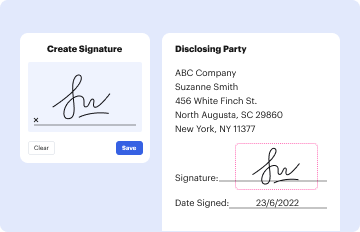
02. Sign it in a few clicks
Draw your signature, type it, upload its image, or use your mobile device as a signature pad.
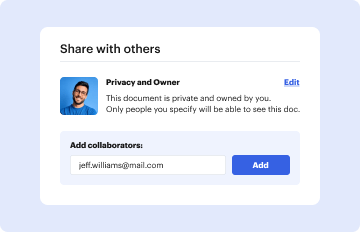
03. Share your form with others
Send inuka membership registration form via email, link, or fax. You can also download it, export it or print it out.
How to use or fill out Economy and financeSouth African Government with our platform

- Click ‘Get Form’ to open the Economy and financeSouth African Government document in the editor.
- Begin by entering your personal information in the 'New Member Personal Information' section. Fill in your first name, surname, ID number or passport number, email address, cell number, and birthday.
- In the 'Payment Details' section, indicate the date of payment and amount paid. Ensure you use the new member's cell number as a reference when making payments.
- Select your preferred delivery option for the Business Kit under 'Business Kit Delivery Options'. Choose between collection at the front office or courier delivery.
- Choose one of the available Business Kit options (Senior Kit, Junior Kit, etc.) and ensure you understand the associated costs.
- Review all entered information for accuracy before signing at the bottom of the form. Confirm that you agree to INUKA's terms and conditions.
- Submit your completed registration form via fax or email as indicated at the end of the document.
Start using our platform today to streamline your document editing and submission process for free!
Fill out Economy and financeSouth African Government online
It's free
It's free
See more Economy and financeSouth African Government versions
We've got more versions of the Economy and financeSouth African Government form. Select the right Economy and financeSouth African Government version from the list and start editing it straight away!
Got questions?
We have answers to the most popular questions from our customers. If you can't find an answer to your question, please contact us.
Contact us
How does the financial sector contribute to the South African economy?
The financial services sector is at the heart of the South African economy and touches the life of each and every citizen. Financial services allow people to make daily economic transactions, save and preserve wealth to meet future aspirations and retirement needs, and insure against personal disaster.
What government and economy does South Africa have?
South Africa has a mixed economy in which there is a variety of private freedom, combined with centralized economic planning and government regulation. South Africa is a member of the Southern African Development Community (SADC).
What type of government is South Africa?
The South African economy is essentially based on private enterprise, but the state participates in many ways. Through the Industrial Development Corporation, the apartheid-era government set up and controlled a wide array of public corporations, many relating to industrial infrastructure.
How is the economy of South Africa currently?
Recent macroeconomic and financial developments Real GDP growth decelerated from 1.9% in 2022 to 0.6% in 2023, due to persistent electricity shortages, transport sector constraints, and lower international prices for gold and platinum group metals.
What is the role of the government in the economy in South Africa?
The primary mandate of the SARB is to protect the value of the currency in the interest of balanced and sustainable economic growth. In addition to this, the SARB has a statutory mandate to enhance and protect financial stability in South Africa.
Security and compliance
At DocHub, your data security is our priority. We follow HIPAA, SOC2, GDPR, and other standards, so you can work on your documents with confidence.
Learn more


People also ask
What type of economy does South Africa have?
South Africas economy has been muted over the past decade, with GDP increasing by an average of only 0.7% over the ten-year period. Several structural constraints on the supply side of the economy, such as infrastructure bottlenecks, a weak business environment, and low productivity have impeded economic growth.