


Maryland act application 2026

Get Form
maryland dream act application Preview on Page 1

Here's how it works

01. Edit your maryland dream act application online
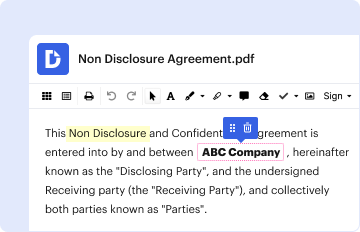
Type text, add images, blackout confidential details, add comments, highlights and more.
02. Sign it in a few clicks
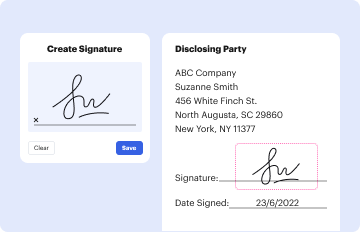
Draw your signature, type it, upload its image, or use your mobile device as a signature pad.

03. Share your form with others
Send md dream via email, link, or fax. You can also download it, export it or print it out.

How to use or fill out Maryland Dream Act Application with our platform

Form edit decoration
9.5
Ease of Setup
DocHub User Ratings on G2
9.0
Ease of Use
DocHub User Ratings on G2
  1. Click ‘Get Form’ to open the Maryland Dream Act Application in the editor.
  2. Begin by filling in your AACC Student ID number, legal last name, and first name. Ensure all information is printed clearly.
  3. Indicate the term and session you are applying for, followed by your current street address, city, state, zip code, and phone number.
  4. In the 'Required Information and Documents' section, check whether this is your initial application or a re-application. Provide necessary documentation such as high school transcripts or GED proof.
  5. Complete the student signature section at the end of the form. Make sure to affirm that all provided information is accurate.
  6. Review your completed application for accuracy before submitting it along with all required documents to ensure eligibility for the special tuition rate.

Start using our platform today to easily fill out your Maryland Dream Act Application for free!

See more maryland act application versions

We've got more versions of the maryland act application form. Select the right maryland act application version from the list and start editing it straight away!
Versions Form popularity Fillable & printable
2020 4.8 Satisfied (182 Votes)
2018 4.3 Satisfied (48 Votes)
be ready to get more

Complete this form in 5 minutes or less

Get form

Got questions?

We have answers to the most popular questions from our customers. If you can't find an answer to your question, please contact us.
Contact us
Homeowners Property Tax Credit Program In other words, it sets a limit on the amount of property taxes any homeowner must pay based upon his or her income. If eligible, this program will reduce the amount of homeowners property taxes you owe. Learn more about eligibility guidelines and how to apply for this program.
Understand the Reason for Denial Common reasons for denial can include: Incomplete Application: Missing documents or signatures can lead to an automatic denial. Eligibility Issues: Not meeting the requirements for the specific exemption, such as age, disability status, or property use.
The Senior Tax Credit is available to homeowners at least 65 for whom the property is their principal residence (see the HOTC page for details); Interested homeowners must submit the Homeowners Tax Credit Application to the Maryland State Department of Assessments and Taxation (SDAT).
Homestead tax exemptions shelter a certain dollar amount or percentage of home value from property taxes. Theyre called homestead exemptions because they apply to primary residences, not rental properties or investment properties. You must live in the home to qualify for the tax break.
Some of the most notable tax benefits in Maryland include: Other tax benefits for retirees in Maryland include: Pension Exclusion: Retirees can exclude up to $36,200 of their pension income from their taxable income.

Security and compliance

At DocHub, your data security is our priority. We follow HIPAA, SOC2, GDPR, and other standards, so you can work on your documents with confidence.

Learn more

People also ask

Relief for Marylanders Marylanders would qualify for these payments who annually earn: $50,954 ($56,844 married filing jointly) with three or more qualifying children. $47,440 ($53,330 married filing jointly) with two qualifying children.
Net worth, excluding the value of the property for which the credit application is being made and the cash value of IRAs or qualified retirement savings plans, must not exceed $200,000, as of December 31, 2024. Combined gross household income cannot exceed $60,000.

Related links