Tenants in common agreement template 2026

Get Form
tenancy in common Preview on Page 1

Here's how it works

01. Edit your tenancy in common online
Type text, add images, blackout confidential details, add comments, highlights and more.
02. Sign it in a few clicks
Draw your signature, type it, upload its image, or use your mobile device as a signature pad.
03. Share your form with others
Send tenants in common agreement template via email, link, or fax. You can also download it, export it or print it out.

How to use or fill out tenants in common agreement template with our platform

Form edit decoration
9.5
Ease of Setup
DocHub User Ratings on G2
9.0
Ease of Use
DocHub User Ratings on G2
  1. Click ‘Get Form’ to open the tenants in common agreement template in the editor.
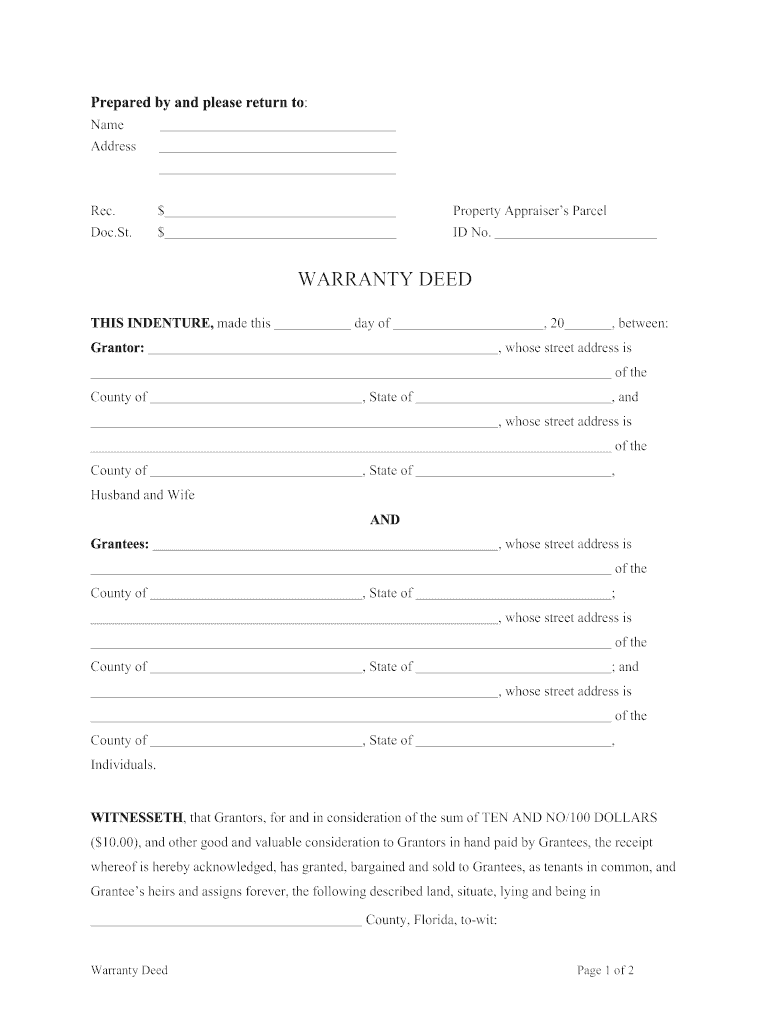
  2. Begin by filling in the 'Prepared by and please return to' section with your name and address. This ensures that all parties are clearly identified.
  3. In the 'Grantor' section, enter the names and addresses of the individuals transferring property rights. Make sure to include all relevant details for each Grantor.
  4. Next, complete the 'Grantees' section with the names and addresses of those receiving property rights. This should reflect all individuals involved in the agreement.
  5. Fill in the legal description of the property being transferred, ensuring accuracy to avoid future disputes. Attach any additional documentation as needed.
  6. Sign and date where indicated, ensuring that witnesses also sign as required. This step is crucial for validating the agreement.
  7. Finally, if applicable, have a Notary Public acknowledge your signatures to finalize the document legally.

Start using our platform today for free to streamline your tenants in common agreement process!

be ready to get more

Complete this form in 5 minutes or less

Get form

Got questions?

We have answers to the most popular questions from our customers. If you can't find an answer to your question, please contact us.
Contact us
Tenants in common is a good idea for couples or co-owners who want control over the handling of their share.
The Bottom Line. Although tenancy in common might seem like a favorable option for owning real estate, there are several disadvantages that you need to be aware of. Joint liability, the lack of right of survivorship, and more could make this kind of arrangement risky.
Despite the many advantages, there are also potential drawbacks to consider with Co-Ownership. a) Limited Usage. b) Potential Main Residence. c) Reduced Control over Management. d) Need for Coordination among Co-Owners. e) Longer-Term Commitment.
In a joint tenancy, a right of survivorship exists. This means that if one of the joint tenants dies, the property will automatically pass to the surviving joint tenant. On the other hand, tenants in common mean that two or more people co-own a property in defined shares that they can dispose of as they wish.
Tenancy in common (TIC) allows multiple parties to hold ownership interests in a property, offering flexibility in ownership percentages. However, unlike joint tenancy, TIC does not grant rights of survivorship, meaning a deceased owners share passes to their estate rather than other co-owners.

Security and compliance

At DocHub, your data security is our priority. We follow HIPAA, SOC2, GDPR, and other standards, so you can work on your documents with confidence.

Learn more
ccpa2
pci-dss
gdpr-compliance
hipaa
soc-compliance

People also ask

While most married couples opt for joint tenancy due to its straightforward inheritance rules, tenancy in common can offer greater flexibility, especially for older couples concerned about estate planning and bequests.

tenants in common template