





Understanding the VOR Form and Its Significance
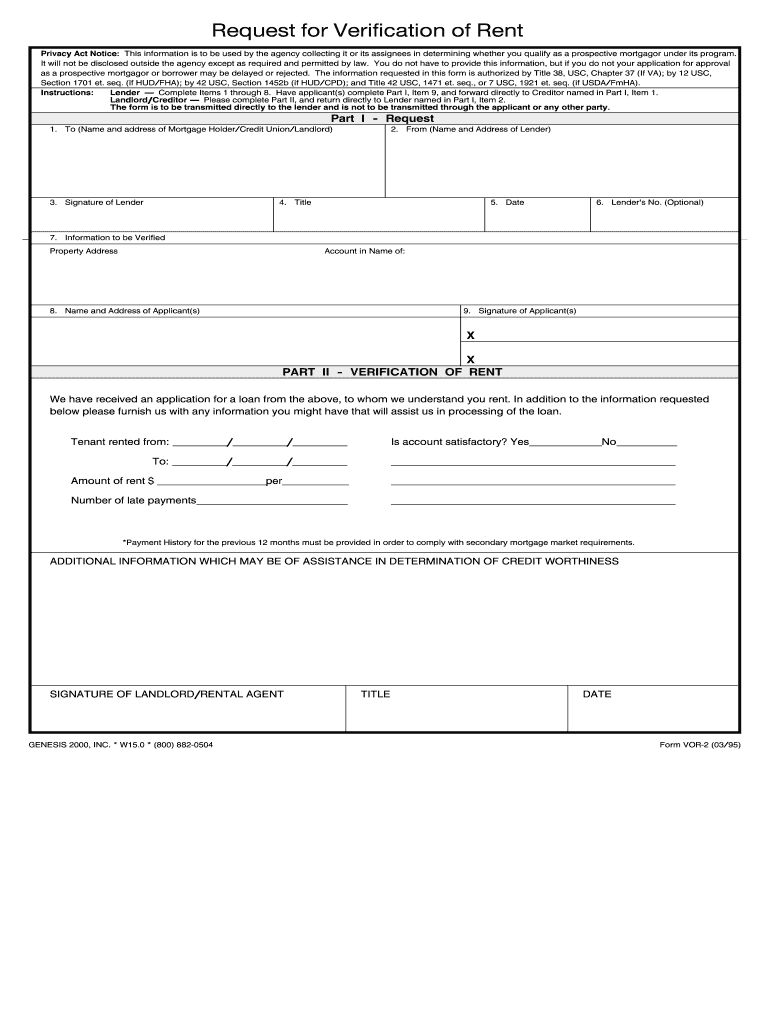
The Verification of Rent (VOR) form is often used by lenders to confirm the rental history of prospective tenants as part of the mortgage application process. It serves to validate rental payments made by applicants, thereby aiding in the assessment of their financial reliability. This form is essential in determining whether an applicant qualifies for credit, as it provides valuable information about their previous rental behavior.
Key Components of the VOR Form
The VOR form typically consists of several critical components that contribute to its effectiveness in documenting rental history:
- Tenant Information: Essential details about the tenant, including full name, contact information, and current address, are required. This ensures that landlords can accurately identify the renter associated with the request.
- Landlord Details: Landlords must provide their name, contact number, and the property address. This information is crucial for lenders to verify the authenticity of the rental history.
- Rental Payment History: This section captures details about payment statuses, including on-time payments, late payments, and any occurrences of defaults. Highlighting payment trends can give lenders a clearer picture of the tenant's reliability.
- Rental Term and Conditions: Lenders need to know the duration of the rental agreement and any specific terms that may affect the applicant's reliability, such as notice periods or conditions of tenancy.
Steps to Complete the VOR Form
Completing the VOR form involves several straightforward steps to ensure accurate and complete information:
- Gather Information: The tenant collects all necessary information such as personal details and rental history.
- Contact Landlord: The tenant should inform the landlord of the VOR request to prevent any delays.
- Fill Out the Form: The VOR template should be completed with accurate data related to the tenant and landlord.
- Submit for Verification: Once filled, the form should be submitted to the landlord for verification. The landlord may require their review before returning it.
- Return the Completed Form: The completed VOR should be sent back to the tenant or directly to the lender according to the established protocol.
Importance of Accurate Data on the VOR Form
Accuracy on the VOR form is critical for several reasons:
- Lender Trust: A well-documented VOR enhances the credibility of the applicant in the eyes of lenders. Missing or inaccurate information may lead to a decline in loan approval.
- Timely Processing: Complete and accurate documentation speeds up the underwriting process. In contrast, discrepancies can result in delays, impacting the overall timeline of loan approvals.
- Risk Mitigation: By providing verified rental histories, lenders can mitigate risks associated with lending to applicants with questionable backgrounds.
Legal Compliance and Fair Use of the VOR Form
The use of the VOR form must adhere to legal guidelines to protect the privacy of tenants and landlords:
- Privacy Regulations: All information collected in the VOR must comply with the Fair Housing Act and the Privacy Act, ensuring that sensitive information is handled appropriately.
- Consent: Tenants should provide consent for their landlords to disclose rental information, preserving transparency during the verification process.
- Data Handling: It is vital that the completed VOR form is securely stored and transmitted to protect against unauthorized access and data breaches.
Common Variations and Templates of the VOR Form
There are several variations of the VOR form that may be utilized depending on the lender's requirements or state regulations:
- FHA Verification of Rent Form: Specifically designed for applicants seeking FHA loans, this version may include unique sections relevant to those guidelines.
- Fannie Mae Verification of Rent: Lenders may use specific forms that align with Fannie Mae’s guidelines in verifying rental histories for applicants.
- Customizable VOR Templates: Many organizations provide templates that can be modified according to specific needs, offering flexibility for landlords and tenants.
Use Cases for the VOR Form
The VOR form is beneficial in various situations, including:
- Mortgage Applications: Most commonly, it is utilized during the mortgage application process to validate the rental history of prospective homeowners.
- Landlord References: It can also act as a reference for landlords when assessing potential tenants, presenting their payment history.
- Financial Assessments: Financial institutions may require the VOR for assessing creditworthiness beyond rental scenarios, often as part of a broader financial picture.
Additional Resources and Support for Using the VOR Form
For further assistance, many resources are available:
- Online Templates and Guides: Numerous online resources provide templates and guidance on filling out the VOR form correctly.
- Legal Consultations: Consulting legal experts can be beneficial for understanding compliance issues around rental verification.
- Contacting Lending Institutions: Direct inquiries to lenders can clarify their specific documentation requirements and processes related to the VOR form.