




Here's how it works
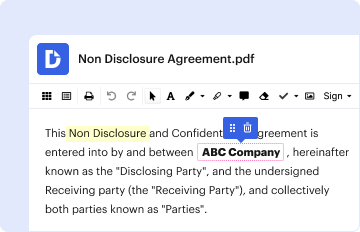
01. Edit your interrogatories defendant online
Type text, add images, blackout confidential details, add comments, highlights and more.
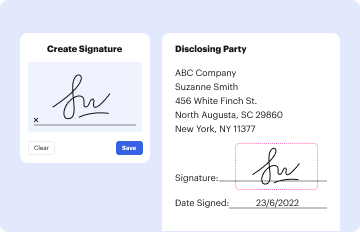
02. Sign it in a few clicks
Draw your signature, type it, upload its image, or use your mobile device as a signature pad.

03. Share your form with others
Send interrogatories defendant sample via email, link, or fax. You can also download it, export it or print it out.
How to use or fill out interrogatories defendant blank with our platform

- Click ‘Get Form’ to open the interrogatories defendant blank in the editor.
- Begin by entering your full name, present address, and date of birth in the designated fields. This information is crucial for identifying you as the defendant.
- For questions regarding any alcohol or drug consumption prior to the incident, provide detailed answers about what was consumed, including quantities and witnesses present.
- If applicable, describe any physical disabilities or illnesses at the time of the incident. Be thorough in detailing how these may have affected your actions.
- List all known witnesses along with their addresses. If some are unknown, provide descriptions to assist in identification.
- Answer questions about statements made regarding the incident, including details about who received these statements and their nature (oral or written).
- Document any evidence such as photographs or reports related to the incident. Include specifics like names and dates where necessary.
- Finally, ensure that all insurance-related queries are answered accurately, providing policy limits and coverage details as required.
Start filling out your interrogatories defendant blank today for free using our platform!
Fill out interrogatories defendant blank online
It's free
It's free
See more interrogatories defendant blank versions
We've got more versions of the interrogatories defendant blank form. Select the right interrogatories defendant blank version from the list and start editing it straight away!
| Versions | Form popularity | Fillable & printable |
|---|---|---|
| 2007 | 4.8 Satisfied (35 Votes) |
Got questions?
We have answers to the most popular questions from our customers. If you can't find an answer to your question, please contact us.
Contact us
What happens if you ignore discovery requests?
The other party might not respond, or s/he could file a motion to compel discovery. A motion to compel discovery is a written request to the judge in which the party seeking discovery asks the judge to issue an order requiring that the other party turns over the requested documents by a certain date or face certain
What happens if the defendant does not answer interrogatories?
A failure to fully answer interrogatories shall be directed to the Courts attention by filing a Motion for Enforcement of Discovery pursuant to Supreme Court Rule 61.01. Compliance with the Golden Rule, as set forth in Circuit Court Rule 33.5, must accompany such motion.
How do you avoid answering interrogatories?
However, you can object to interrogatories that call for legal conclusions. You can also object to questions if they are not at all related to the court case. To object, you need to write out the reasons for the objection instead of answering the question.
What happens if defendant lies in discovery?
Time after time, courts have authorized sanctions for false and misleading discovery responses, up to and including striking the pleading of the offending party.
What happens if someone doesnt answer interrogatories?
If you do not answer the questions by the deadline, which is usually about a month, the other side could ask the judge to order you to respond to the interrogatories. If you miss the second deadline, the judge could impose a fine against you or strike your pleadings.
Security and compliance
At DocHub, your data security is our priority. We follow HIPAA, SOC2, GDPR, and other standards, so you can work on your documents with confidence.
Learn more


People also ask
Who signs the answers to the interrogatories?
(2) The answers are to be signed by the person making them, and the objections signed by the attorney making them. (3) The party upon whom the interrogatories have been served shall serve a copy of the answers, and objections if any, within 30 days after the service of the interrogatories.
Does a defendant have to answer interrogatories?
Rule 33 (b), Federal Rules of Civil Procedure , requires the respondent to answer an interrogatory separately and fully in writing and under oath, unless the respondent objects, in which event the party objecting shall state with specificity the reasons for objection and shall answer to the extent the interrogatory is
What are interrogatories to defendants?
Interrogatories are a discovery device used by a party, usually a Defendant, to enable the individual to learn the facts that are the basis for, or support, a pleading with which he or she has been served by the opposing party.