
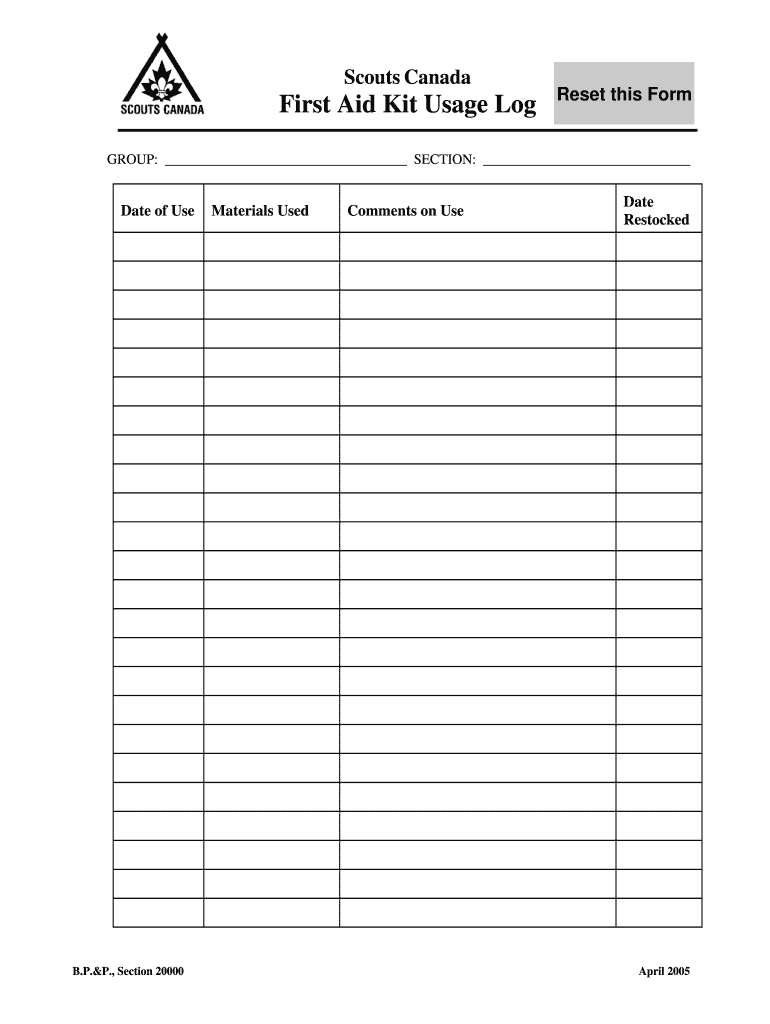







Definition and Meaning of the First Aid Usage Log
A first aid usage log is a systematic record that tracks the use of first aid materials within an organization or group. This log is essential for documenting various incidents where first aid kits are utilized, including the type of aid provided and the materials consumed.
Importance of the First Aid Usage Log
- Provides accountability for first aid kit usage.
- Facilitates timely restocking of supplies.
- Enhances safety management practices by identifying trends in accidents or injuries.
- Supports compliance with Occupational Safety and Health Administration (OSHA) regulations.
Typical Content of a First Aid Usage Log
A first aid usage log generally includes:
- Date of Use: When the first aid materials were used.
- Group/Section: Identification of the group utilizing the materials.
- Materials Used: Specific items taken from the first aid kit (bandages, antiseptics, etc.).
- Comments: Notes regarding each incident, including the nature of the injury or illness.
- Restocking Dates: When items were replenished, ensuring the kit remains fully stocked.
Key Elements of the First Aid Usage Log
Understanding the critical components of a first aid usage log can streamline its effectiveness. Each element plays a unique role in documenting the use and effectiveness of first aid supplies.
Essential Fields in the Log
- Incident Description: A brief explanation of what occurred.
- Respondent’s Name: The person who administered first aid.
- Quantity Used: How many items were taken from the kit during the incident.
- Follow-Up Action: Any further medical attention required post-incident.
Maintaining Accuracy in the Log
Accuracy in logging information is vital. Ensure that:
- All entries are made immediately after an incident to prevent forgetfulness.
- The person responsible for maintaining the log is always available and trained in its importance.
- Regular audits are conducted to verify entries against supply levels.
How to Use the First Aid Usage Log
Using the first aid usage log effectively requires familiarity with its components and best practices for completion.
Steps to Completing the First Aid Usage Log
- Document the Date: Record the exact date when first aid was administered.
- Describe the Incident: Clearly explain what happened, including the type of injury or illness.
- List Materials Used: Detail which first aid supplies were utilized.
- Note the Administering Individual: Include the name of the person who provided first aid.
- Record Follow-Up: Indicate if the individual needed more medical attention afterwards.
Regular Review and Updates
Conduct periodic reviews of the first aid usage log:
- Evaluate the frequency and types of incidents to identify high-risk areas.
- Adjust training and safety protocols accordingly.
Legal Use of the First Aid Usage Log
Legal considerations play a crucial role in how the first aid usage log is maintained and utilized.
Compliance with OSHA Regulations
- Many workplaces are required by OSHA to maintain records of workplace injuries and first aid responses.
- The first aid usage log can serve as an effective tool in demonstrating compliance during audits.
Importance of Confidentiality
- Ensure all entries respect the privacy of individuals involved.
- Avoid using identifiable information in reports that could breach confidentiality guidelines.
Examples of Using the First Aid Usage Log
Practical examples illustrate how to utilize the first aid usage log effectively across different scenarios.
Scenario 1: Office Environment
In an office setting, an employee sprains their ankle. The following items are used from the first aid kit:
- Ice pack
- Elastic bandage
- Pain relief cream The incident would be logged with the date, names, and materials for future reference.
Scenario 2: School Setting
A student gets a paper cut during a class activity:
- The teacher uses adhesive bandages and antiseptic wipes.
- This event is documented immediately, helping the school monitor the frequency of minor injuries.
Utilizing these examples not only promotes readiness but also enhances the overall safety culture within an organization or community.




