







Understanding the Tinetti Balance Assessment
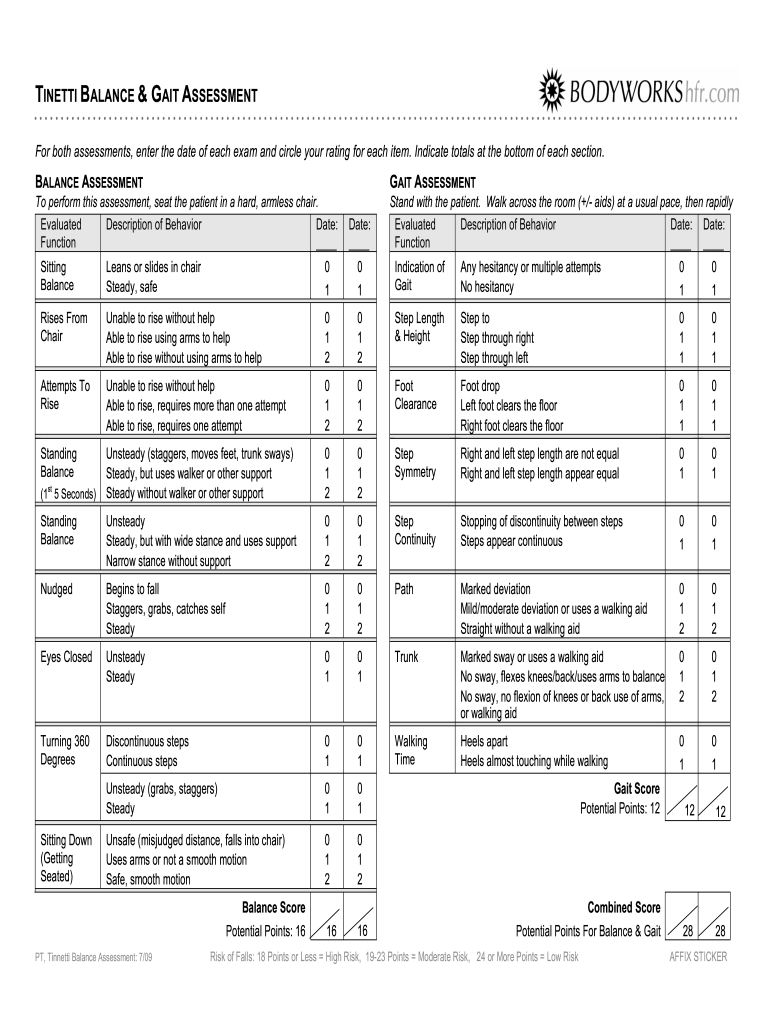
The Tinetti Balance Assessment, often referred to as the Tinetti test or Tinetti balance test, serves as a vital tool for evaluating a patient’s balance and gait abilities. This assessment consists of two primary components: the balance subtest and the gait subtest. The total score from these tests helps determine the patient's risk of falling, guiding further care and intervention strategies.
Components of the Tinetti Balance Assessment
- Balance Subtest: This part assesses various aspects of balance, including the ability to sit, stand, and transfer.
- Gait Subtest: Focuses on evaluating the patient’s walking abilities, such as stride length and path stability.
A total score is calculated by combining the results from both sections, typically ranging from zero to twenty-eight, with lower scores indicating a higher risk of falls.
Scoring System and Interpretation
The Tinetti scoring system includes specific criteria for evaluating each position and movement required during the tests.
- Rating Scale: Each aspect is rated from zero (unable) to two (independent), enabling detailed evaluation.
- Total Score Assessment:
- 25-28: Low fall risk
- 19-24: Medium fall risk
- 0-18: High fall risk
This scoring interpretation is crucial for healthcare providers to design individualized intervention plans and follow-up assessments.
Practical Instructions for Administration
Conducting the Tinetti Balance Assessment requires careful attention to detail. Here’s a simplified guide for healthcare professionals:
- Preparation: Ensure a safe and clear environment for the patient to perform the tests.
- Instructions: Clearly explain each component to the patient, ensuring they understand what is expected during the test.
Specific steps include:
- Assess the patient’s ability to transfer from a seated to a standing position.
- Observe their balance while standing and perform various movements, such as turning and reaching.
- Measure gait by analyzing walking speed and stride characteristics.
Applications of the Tinetti Assessment
The Tinetti Balance Assessment is predominantly used in clinical settings with various patient populations, particularly older adults. It can also be adapted for:
- Rehabilitation Centers: To evaluate recovery progress in patients after injury or surgery.
- Long-Term Care Facilities: For regular monitoring of patients at risk of falls.
Documenting Results and Follow-Up Actions
After conducting the Tinetti assessment, proper documentation is essential. The Tinetti score sheet should detail each evaluated aspect, along with the total score.
- Follow-Up Recommendations: Based on the score, healthcare providers can recommend interventions such as:
- Strength training exercises
- Home safety evaluations
- Referrals to physical therapy for balance training
This systematic approach ensures that patient needs are met promptly and effectively while minimizing the risk of falls.
Related Tools and Resources
To enhance the utility of the Tinetti Balance Assessment, various related resources can be beneficial:
- Tinetti Test PDF: A printable version of the Tinetti test for easy reference.
- Tinetti Calculator: Online tools that assist in scoring the assessment and providing instantaneous recommendations.
Utilizing these resources can streamline the assessment process, ensuring comprehensive care for patients requiring balance evaluation.
Key Considerations
When implementing the Tinetti Balance Assessment, it is crucial to consider factors such as:
- Patient Cooperation: Patients must feel comfortable and willing to engage with the assessment.
- Environmental Safety: Adjustments should be made to optimize safety, especially for high-risk individuals.
By being mindful of these considerations, healthcare providers can maximize the assessment's effectiveness and offer more tailored interventions for patient wellness.




