




Here's how it works
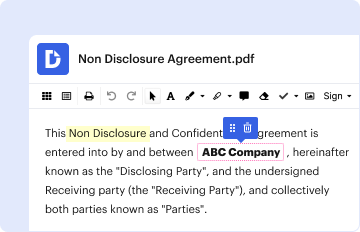
01. Edit your arap form online online
Type text, add images, blackout confidential details, add comments, highlights and more.
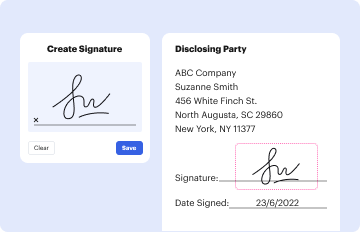
02. Sign it in a few clicks
Draw your signature, type it, upload its image, or use your mobile device as a signature pad.

03. Share your form with others
Send it via email, link, or fax. You can also download it, export it or print it out.
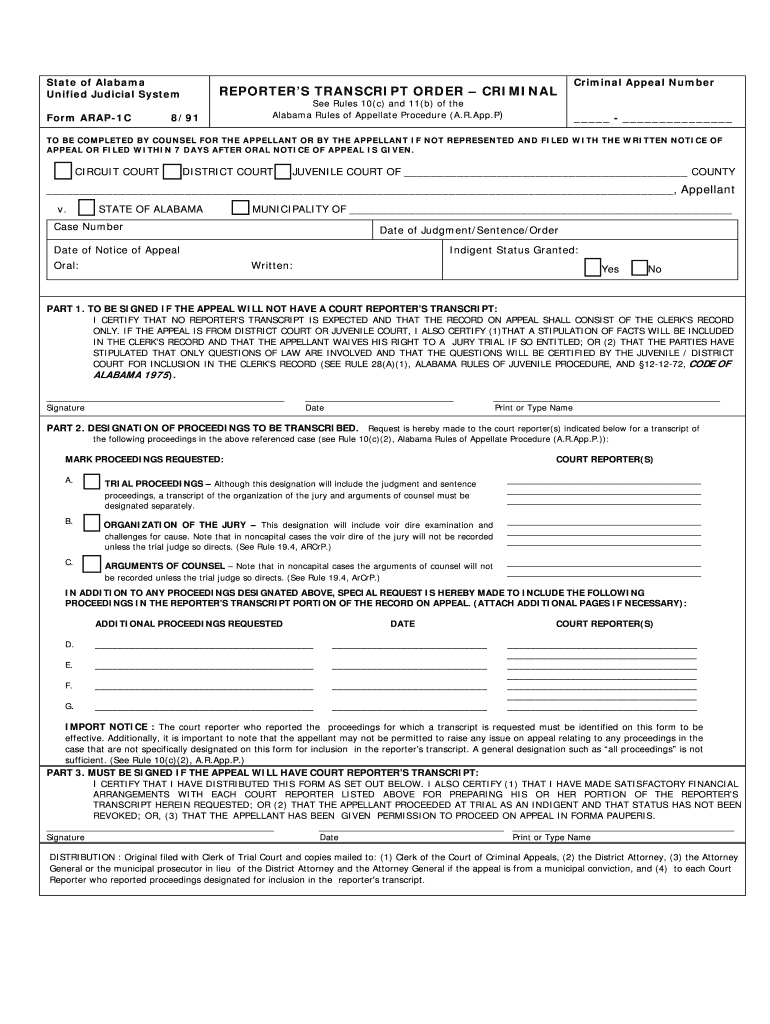
How to use or fill out al criminal form with our platform

- Click ‘Get Form’ to open the al criminal form in the editor.
- Begin by entering the Criminal Appeal Number at the top of the form. This is essential for identifying your case.
- Fill in the court type (Circuit, District, or Juvenile) and specify the county where your case is being heard.
- Provide your name as the Appellant and include details about the State of Alabama and any relevant municipality.
- Enter the Case Number, Date of Judgment/Sentence/Order, and Date of Notice of Appeal. Ensure accuracy in these fields.
- Indicate if indigent status was granted by selecting 'Yes' or 'No'.
- If no court reporter’s transcript is expected, sign Part 1 certifying this. If a transcript is needed, complete Part 2 by marking requested proceedings.
- In Part 3, certify that you have made financial arrangements with court reporters or indicate your indigent status if applicable.
Start filling out your al criminal form today for free using our platform!
Fill out al criminal form online
It's free
It's free
See more al criminal form versions
We've got more versions of the al criminal form form. Select the right al criminal form version from the list and start editing it straight away!
| Versions | Form popularity | Fillable & printable |
|---|---|---|
| 1991 | 4.8 Satisfied (103 Votes) |
Got questions?
We have answers to the most popular questions from our customers. If you can't find an answer to your question, please contact us.
Contact us
What is the rule 32 of Criminal Procedure?
Rule 32 of the Federal Rules of Criminal Procedure provides that the probation officer shall conduct a presentence investigation and submit a report to the Court at least seven days before the imposition of sentence, unless the Court finds that there is sufficient information in the record to enable the meaningful
What is the rule 32 of the civil procedure?
(1) Any deposition may be used by any party for the purpose of contradicting or impeaching the testimony of deponent as a witness, or for any other purpose permitted by the Federal Rules of Evidence.
What is the rule 32 in Alabama Criminal Procedure?
In Alabama, Rule 32 of the Alabama Rules of Criminal Procedure governs state post-conviction challenges to a conviction or sentence.
What happens during a rule 32 proceeding?
In the judgment of conviction, the court must set forth the plea, the jury verdict or the courts findings, the adjudication, and the sentence. If the defendant is found not guilty or is otherwise entitled to be discharged, the court must so order. The judge must sign the judgment, and the clerk must enter it.
Can you look up someones criminal record in Alabama?
To obtain a record, interested persons may use the state online repository or query the Alabama Law Enforcement Agency (ALEA) in person or via mail. In-person or mail-in requests may be made by downloading and completing the ALEA Application to Review Alabama Criminal History Record Information (CHRI).
Security and compliance
At DocHub, your data security is our priority. We follow HIPAA, SOC2, GDPR, and other standards, so you can work on your documents with confidence.
Learn more


People also ask
What is the rule 32 in criminal procedure in Alabama?
Its called a Rule 32 petition because its filed under Rule 32 of the Alabama Rules of Criminal Procedure. Generally speaking, someone would use a Rule 32 petition to attack their conviction once theyve been convicted and once their appeals have gone final. A Rule 32 petition is how someone can get back into court.
What is the rule 17.3 in Alabama Rules of Criminal Procedure?
Rule 17.3. Subpoena duces tecum. (a) PRODUCTION OF BOOKS, PAPERS, ETC. A subpoena may command the person to whom it is directed to produce the books, papers, documents, or other objects which may be designated therein.
What is a motion to suppress in Alabama?
A motion to exclude evidence, or a motion to suppress, is a way to effect this rule. In this motion, a defendant requests that the court exclude certain evidence from a trial. It is a pretrial motion, heard and decided by a judge.