



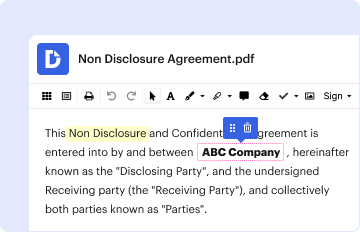
01. Edit your hud declaration of citizenship 214 online
Type text, add images, blackout confidential details, add comments, highlights and more.

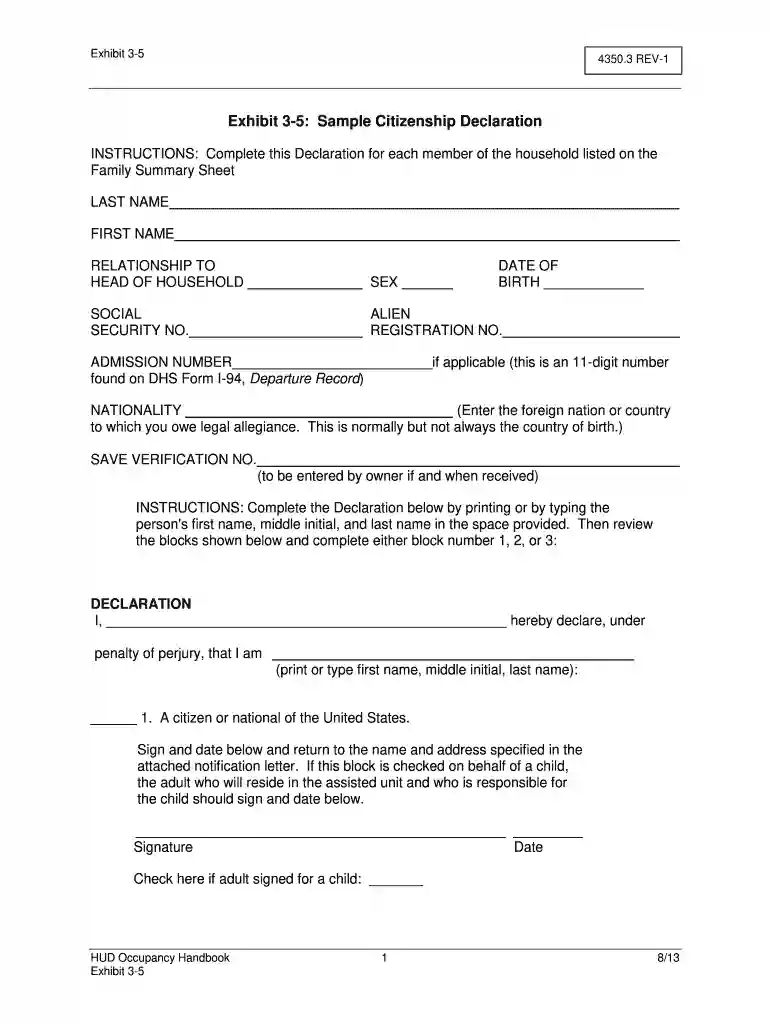
Type text, add images, blackout confidential details, add comments, highlights and more.
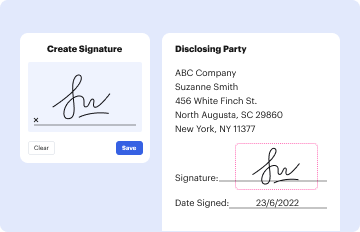
Draw your signature, type it, upload its image, or use your mobile device as a signature pad.
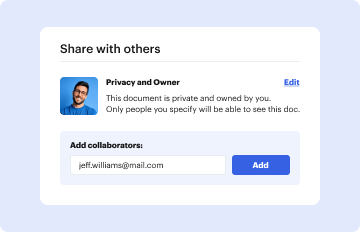
Send declaration of citizenship form via email, link, or fax. You can also download it, export it or print it out.
The declaration of citizenship form is an essential document used primarily in contexts where an individual's citizenship status needs to be established. In the United States, this form plays a crucial role in various applications, particularly in compliance with federal regulations, such as those outlined in the U.S. Department of Housing and Urban Development (HUD) rules. Specifically, it is used to confirm the citizenship status of individuals in housing assistance programs, ensuring that funds are allocated appropriately and that applicants meet eligibility criteria.
The form is typically framed around three main categories:
Understanding the implications of completing this form accurately is vital, as incorrect declarations could lead to legal consequences or loss of benefits.
Obtaining the declaration of citizenship form is a straightforward process, as it is designed to be accessible to all individuals needing to document their citizenship status. Interested parties can usually acquire it through the following means:
Official Government Websites: Forms can often be downloaded directly from relevant federal agency websites, such as the HUD website, where the most current version is provided.
Local Housing Authorities: Individuals can request physical copies from local housing authorities that administer federally funded housing assistance programs.
Community Resources: Nonprofit organizations that assist with housing questions may also have copies available and can provide guidance on how to complete the forms accurately.
Furthermore, for convenience, many organizations offer online access to the forms, making it easy for applicants to fill them out from home.
Completing the declaration of citizenship form requires careful attention to detail. Here is a step-by-step guide to ensure the form is filled out correctly:
Gather Personal Information: Collect relevant identification details, including your name, date of birth, Social Security number, and the names of any household members whose citizenship status is being declared.
Choose Citizenship Status: Indicate your citizenship status by selecting from the defined categories of U.S. citizen, noncitizen with eligible immigration status, or non-eligible status.
Provide Documentation: Depending on your citizenship status, attach necessary documentation proving your status. This might include U.S. birth certificates, passports, or immigration documents for noncitizens.
Read and Sign the Declaration: Carefully read the certification statement to understand the legal implications of your declaration and then sign and date the form, affirming the truthfulness of the information provided.
Submit the Form: Finally, make sure to submit the form according to the instructions provided, whether online, by mail, or in person.
Following these steps can help prevent misunderstandings or errors that might delay your application for assistance.
Understanding the terminology associated with the declaration of citizenship form is important for applicants. Here are several key terms:
Familiarity with these terms helps candidates navigate the process and ensure compliance with legal requirements.
The legal implications of the declaration of citizenship form are significant. It serves as a formal declaration that individuals must represent their citizenship status truthfully. Misrepresentation can result in:
To maintain integrity, it is essential that all information provided on the declaration of citizenship form is accurate and complete.
The declaration of citizenship form is frequently utilized by a range of individuals and entities, primarily including:
Housing Applicants: Individuals or families applying for public housing programs who must verify their citizenship status to qualify for assistance.
Public Institutions: Organizations that administer federal housing assistance programs are required to collect and maintain records of citizenship status for compliance purposes.
Nonprofit Organizations: Groups that aid in housing applications may require this form from clients to help determine eligibility for resources.
Understanding the demographic that relies on this form is key to recognizing its necessity in ensuring equitable access to housing resources.


Real-world scenarios provide insight into the practical application of the declaration of citizenship form:
A family applying for housing assistance in a HUD-funded program completes the form to confirm that all members are U.S. citizens. This allows them to secure aid without delays due to paperwork issues.
A foreign national with lawful permanent residency submits the form, listing their status accurately to gain eligibility for certain housing benefits, aiding their transition to stability.
A community organization helping applicants for HUD programs educates about the need for accurate information on the form, preventing potential legal ramifications for misrepresentation.
These examples illustrate the diverse contexts in which the declaration of citizenship form is imperative for maintaining transparency in housing assistance programs.
We've got more versions of the hud declaration of citizenship 214 form. Select the right hud declaration of citizenship 214 version from the list and start editing it straight away!
| Versions | Form popularity | Fillable & printable |
|---|---|---|
| 2013 | 4.8 Satisfied (274 Votes) |
At DocHub, your data security is our priority. We follow HIPAA, SOC2, GDPR, and other standards, so you can work on your documents with confidence.
DECLARATION OF CITIZENSHIP If you answered yes to this question, please sign this form in the presence of a notary and return it with your application.Read more
Citizenship/Nationality. Mark USA if you are a U.S. Citizen or legally naturalized U.S. Citizen. If you are not a U.S. citizen, mark Other and enter theRead more


