No rise no impact 2026

Get Form
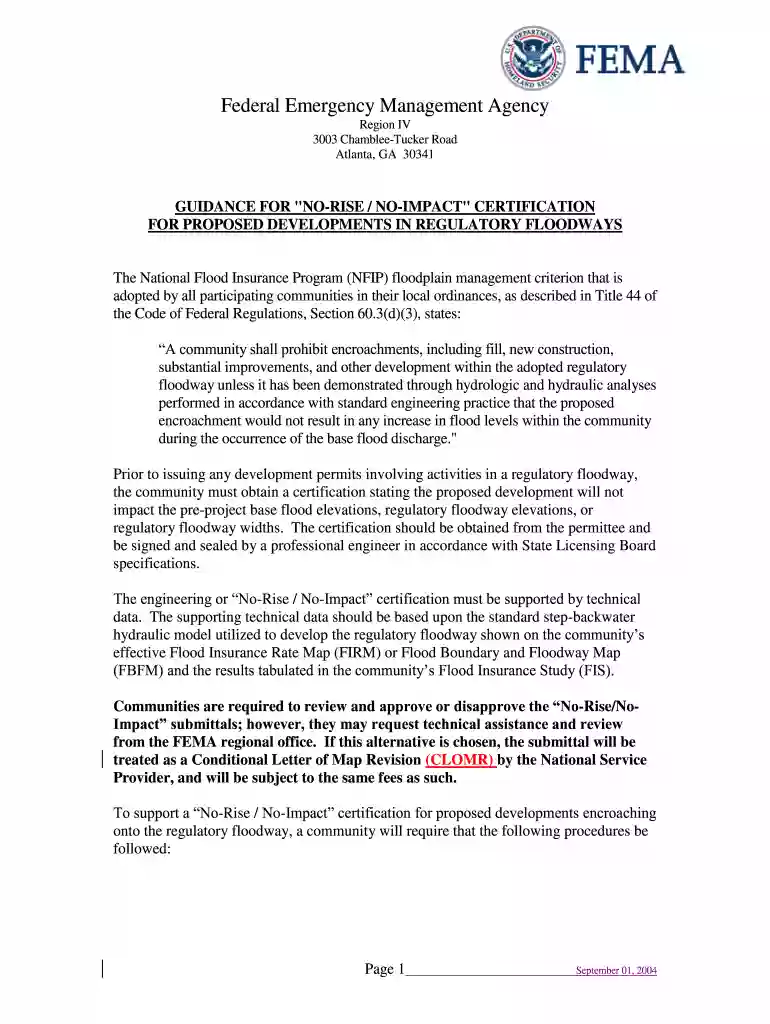
no rise no impact Preview on Page 1

Here's how it works

01. Edit your no rise no impact online
Type text, add images, blackout confidential details, add comments, highlights and more.

02. Sign it in a few clicks
Draw your signature, type it, upload its image, or use your mobile device as a signature pad.

03. Share your form with others
Send no rise certificate via email, link, or fax. You can also download it, export it or print it out.

How to use or fill out no rise no impact with our platform

Form edit decoration
9.5
Ease of Setup
DocHub User Ratings on G2
9.0
Ease of Use
DocHub User Ratings on G2
  1. Click ‘Get Form’ to open the 'No-Rise / No-Impact' certification form in the editor.
  2. Begin by filling in your name, title, and address at the top of the form. Ensure that all information is accurate and up-to-date.
  3. In the section labeled 'Name of Development', specify the proposed development project clearly.
  4. Next, indicate the name of the stream where the development will take place. This is crucial for regulatory compliance.
  5. Fill in the community name and date accurately to ensure proper documentation.
  6. Attach all required technical data supporting your certification. This includes hydraulic models and any additional documentation as specified in the guidelines.
  7. Finally, ensure that a licensed engineer reviews and signs the document before submission. Their seal must be included for validation.

Start using our platform today to streamline your document editing and certification process for free!

See more no rise no impact versions

We've got more versions of the no rise no impact form. Select the right no rise no impact version from the list and start editing it straight away!
Versions Form popularity Fillable & printable
2004 4.8 Satisfied (211 Votes)
be ready to get more

Complete this form in 5 minutes or less

Get form

Got questions?

We have answers to the most popular questions from our customers. If you can't find an answer to your question, please contact us.
Contact us
Most homeowners do not need an EC to get flood insurance. The exception is if they live in high-risk (Zone A) or high-risk coastal (Zone V) flood area. Homeowners in these areas may need ECs to verify their properties meet local floodplain management ordinances.
In contrast, a non-accredited course does not count towards a recognised qualification. Instead, non-accredited courses are specially designed to teach you relevant skills that will enable you to perform your job more effectively, typically in a shorter period of time.
An Elevation Certificate (EC) is an essential tool that documents and confirms your homes elevation relative to the estimated height floodwaters will docHub in the event of a major flood in a high-risk area.
The engineering no-rise certification and supporting technical data must stipulate NO impact on the 100-year flood elevations (mandatory), floodway elevations (mandatory by state), or floodway widths (optional) at the new cross-sections and at all existing cross- sections anywhere in the model.
No-Rise Certification The term No-Rise Certification is defined as a document used to docHub that a proposed project will not cause an increase in flood heights.

Security and compliance

At DocHub, your data security is our priority. We follow HIPAA, SOC2, GDPR, and other standards, so you can work on your documents with confidence.

Learn more

People also ask

Special Flood Hazard Areas (SFHAs) are the areas that are at the greatest risk of flooding, mudflow, or flood-related erosion. High risk areas are started by either A or V, low and moderate flood risk areas begin with B, C, or X.
High risk areas are started by either A or V, low and moderate flood risk areas begin with B, C, or X. D labels undetermined flood zones, where flood risk exists but is unmeasured.

how much does a no rise certification cost