
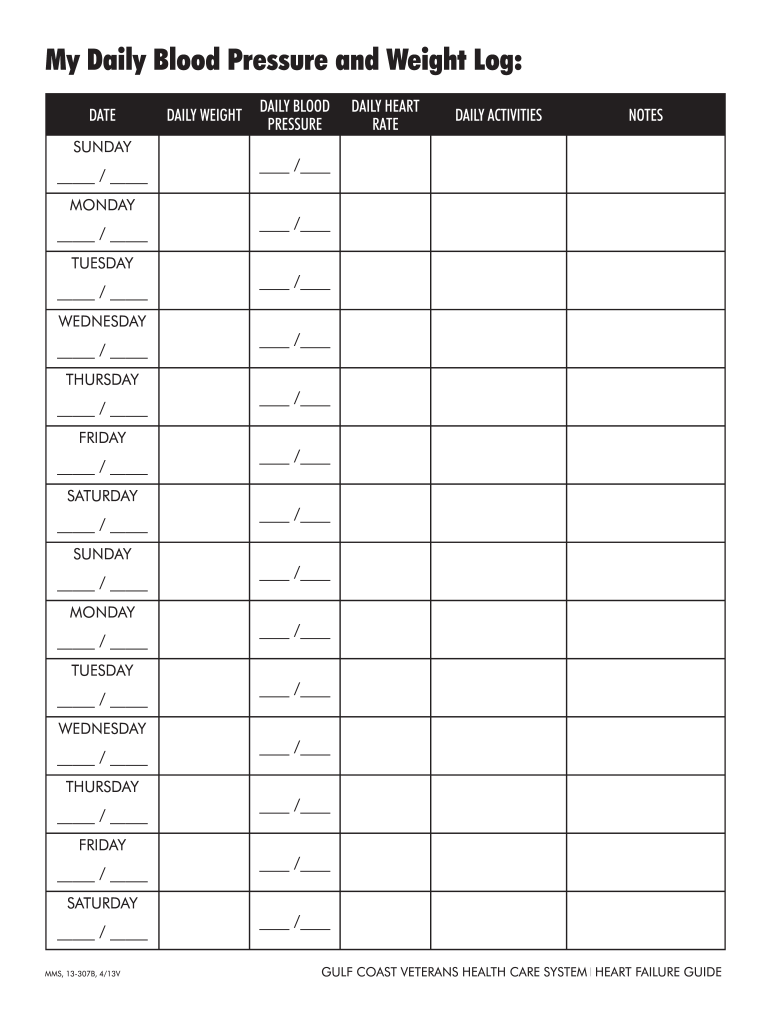







Definition and Meaning of the Blood Pressure and Weight Log Sheet
The blood pressure and weight log sheet serves as a vital tool for individuals monitoring their cardiovascular health and weight management. This structured document enables users to record key health metrics such as daily blood pressure readings, weight fluctuations, heart rate, and physical activities. A well-maintained log sheet can provide crucial insights into one’s health status, especially for individuals managing chronic conditions like hypertension or heart disease.
Utilizing a dedicated log sheet helps in tracking patterns over time, thereby enabling more informed discussions during medical consultations. It can also prove valuable for healthcare providers, as it offers clear documentation of a patient's health trends, facilitating targeted treatment plans. This log sheet encompasses various formats, such as PDFs or printable versions, ensuring accessibility for users with different needs.
How to Use the Blood Pressure and Weight Log Sheet
Understanding how to effectively use the blood pressure and weight log sheet is essential for accurate tracking. Users should begin by clearly labeling the log with essential identifiers, including their name, date, and specific health goal. Each entry should include the following components:
- Date: Record daily, allowing for accurate historical tracking.
- Time: Note down the time of each measurement for consistency.
- Blood Pressure Readings: Document systolic and diastolic values in millimeters of mercury (mmHg).
- Weight: Record weight in pounds or kilograms at the same time each day, preferably under similar conditions.
- Heart Rate: Include pulse measurements to observe changes in cardiovascular activity.
- Activities: List significant daily activities, as these can impact weight and blood pressure.
- Notes: Add any relevant health observations or changes in medication.
Consistent recording not only helps individuals manage their health better but also equips them to present valuable information to healthcare professionals, improving care quality.
Steps to Complete the Blood Pressure and Weight Log Sheet
To ensure accurate tracking of health metrics, individuals should follow a structured process when completing the blood pressure and weight log sheet:
- Prepare Your Log Sheet: Choose either a physical or digital version that suits your lifestyle.
- Standardize Timing for Measurements: Aim to take blood pressure and weight readings at consistent times each day.
- Measure Blood Pressure and Heart Rate: Use an accurate device. Follow the manufacturer’s instructions for correct usage.
- Weigh Yourself: Ensure your scale is calibrated. Weigh yourself at the same time daily, preferably in the morning before eating.
- Record Data Promptly: Enter the measurements immediately in the log to prevent memory errors.
- Review Your Entries: Regularly assess the logged data for patterns or significant changes.
By following these steps, individuals can develop a reliable database of their health metrics, ensuring improved management and understanding of their conditions.
Importance of the Blood Pressure and Weight Log Sheet
The blood pressure and weight log sheet is important for several reasons:
- Tracking Health Progress: Regularly documenting measurements helps identify trends over time which can reveal patterns that may require lifestyle adjustments or medical interventions.
- Enhancing Communication with Health Care Providers: The log provides healthcare professionals with a detailed overview of a patient's health, allowing for more tailored care and treatment plans.
- Encouraging Accountability: Maintaining a log encourages individuals to stay focused on their health goals and can enhance motivation by visualizing progress.
- Supporting Healthy Lifestyle Changes: The insights gained through the log can guide personal decisions related to diet, exercise, and medication adherence, ultimately leading to improved health outcomes.
In summary, the log sheet acts not only as a recording tool but also as an essential component in proactive health management.
Who Typically Uses the Blood Pressure and Weight Log Sheet
Several demographics benefit significantly from using the blood pressure and weight log sheet:
- Individuals with Chronic Conditions: Those living with hypertension, diabetes, or heart disease frequently utilize log sheets to manage their conditions effectively.
- Healthcare Professionals: Doctors, nurses, and dietitians may provide these log sheets to patients as part of health monitoring programs.
- Fitness Enthusiasts: Individuals pursuing weight loss or fitness goals often track their weight and blood pressure to measure their progress.
- Caregivers and Family Members: Those caring for elderly or chronically ill individuals may use the log sheets to monitor and record vital health information for more effective management.
Overall, the log sheet serves a diverse audience, helping in personal health management and professional healthcare delivery.


Important Terms Related to Blood Pressure and Weight Log Sheet
Familiarity with certain terms enhances comprehension and effective usage of the blood pressure and weight log sheet. Key terms include:
- Systolic Pressure: The higher number in a blood pressure reading, indicating the pressure in arteries when the heart beats.
- Diastolic Pressure: The lower number that represents the pressure in the arteries when the heart is at rest between beats.
- BPM (Beats Per Minute): A measure of heart rate frequency, often documented alongside blood pressure for comprehensive tracking.
- BMI (Body Mass Index): A measurement derived from weight and height used to assess body weight categories related to health risks.
- Hypertension: A condition characterized by abnormally high blood pressure, typically classified into stages that indicate severity.
Understanding these terms can improve engagement with health documentation and facilitate discussions with medical professionals.




