
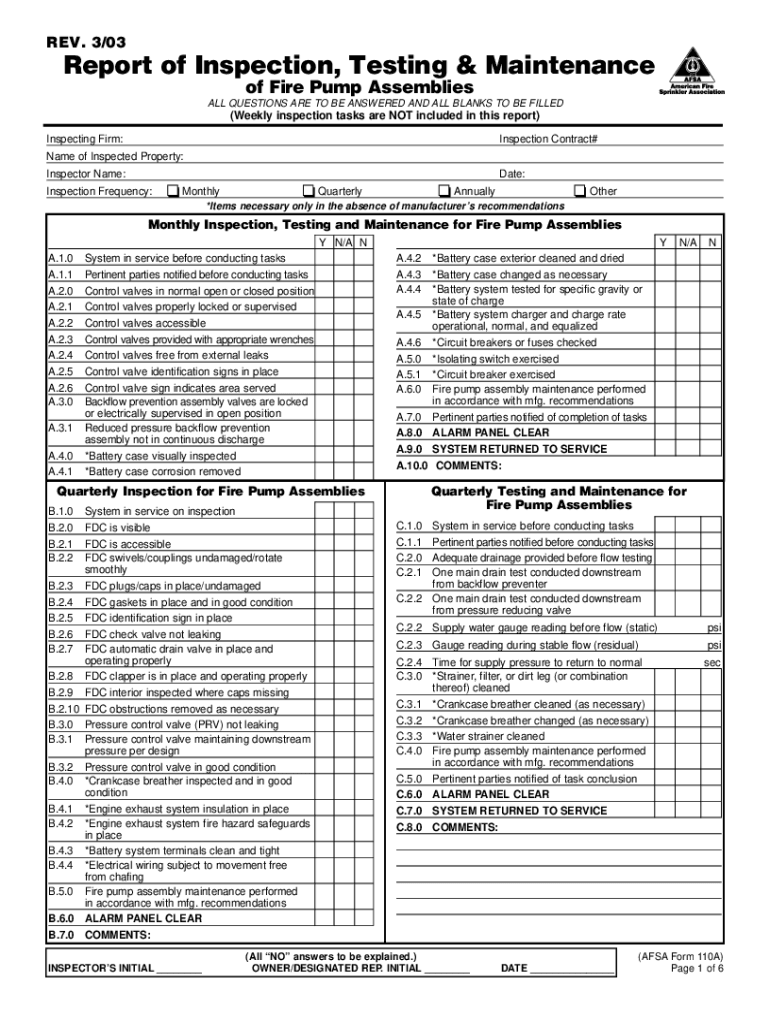







Understanding the Fire Pump Report
A fire pump report serves as a critical component in maintaining and ensuring the operational efficiency of fire pump assemblies. This document is essential for documenting inspections, tests, and maintenance activities related to fire pumps, which are vital for fire safety and compliance with fire safety regulations. Each time a fire pump is inspected, tested, or maintained, detailed information must be captured to provide immediate insight into its performance and functionality.
Key Components of a Fire Pump Report
The report generally includes several essential elements that contribute to a comprehensive understanding of the pump’s status. These components often encompass:
- Inspection Details: This section specifies the date of the inspection, the type of test performed (e.g., flow test or performance test), and the technician’s name.
- Operational Status: Inspectors verify whether the fire pump, control valves, and associated equipment are functioning correctly. They document any discrepancies or malfunctions that may affect operations.
- Performance Metrics: This includes flow rates, pressure readings, and comparative metrics against manufacturer specifications or regulatory standards.
Maintaining thorough records ensures quick access to vital information in case of future inspections or audits.
Inspection Frequencies and Checklists
Fire pumps should be inspected regularly according to established frequencies. Common intervals include monthly, quarterly, semi-annual, and annual inspections. Each frequency demands tailored checklists ensuring all necessary components are evaluated:
-
Monthly Fire Pump Inspection Checklist:
- Visual inspection of the pump assembly and surroundings.
- Confirm that the pump controller operates correctly.
- Check for any leaks or signs of wear in hoses and fittings.
-
Quarterly Fire Pump Inspection Checklist:
- Inspect the pump for corrosion or physical deterioration.
- Test automatic start and stop functionalities.
- Review the fire department connection for accessibility and visibility.
-
Annual Fire Pump Inspection Checklist:
- Conduct a comprehensive performance test, documenting all metrics.
- Review maintenance history and ensure compliance with all required standards.
- Inspect electrical systems, including connections and controls.
Customizing checklists according to specific operational needs ensures thorough assessments, reducing risks associated with equipment failure during emergencies.
Compliance with National Fire Safety Standards
Fire pump reports must adhere to various national and local fire safety standards, such as those dictated by the National Fire Protection Association (NFPA). These standards outline:
- Testing Requirements: Specific tests, such as those mandated in NFPA 25, detail frequency and criteria for inspection, ensuring that fire pumps remain reliable in emergencies.
- Documentation Procedures: The standards call for accurate documentation of all tests and maintenance performed, contributing to traceability and accountability.
Ensuring compliance not only promotes safety but also mitigates legal risks associated with oversight in fire safety measures.
Common Issues Identified in Fire Pump Inspections
Regular inspections may reveal several common issues affecting fire pump performance, including:
- Worn or damaged components: Regular wear can compromise the pump's effectiveness, necessitating timely repairs or replacements.
- Inadequate water supply: This can result from system design flaws or external factors, like drought conditions affecting water sources.
- Electrical failures: Malfunctions in the electrical components can hinder operational readiness, especially if not caught during routine inspections.
Identifying and resolving these issues promptly ensures dependable fire protection capabilities, safeguarding lives and property.
Understanding Fire Pump Testing Reports
Fire pump testing reports are crucial in documenting the results of performance tests, validating that the fire pump meets operational standards. The test report typically contains:
- Performance Metrics: This section includes flow rates and pressures captured during the test, compared against required thresholds.
- Test Methodology: Detailed descriptions of testing procedures, ensuring transparency and repeatability.
- Findings and Recommendations: Technicians document any operational deficiencies discovered during testing, along with recommendations for repairs or further evaluations.
These reports serve as a foundational tool for maintaining compliance and enhancing fire protection systems.
Summary of Fire Pump Report Best Practices
To ensure effective fire safety management, organizations must adopt best practices related to fire pump reporting and inspections:
- Regular training for personnel on inspection protocols and reporting standards.
- Maintaining electronic and physical archives of all fire pump reports for easy retrieval and management.
- Establishing clear communication lines between maintenance teams and management to address issues that arise promptly.
Fostering a culture of safety and preparedness in fire management not only enhances compliance but also contributes to overall organizational resilience.




