




01. Edit your renunciation of inheritance form online
Type text, add images, blackout confidential details, add comments, highlights and more.

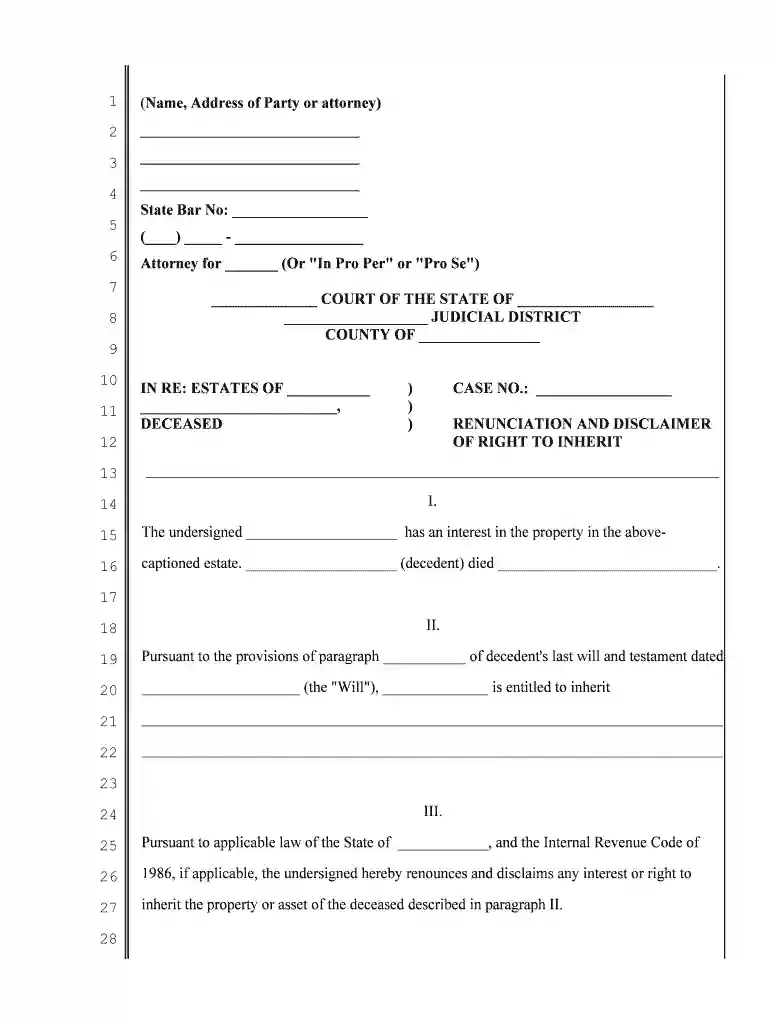
Type text, add images, blackout confidential details, add comments, highlights and more.

Draw your signature, type it, upload its image, or use your mobile device as a signature pad.

Send renunciation of inheritance template south africa via email, link, or fax. You can also download it, export it or print it out.
The renunciation of inheritance form is a legal document through which an individual relinquishes their right to inherit property or assets from a deceased person. This filing allows the designated individual, who is typically an heir named in a will or recognized by law, to formally decline their inheritance. By completing this form, the renouncing party ensures that the designated property will not be given to them but will instead pass to other designated heirs as if they had predeceased the decedent. This action is significant as it alters the distribution of an estate and impacts tax liabilities.
Understanding these terms can aid individuals in grasping the implications of the renunciation of inheritance form, particularly in contexts where estate distribution can complicate legal and financial situations.
Completing the renunciation of inheritance form involves several steps, ensuring that the process adheres to legal requirements and preserves the interests of all parties involved.
By following these steps accurately, an individual can ensure that their renunciation is legally recognized and effectively executed.
Several factors should be considered when determining whether to use the renunciation of inheritance form.
Tax Implications: Renouncing an inheritance can lead to specific tax consequences, potentially relieving the individual from tax obligations associated with the inherited wealth—such as estate taxes or income taxes on certain income generated by the inherited estate.
Legal Advice: It is advisable to consult with an attorney or estate planning specialist to understand the ramifications fully, as misunderstandings about the process can lead to complications or unintended consequences.
Impact on Other Heirs: Renouncing an inheritance not only affects the renouncer but also alters the distribution among remaining heirs, which may lead to advantageous or detrimental results for them, depending on the circumstances.
Overall, a thorough understanding of these considerations will inform one's decision and ensure the form is utilized appropriately.
The requirements and implications of the renunciation of inheritance form can vary notably from state to state. Each jurisdiction may have unique stipulations regarding:
Filing Procedures: Different states may require specific methods or formats for submitting the form, and some might necessitate additional documents.
Timeline Limitations: Some states impose strict deadlines on when the renunciation must be filed following the decedent's death or probate proceedings, leading to increased urgency for the renouncer.
Estate Size Thresholds: Various regions might allow exemptions for smaller estates or offer simplified processes that ensure quick resolution.
Being cognizant of these regional nuances helps ensure compliance with local laws and can streamline the renunciation process.
The legal foundation of the renunciation of inheritance form lies within the statutes governing probate and estate administration. This form is typically governed by state laws that dictate:
Compliance with these laws is critical, as improper handling of the form can create legal disputes or delay the settlement of the estate in question.
By understanding the form's legal context, individuals can navigate the complexities of inheritance law more effectively.
We've got more versions of the renunciation of inheritance form form. Select the right renunciation of inheritance form version from the list and start editing it straight away!
| Versions | Form popularity | Fillable & printable |
|---|---|---|
| 2020 | 4.8 Satisfied (47 Votes) |
Sign in to your DocHub account and add your renunciation disclaimer right inherit to our editor using one of its upload methods - from your device, cloud storage, secure URL, or your DocHub folders if you have already processed your document before. Open our editor, click the Sign key in the upper toolbar, and choose your signing method. You can upload a picture of your handwritten signature, draw it, enter your name, or use a QR code instead.
You can find and modify your renunciation of inheritance sample online with the help of DocHub. Its simple but feature-rich design allows you to start effective work right after you register your account. Create your profile and add your document, then our user interface will guide you through our stress-free form completion experience.
At DocHub, your data security is our priority. We follow HIPAA, SOC2, GDPR, and other standards, so you can work on your documents with confidence.
Renunciation is voluntary and involves the successor giving up his/her right to inherit from the decedent. Renunciation must be express and in writing.Read more
RENUNCIATION OF RIGHT TO ADMINISTRATION. AND/OR NOMINATION I am not giving up any interest in the estate or inheritance rights by signing this document.Read more


