
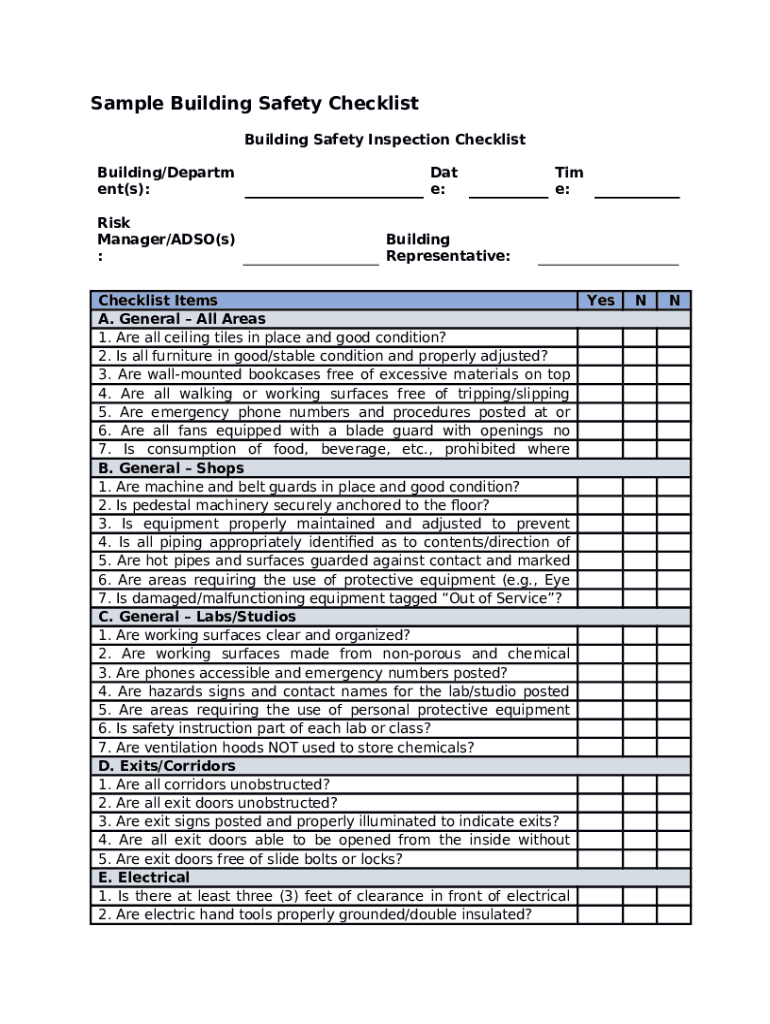







Comprehensive Safety Standards for Building Inspections
The Sample Building Safety Checklist is an essential tool in the evaluation of safety protocols and compliance measures within various environments such as construction sites, laboratories, and commercial buildings. It guides both inspectors and facility managers in ensuring that all relevant safety criteria are thoroughly assessed.
General Conditions for Safety
It is vital to first evaluate the general conditions of the site. Inspectors should look for:
- Site Accessibility: Ensure that pathways and entrances are clear of obstructions.
- Housekeeping Practices: Evaluate the orderliness of workspaces. Cluttered areas can pose trip hazards and impede emergency responses.
- Pest Control: Confirm that the premises are free of pests that could compromise hygiene and safety.
Each of these elements plays a pivotal role in maintaining a safe working environment, dictating the security of workers and visitors alike.
Electrical Safety Protocols
Electrical safety is a critical component of the safety inspection checklist. Inspectors should examine:
- Condition of Wiring and Outlets: Check for visible wear or fraying and ensure that all electrical installations comply with local codes.
- Grounding and Bonding: Verify that all electrical systems are correctly grounded to prevent hazards such as electric shock.
- Emergency Shut-offs: Ensure accessible emergency shut-off switches are present and operational.
These features are crucial in preventing electrical fires and protecting personnel from electrical hazards.
Emergency Equipment and Accessibility
The readiness and functionality of emergency equipment are paramount in any building safety checklist. Inspectors should focus on:
- Fire Extinguishers: Confirm the presence, accessibility, and regular maintenance of fire extinguishers. They should be appropriately dispersed throughout the facility.
- Emergency Exits: Evaluate the visibility and accessibility of emergency exits. Enforce compliance with fire safety regulations requiring illuminated exit signs.
- First Aid Kits: Ensure that first aid kits are stocked, accessible, and maintained regularly.
Timely access to emergency resources can significantly reduce response times in crisis situations.
Personal Protective Equipment (PPE) Compliance
A thorough review of personal protective equipment (PPE) is crucial for maximizing worker safety. Inspectors should check:
- Availability of PPE: Ensure that all required PPE, such as helmets, gloves, and goggles, is available to employees.
- Condition of PPE: Examine items for wear and tear to ensure they meet safety standards. Damaged equipment should be replaced promptly.
- Training on PPE Usage: Confirm that employees have received proper training on how to use PPE effectively and understand its importance.
Ensuring compliance with PPE requirements mitigates risks associated with physical and chemical hazards.
Hazardous Materials Management
Proper handling and storage of hazardous materials are essential for regulatory compliance and the safety of all occupants. Inspectors must assess:
- Labeling: Verify that all hazardous materials are clearly labeled according to Occupational Safety and Health Administration (OSHA) standards.
- Storage Practices: Check that hazardous materials are stored in designated areas with appropriate containers that are compatible with the substances.
- Material Safety Data Sheets (MSDS): Ensure MSDS for all hazardous substances are readily available to all personnel.
Through diligent management, potential exposure to harmful substances can be minimized significantly.
Traffic Safety Regulations
Within certain environments, particularly construction sites, traffic safety becomes paramount. Inspectors should evaluate:
- Signage and Markings: Confirm that adequate traffic signs and floor markings are in place to guide both vehicular and pedestrian traffic safely.
- Barriers: Assess the presence of barriers to separate work zones from public areas, enhancing safety for both workers and the general public.
- Training Protocols: Review training programs for workers on safe driving practices and pedestrian awareness in work zones.
Attention to traffic safety not only ensures compliance with safety regulations but also protects workers and visitors from accidents.
Effective Hazard Reporting Procedures
Lastly, it is crucial to have effective hazard reporting protocols in place. Inspectors should ensure:
- Reporting Mechanisms: Establish clear channels for employees to report hazards and incidents without fear of repercussion.
- Documentation of Incidents: Review the system for documenting safety violations, near misses, and accidents to help identify trends and prevent future incidents.
- Follow-Up Procedures: Verify that appropriate actions are taken after a hazard is reported to maintain a safe working environment.
A robust reporting system fosters a culture of safety where all team members actively contribute to hazard identification and resolution.
Integration of Online Tools for Safety Management
With the rise of digital documentation, the integration of online tools such as DocHub can enhance the workflow for managing safety checklists. This platform allows seamless editing, sharing, and signing of documents.
- Template Utilization: Users can create and modify building safety inspection checklists, ensuring that specific regulatory requirements are included.
- Real-Time Collaboration: Multiple stakeholders can collaborate on safety documents, achieving transparency and efficiency in the review process.
- Data Security: Enhanced security measures protect sensitive safety data through encryption and access control.
DocHub provides the necessary features to streamline building safety management effectively.




