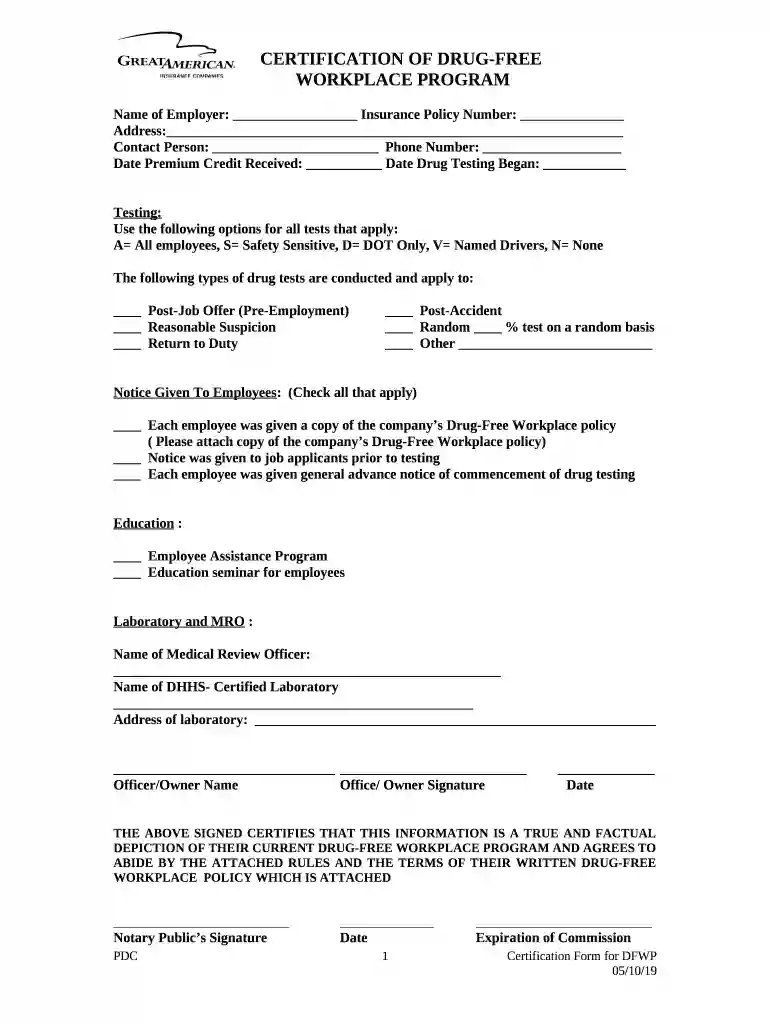
Definition and Importance of the Drug Certificate Template
A drug certificate template serves as an official document that certifies an individual’s completion of a drug rehabilitation program or ongoing compliance with established drug policies in the workplace. This professional certification is essential for various stakeholders, including employers, employees, and rehabilitation facilities.
- Purpose: The primary intent of the drug certificate is to confirm that the individual has undergone necessary assessments and treatments aimed at addressing substance use disorders. These certificates are often requested for employment verification, legal compliance, or as part of a rehabilitation documentation process.
- Types of Certificates: There are variations within drug certificates, such as the drug rehab certificate of completion template and the rehab completion certificate, which differ based on the programs they represent. Understanding these distinctions is vital for proper usage.
- Relevance: For employers maintaining a drug-free workplace, these certificates assure adherence to regulations and organizational policies. Employees can present these documents to validate their commitment to personal well-being and professional standards.
How to Use the Drug Certificate Template Effectively
Using a drug certificate template requires understanding its components and how to fill it out accurately. This section outlines practical steps to leverage the template effectively.
- Download the Template: Obtain a reliable drug certificate template from a verified source, ensuring that it meets relevant state and federal guidelines.
- Input Key Information: Fill in essential details such as:
- Individual’s name
- Program details (type, duration, and completion date)
- Provider's credentials (including the Medical Review Officer, if applicable)
- Signatures of authorized personnel
- Customization: Adapt sections to meet specific requirements set by the organization or legal entity requesting the certificate. Certain fields may need to emphasize the completion of particular treatment milestones.
- Review for Accuracy: Verify all entries for correctness. Confirm the spelling of names, dates, and other pertinent information prior to issuing the document to prevent potential issues.
Steps to Complete the Drug Certificate Template
Completing the drug certificate template effectively is necessary for ensuring that the document is valid and useful for its intended purpose. Here are detailed steps to follow:
- Identify the Template Type: Select the correct version of the certificate based on the program completed or requirement dictated by the requesting party.
- Complete Personal Information:
- Full name of the individual receiving the certificate.
- Date of birth and any identification numbers if necessary.
- Detail the Treatment Program:
- Specify the type of rehabilitation program (inpatient, outpatient, intensive).
- Include start and end dates of the program.
- Mention the number of sessions attended or completed if applicable.
- Include Provider Information:
- Name of the facility or individual providing the treatment.
- Address and contact details of the service provider.
- Signature of an authorized representative.
- Add a Notarization Section (if required): Some documents may need to be notarized to authenticate the certificate's validity. This section should be clearly marked and include a space for the notary’s signature.
Key Elements of a Drug Certificate Template
Understanding the core elements of a drug certificate template ensures that all required information is comprehensively covered. Here are the key sections included:
- Title: Clearly labeled as a "Drug Certificate" or "Certificate of Completion for Drug Rehabilitation".
- Personal Identification: Full name, address, and date of birth of the individual receiving the certificate.
- Program Information:
- Name of the program.
- Duration (start date and completion date).
- Type of program (rehab, counseling, etc.).
- Provider Details:
- Name and credentials of the treatment provider.
- Contact information for the facility or individual.
- Signatures:
- Space for the signature of the program director or authorized personnel.
- Notary space if necessary.
- Certification Statement: A clear statement certifying that the individual has completed the necessary treatment.
Legal Use of the Drug Certificate Template
The legal implications of a drug certificate template are significant, particularly in employment and legal contexts. Here are crucial legal considerations:
- Adherence to Regulations: For employers, maintaining a drug-free workplace requires compliance with state and federal laws regarding drug testing and reporting. The drug certificate often acts as evidence of compliance with these policies.
- Validity: Ensure that all information on the drug certificate is accurate and verifiable. Misrepresentation can lead to legal penalties for both the issuing authority and the individual.
- Privacy Concerns: Handle the distribution and storage of drug certificates with care, as they may contain sensitive information related to an individual’s health and treatment history.
- Jurisdictional Variations: Be aware of any specific legal requirements in your state regarding the issuance and utilization of drug certificates, as regulations may vary significantly.
Examples of Using the Drug Certificate Template
Practical examples illustrate how drug certificate templates can be utilized across different scenarios:
- Employment Verification: An employer may request a drug certificate to confirm that a candidate has completed a rehabilitation program, thus ensuring compliance with workplace policies on substance abuse.
- Legal Proceedings: An individual involved in a court case may present a drug certificate to demonstrate commitment to recovery and adherence to court orders regarding substance abuse treatment.
- Educational Requirements: Schools or educational institutions may request proof of rehabilitation for students returning after treatment, ensuring that they provide a supportive environment for recovery.
By understanding these aspects, individuals and organizations can effectively navigate the nuances of using a drug certificate template while ensuring compliance and proper documentation.