
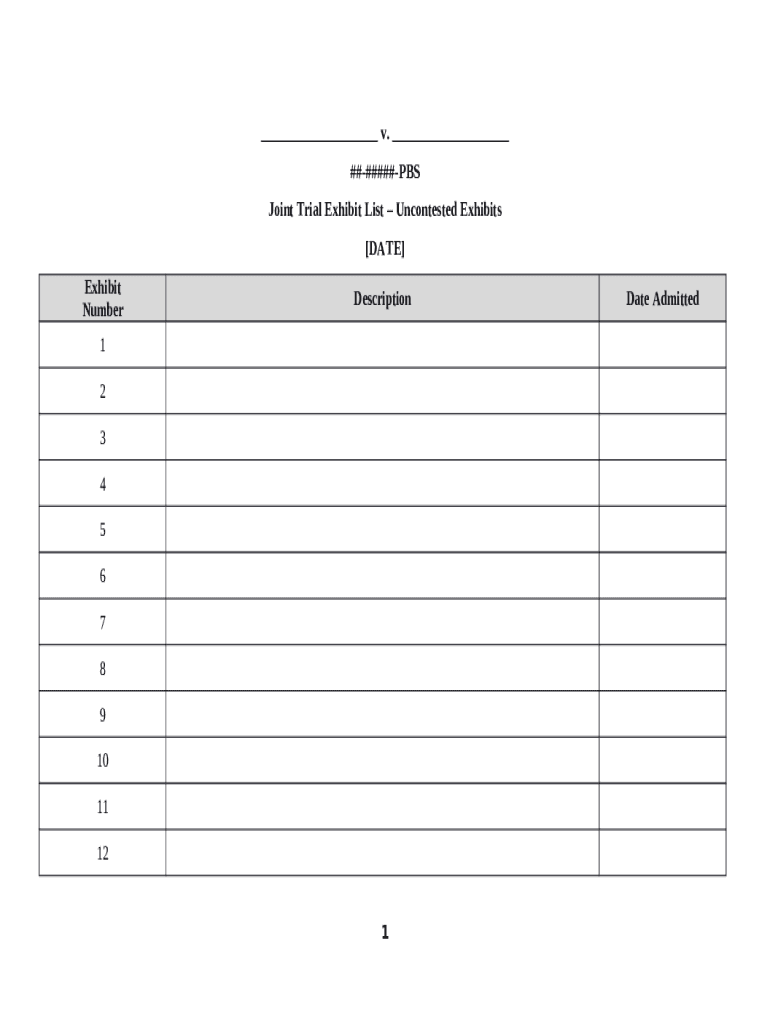







Understanding the Exhibit List for Trial
An exhibit list for trial is a comprehensive document that details all the exhibits intended to be presented in court during a trial. This list is essential for helping the court and all parties involved understand what evidence will be showcased, ensuring that the trial proceeds smoothly and efficiently.
Key Components of an Exhibit List
A well-structured exhibit list typically includes the following components:
- Exhibit Number: Each item on the list should have a unique exhibit number. This helps in easily identifying and referencing each piece of evidence during the trial.
- Description of Exhibit: A brief description of each exhibit providing sufficient detail to understand its relevance without needing to refer to the physical item.
- Date of Admission: The date on which the exhibit was accepted as evidence in the trial; this can also include dates when the exhibit was introduced or marked.
- Basis for Admission: A brief note on why the evidence is relevant and why it should be admitted in court, often aligning with rules of evidence.
Format and Presentation
Court exhibit templates can vary but typically adhere to a standardized format. Utilizing an exhibit list template can simplify this process. Include the following formatting elements:
- Header Section: Include the case name, court information, and details of the parties involved at the top of the document.
- Table Structure: Organize the exhibit list in a table format, with clear headers for exhibit numbers, descriptions, admission dates, and comments.
- Legibility: Ensure the document is easy to read, using clear fonts and appropriate spacing.
Steps to Create an Exhibit List for Trial
Creating a comprehensive exhibit list involves several steps:
- Gather Evidence: Collect all documents, photographs, and other items intended for presentation.
- Assign Exhibit Numbers: Number each piece of evidence sequentially.
- Draft Descriptions: Write concise descriptions for each exhibit, explaining what they are and their relevance to the case.
- Compile Admission Dates: Note the dates when each exhibit was presented for admission.
- Review Compliance: Ensure the list complies with jurisdiction-specific rules and formats, such as those relevant in Florida or other states.
Sample Exhibit List for Trial
A sample exhibit list might include the following entries:
| Exhibit Number | Description | Date of Admission | Comments | |----------------|-----------------------------------|------------------|------------------------| | 1 | Contract between Plaintiff and XYZ Corp | 01/15/2023 | Authenticated by John Smith | | 2 | Emails exchanged discussing terms | 01/20/2023 | Relevant to negotiations | | 3 | Photographs of the incident | 01/25/2023 | Taken by witness Jane Doe |
Legal Considerations
In preparing an exhibit list, it’s crucial to understand legal implications, including:
- Relevance: Ensure each exhibit is pertinent to the case at hand.
- Witness Testimony: Consider how exhibits will relate to witness statements and how they support your arguments.
- Objections: Be prepared for possible objections regarding the admission of certain evidence, and brace your list with counterarguments if necessary.
Variations in Exhibit Lists
Exhibit lists may vary by case type, jurisdiction, or specific trial requirements. Some examples include:
- Trial Exhibit Index: A detailed index accompanying the main list, categorizing exhibits by type.
- Court Exhibit Templates: These might include specific formats mandated by the court based on procedural rules.
- Exhibit Book: A compiled collection of exhibits provided to the judge and jury, formatted for clarity and impact.
Finalizing Your Exhibit List
Before submitting your exhibit list to the court, consider these final steps:
- Proofread: Check for errors in numbering, spelling, and formatting.
- Witness Review: Share the list with witnesses to confirm that their testimony aligns with the exhibits.
- Confirm Filing Requirements: Verify that the exhibit list meets all procedural requirements, including deadlines for submission.
Following these guidelines can enhance the effectiveness of your exhibit list for trial, ensuring it meets the necessary standards for legal proceedings.




