







Definition and Purpose of the Continued Monthly Residence Form - CalPERS Long Term Care
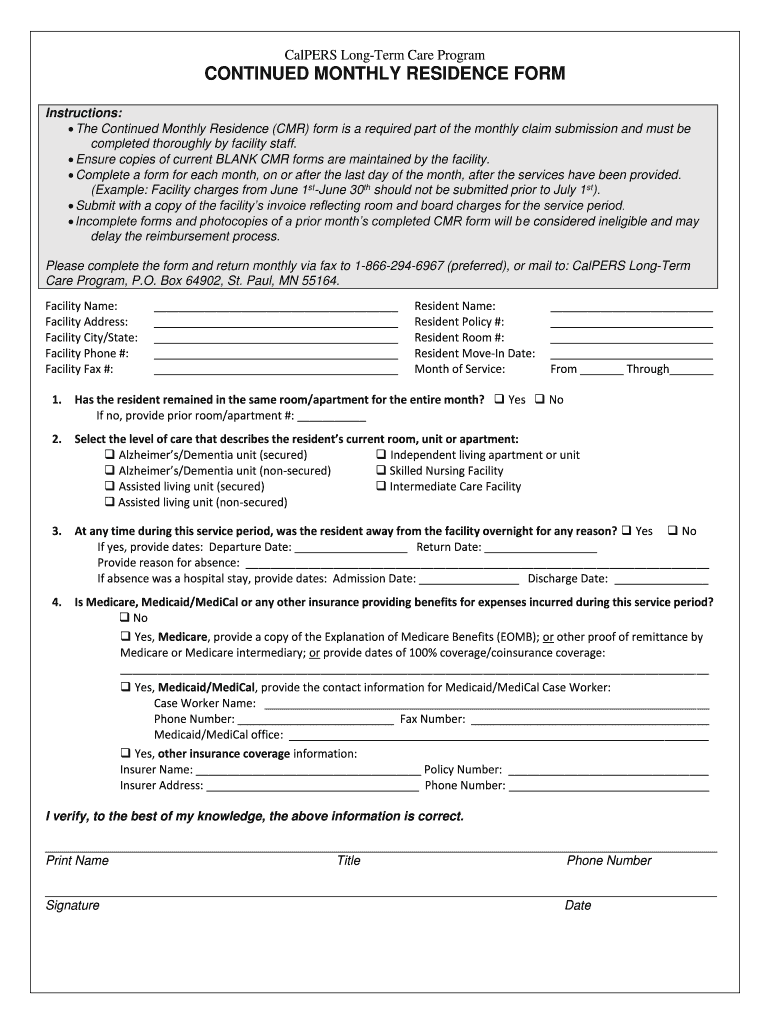
The continued monthly residence form (CMR) is an essential document for participants in the CalPERS Long-Term Care Program. This form is required to verify the ongoing eligibility of beneficiaries for monthly claims regarding long-term care services. The primary purpose of the CMR is to ensure that the care being received aligns with the program's eligibility criteria and to facilitate timely reimbursements for covered services.
Key features of the CMR include its requirement for monthly completion by facility staff. Each submission must include accurate details about the resident's status and the level of care provided during the month. This ensures that CalPERS can appropriately assess the claims filed by participants and ensure they fulfill their obligations under the program.
The form gathers vital information regarding absences, care levels, and applicable insurance coverage, thereby providing clarity on the care provided and assisting in administrative accuracy. This process ultimately supports CalPERS in maintaining operational integrity and makes certain that eligible individuals continue to receive the long-term care benefits they need.
How to Use the Continued Monthly Residence Form - CalPERS Long Term Care
Using the continued monthly residence form effectively is crucial for timely reimbursement from the CalPERS Long-Term Care Program. To utilize this form, participants should follow a series of steps that streamline the process.
-
Obtain the Form: The CMR can typically be acquired from administrative staff at the care facility or directly from the CalPERS Long-Term Care program portal. Ensuring that you have the correct version of the form is essential for compliance.
-
Completed Monthly Details: Facility staff should fill out the CMR at the end of each month. This involves accurately documenting the care provided, any change in the resident's status, and any periods of absence. Detailed and truthful information should be entered, as discrepancies can impact reimbursement.
-
Submission Process: Once the form is complete, it must be submitted alongside the invoice for the services rendered during that month. Administrators should ensure to keep a copy for records and potential audits.
-
Follow Up: It's advisable to follow up with the CalPERS office to confirm receipt of the submitted CMR and invoice, ensuring that there are no processing delays.
By adhering to these steps, care facilities can ensure a smooth operation and maintain the necessary flow for reimbursements.
Steps to Complete the Continued Monthly Residence Form - CalPERS Long Term Care
Completing the continued monthly residence form accurately involves a systematic approach. Each section of the form must be filled out with attention to detail to avoid delays or issues with reimbursement.
-
Identify Resident Information: Begin with the basic information about the resident, including their name, identification number, and contact details.
-
Detail Care Provided: Clearly outline the type of care services rendered during the month. This might include specifics related to medical, personal, or rehabilitative services.
-
Absences: Indicate any days the resident was absent from the facility and provide reasons for these absences, as this information is critical for eligibility verification.
-
Insurance Verification: Ensure to include details on any other insurance coverage the resident may have. This includes primary and secondary coverage information to prevent any audit issues later.
-
Signature Requirement: The form must then be signed by an authorized facility representative, confirming that the information provided is factual and complete.
-
Submission Checklist: Before submitting, use a checklist to verify that all sections are completed, attached invoices are provided, and a copy of the CMR is retained for your records.
By following these systematic steps, the risk of errors is minimized, ensuring compliance with CalPERS requirements.
Important Terms Related to the Continued Monthly Residence Form - CalPERS Long Term Care
Understanding key terms associated with the continued monthly residence form can enhance comprehension and ensure better compliance. Here are essential terms to know:
-
Beneficiary: An individual eligible for benefits under the CalPERS Long-Term Care Program, typically the person receiving care.
-
Care Level: The designation of the type and intensity of care provided to the beneficiary, which may affect reimbursement levels.
-
Claim Submission: The process of submitting the CMR along with invoices for covered services rendered throughout the month.
-
Reimbursement: The funds disbursed by CalPERS to reimburse the care facility for services rendered to the beneficiary as verified by the claim submission.
-
Authorized Representative: A designated individual who signs the form on behalf of the facility, confirming accuracy of the submitted information.
By familiarizing oneself with these terms, users of the continued monthly residence form can navigate the claiming process with greater ease and understanding.
Key Elements of the Continued Monthly Residence Form - CalPERS Long Term Care
The continued monthly residence form encompasses several critical components necessary for successful completion and submission. Each part plays a vital role in ensuring comprehensive reporting of care provided.
-
Resident Identification: This section captures the essential details of the resident, including full name, identification number, and dates of service.
-
Service Details: A precise description of services provided each month, including any changes in health status or care levels that occurred.
-
Absence Records: Documentation of any time the beneficiary was absent from the care facility, including the duration and reasons for the absence.
-
Insurance Information: This includes information relating to other health insurance policies, ensuring transparency and compliance for reimbursement purposes.
-
Verification Signatures: A space for both the facility staff and an authorized signatory to confirm that the information provided is accurate, fostering accountability.
Each of these elements is vital for ensuring the integrity of the form and the accuracy of processing long-term care claims.
Submission Methods for the Continued Monthly Residence Form - CalPERS Long Term Care
There are multiple methods available for submitting the continued monthly residence form, each catering to different operational preferences and technological capabilities.
-
Online Submission: Most facilities favor the online submission method through the CalPERS Long-Term Care portal. This allows for quick processing and confirmation of receipt.
-
Mail Submission: Organizations may also opt to send hard copies via postal services. This method requires careful packaging to prevent loss or damage during transit.
-
In-Person Submission: In certain cases, submissions can be made in person at local CalPERS offices, allowing for immediate confirmation.
Each submission method has its advantages, with online submissions generally being the fastest way to ensure documents are received and processed in a timely manner.
Legal Use of the Continued Monthly Residence Form - CalPERS Long Term Care
The continued monthly residence form serves a legal purpose within the framework of the CalPERS Long-Term Care Program. Its completion and accurate submission are vital to fulfilling obligations under the program's regulations.
-
Compliance with Regulations: The CMR must be filled out in accordance with state regulations governing long-term care and the CalPERS eligibility criteria. Failure to comply may result in penalties or a denial of claims.
-
Documentation for Audits: The submitted CMR becomes part of the official documentation that could be reviewed during audits by CalPERS. Accurate and truthful submissions help protect facilities from potential legal challenges.
-
Record Keeping: Both the care facility and CalPERS keep records of submitted CMRs, ensuring a comprehensive account of services provided and claims made, thus enforcing accountability.
Maintaining legal compliance and ensuring the accuracy of submitted forms protects both beneficiaries and providers, fostering a trustworthy relationship within the framework of long-term care services.




