Cyber Situational Awareness in Public-Private-Partnerships 2026

Get Form
Cyber Situational Awareness in Public-Private-Partnerships Preview on Page 1

Here's how it works

01. Edit your form online
Type text, add images, blackout confidential details, add comments, highlights and more.
02. Sign it in a few clicks
Draw your signature, type it, upload its image, or use your mobile device as a signature pad.
03. Share your form with others
Send it via email, link, or fax. You can also download it, export it or print it out.

How to use or fill out Cyber Situational Awareness in Public-Private-Partnerships

Form edit decoration
9.5
Ease of Setup
DocHub User Ratings on G2
9.0
Ease of Use
DocHub User Ratings on G2
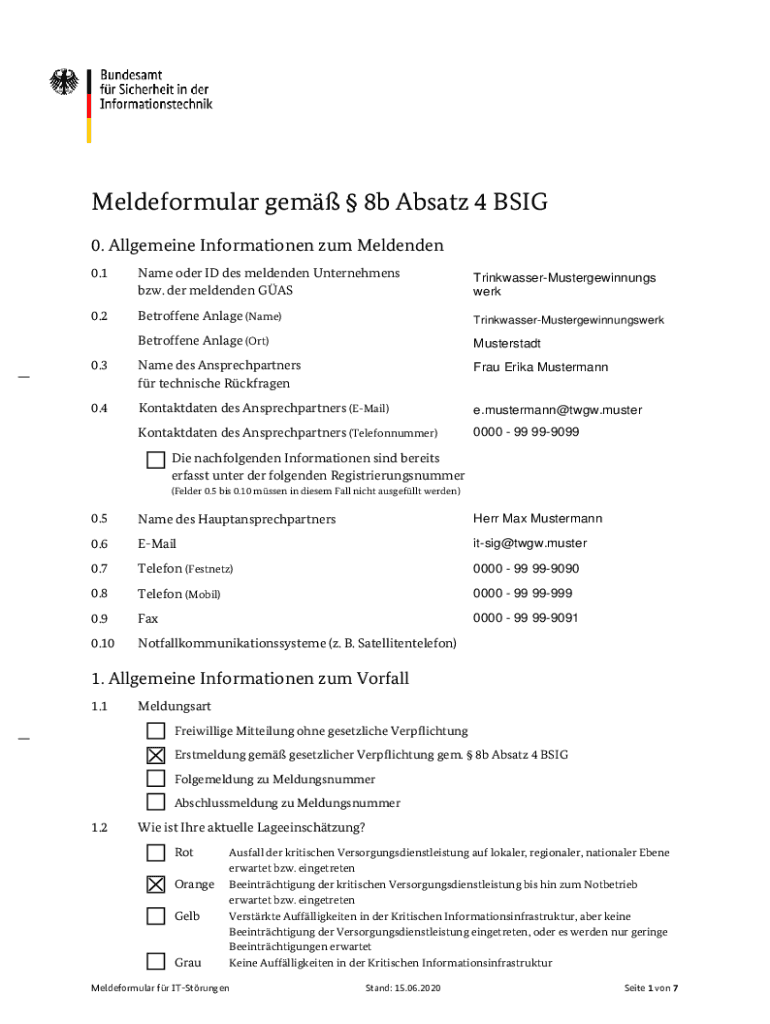
  1. Click ‘Get Form’ to open it in the editor.
  2. Begin by entering the name or ID of your organization in the designated field. This is crucial for identifying the reporting entity.
  3. Fill in the affected facility's name and location. Ensure accuracy as this information is vital for incident tracking.
  4. Provide contact details for a technical representative, including their name, email, and phone number. This allows for efficient communication regarding the incident.
  5. Select the type of report you are submitting from the options provided, such as voluntary notification or mandatory reporting.
  6. Assess and indicate your current situation assessment using color-coded options (Red, Orange, Yellow, Gray) to convey urgency.
  7. Detail any critical services affected by the incident and describe the nature of the IT disturbance in subsequent fields.

Start using our platform today to streamline your document editing and form completion process for free!

See more Cyber Situational Awareness in Public-Private-Partnerships versions

We've got more versions of the Cyber Situational Awareness in Public-Private-Partnerships form. Select the right Cyber Situational Awareness in Public-Private-Partnerships version from the list and start editing it straight away!
Versions Form popularity Fillable & printable
2020 4.6 Satisfied (43 Votes)
be ready to get more

Complete this form in 5 minutes or less

Get form

Got questions?

We have answers to the most popular questions from our customers. If you can't find an answer to your question, please contact us.
Contact us
Public-Private Partnerships (PPPs) are essential for the Security and Resilience of Critical Information Infrastructures (CII), since a large part of them belongs to private sector stakeholders. Apart from tackling cyber security risks, a strategy builds on collaboration.
Public-private partnerships allow large-scale government projects, such as roads, bridges, or hospitals, to be completed with private funding. These partnerships work well when private-sector technology and innovation combine with public-sector incentives to complete work on time and within budget.
The Partnership against Cybercrime (PAC) aims to shift the balance between cybercriminals and defenders by mobilizing the private sector in the fight against cybercrime and promoting public-private cooperation.
A PPP is defined as an organized relationship. between public and private organizations in which the parties set common. objectives, have separate roles and have an agreed-upon work method to. achieve common goals.4. The importance of PPPs in cybersecurity is now widely recognized by policy makers and industry.
The private sector owns and operates a majority of our nations critical infrastructure, and partnerships between the public and private sectors that foster trust and effective coordination are essential to maintaining critical infrastructure security and resilience.

Security and compliance

At DocHub, your data security is our priority. We follow HIPAA, SOC2, GDPR, and other standards, so you can work on your documents with confidence.

Learn more
ccpa2
pci-dss
gdpr-compliance
hipaa
soc-compliance
be ready to get more

Complete this form in 5 minutes or less

Get form

People also ask

This awareness involves monitoring network activity, identifying abnormal behavior, and recognizing potential vulnerabilities that cybercriminals could exploit.

Related links