Utah living trust 2026

Get Form
utah living trust Preview on Page 1

Here's how it works

01. Edit your form online
Type text, add images, blackout confidential details, add comments, highlights and more.
02. Sign it in a few clicks
Draw your signature, type it, upload its image, or use your mobile device as a signature pad.
03. Share your form with others
Send it via email, link, or fax. You can also download it, export it or print it out.

How to use or fill out Utah Living Trust with our platform

Form edit decoration
9.5
Ease of Setup
DocHub User Ratings on G2
9.0
Ease of Use
DocHub User Ratings on G2
  1. Click ‘Get Form’ to open the Utah Living Trust document in the editor.
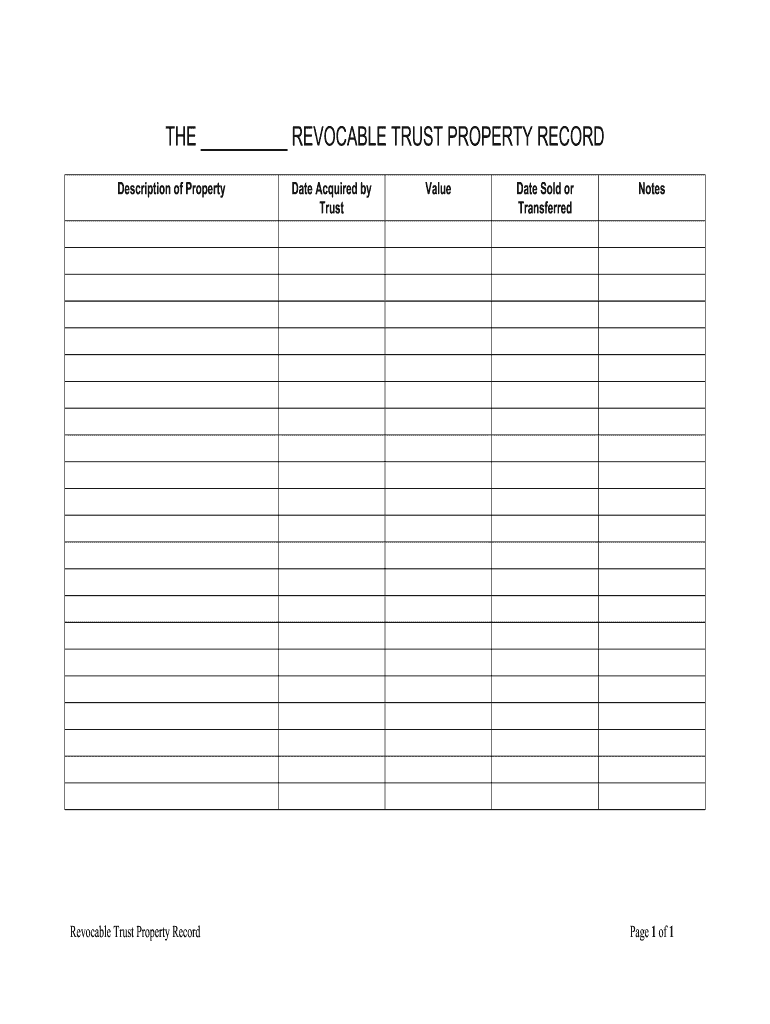
  2. Begin by entering the name of the trust at the top of the form. This identifies your specific revocable trust.
  3. In the 'Description of Property' section, list each property included in the trust. Be sure to provide a clear description for easy identification.
  4. Fill in the 'Date Acquired by Trust' field with the date you transferred ownership of each property into the trust.
  5. Next, indicate the 'Value' of each property at the time it was added to the trust. This helps in assessing overall trust value.
  6. If any property has been sold or transferred, record that information in the 'Date Sold or Transferred' section.
  7. Use the 'Notes' section for any additional comments or details relevant to each property, ensuring clarity and completeness.

Start using our platform today to easily complete your Utah Living Trust for free!

be ready to get more

Complete this form in 5 minutes or less

Get form

Got questions?

We have answers to the most popular questions from our customers. If you can't find an answer to your question, please contact us.
Contact us
For the most part, you are unable to completely avoid paying taxes on living trusts. The trust remains part of the grantors taxable estate, and any income earned by trust assets is taxed to the grantor. Potential for legal disputes.
A trust is a legal structure that involves a third party, referred to as a trustee, to hold assets for a beneficiary or group of beneficiaries. The person who establishes the trust is the trustor, the settlor, or the grantor. As for an irrevocable trust, the heirs may refer to the trustor as a benefactor.
Creating a living trust places you squarely in control of your assets during life and even after death. While you are alive, the assets are owned in the name of the trust, but you have total control over them. You live in your house and use your assets as you normally would without restriction.
Lawyers often use hourly fee schedules, and the price associated with creating a living trust is generally at least $1,000. Again, more complex estates may pay even more than that. In particular, make sure youre using an estate planning lawyer who has a specialty in trusts.
A Living Trust is a legal tool for financial planning that allows a person (Trustee) to hold another persons (Settlors) property for the benefit of someone else (Beneficiary). Unlike a testamentary trust, a Living Trust goes into effect during the settlors lifetime.

Security and compliance

At DocHub, your data security is our priority. We follow HIPAA, SOC2, GDPR, and other standards, so you can work on your documents with confidence.

Learn more
ccpa2
pci-dss
gdpr-compliance
hipaa
soc-compliance
be ready to get more

Complete this form in 5 minutes or less

Get form

People also ask

LegalZoom Pricing (as an example): Living Trust: Approximately $400. Property Deed Template: $250 (Consider Utahs recording fee: $40 per deed). Power of Attorney: $35. Living Will: $39.
The trust must be irrevocable and the words asset protection trust must appear in the title. The trust must have a corporate trustee, and at least some of the trust assets must be held in the form of cash or stocks in an account with the trustee. The trust must not provide for mandatory distributions.

Related links