Type text, add images, blackout confidential details, add comments, highlights and more.
02. Sign it in a few clicks
Draw your signature, type it, upload its image, or use your mobile device as a signature pad.
03. Share your form with others
Send it via email, link, or fax. You can also download it, export it or print it out.
How to use or fill out Oregon Board of Dentistry: About Us: State of Oregon with DocHub
Ease of Setup
DocHub User Ratings on G2
Ease of Use
DocHub User Ratings on G2
Click ‘Get Form’ to open it in the editor.
Begin by entering your personal information in the designated fields, including your name, Oregon License Number, mailing address, and business phone. Ensure all details are accurate to avoid delays.
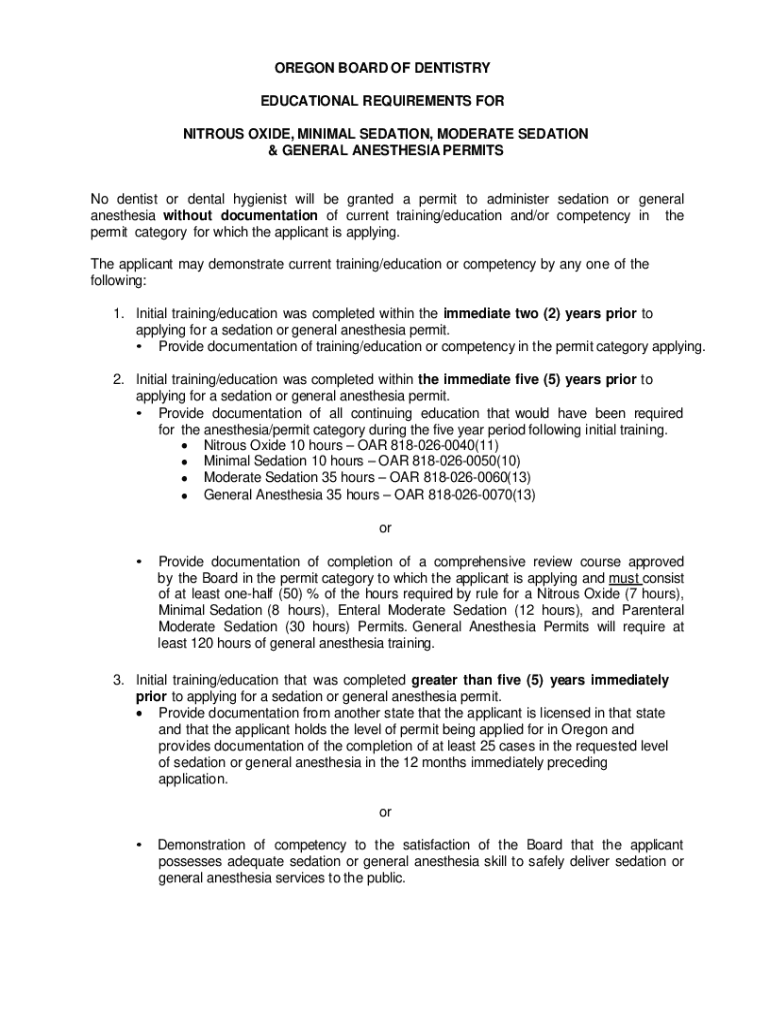
In the 'Training' section, provide evidence of your formal training in anesthesia. List courses taken, dates, and hours completed for both clinical and classroom settings.
Complete the 'Preoperative' section by detailing how you evaluate patients for anesthesia and attach any necessary forms such as informed consent and health history.
Fill out the 'Operative' section with specifics about sedation procedures, including drugs administered and monitoring methods. Be thorough to meet compliance standards.
Finally, review all sections for completeness before signing at the bottom. Missing information can lead to automatic rejection of your application.
Start using our platform today to streamline your document editing and submission process!
Fill out Oregon Board of Dentistry : About Us : State of Oregon online It's free
See more Oregon Board of Dentistry : About Us : State of Oregon versions
We've got more versions of the Oregon Board of Dentistry : About Us : State of Oregon form. Select the right Oregon Board of Dentistry : About Us : State of Oregon version from the list and start editing it straight away!
How to file a complaint against a dentist in Oregon?
OREGON BOARD OF DENTISTRY. OPTIONS FOR. Telephone: 971-673-3200. The Oregon Board of Dentistry regulates the practice of dentistry and dental hygiene in the state of Oregon. Discuss the complaint with the dentist, dental hygienist, or his or her supervisor. The Oregon Health Plan has a process.
Does Oregon require you to have a dental assisting license?
In order to take x-rays, perform general expanded functions (EFDA), perform expanded orthodontic functions (EFODA), perform restorative functions, perform preventive functions (EFPDA) or perform certified anesthesia functions, dental assistants in Oregon must first be certified in those procedures.
What is unprofessional conduct in dentistry?
Unprofessional Conduct (violation): Serious violations of the Dental Practice Act or unethical business practices, such as client abandonment, failure to release or return records, or bdocHub of confidentiality.
How long after dental treatment can I complain?
Although there are no set time limits, the Dental Complaints Service can look into private complaints raised with them within 12 months of the treatment taking place, or within 12 months of a patient becoming aware they have something to complain about.
What does the Oregon Board of Dentistry do?
The Mission of the Oregon Board of Dentistry is to promote quality oral health care and protect all communities in the State of Oregon by equitably and ethically regulating dental professionals. The authority and responsibilities of the Board are contained in Oregon Revised Statutes.
Related Searches
Oregon board of dentistry loginOregon board of dentistry membersOregon board of dentistry name changeOregon dental hygienist license lookupOregon board of dentistry license lookup by nameHow to become a dentist in oregonOregon board of dentistry nitrous oxide permitOregon board of dentistry dental assistants
Security and compliance
At DocHub, your data security is our priority. We follow HIPAA, SOC2, GDPR, and other standards, so you can work on your documents with confidence.
Tooth decay is also known as dental caries or dental cavities. It is the most common dental problem that dentists see in patients. Practically everyone, at some point in their life, has experienced tooth decay. Tooth decay occurs when bacteria form a film, called plaque, on the surface of teeth.
Related links
Oregon Board of Dentistry : Welcome Page
Oregon Board of Dentistry The Mission of the Oregon Board of Dentistry is to promote quality oral health care and protect all communities in the State of OregonRead more
Cookie consent notice
This site uses cookies to enhance site navigation and personalize your experience.
By using this site you agree to our use of cookies as described in our Privacy Notice.
You can modify your selections by visiting our Cookie and Advertising Notice.