





Definition and Meaning of the Thermostatic Mixing Valve Commissioning and Maintenance Report
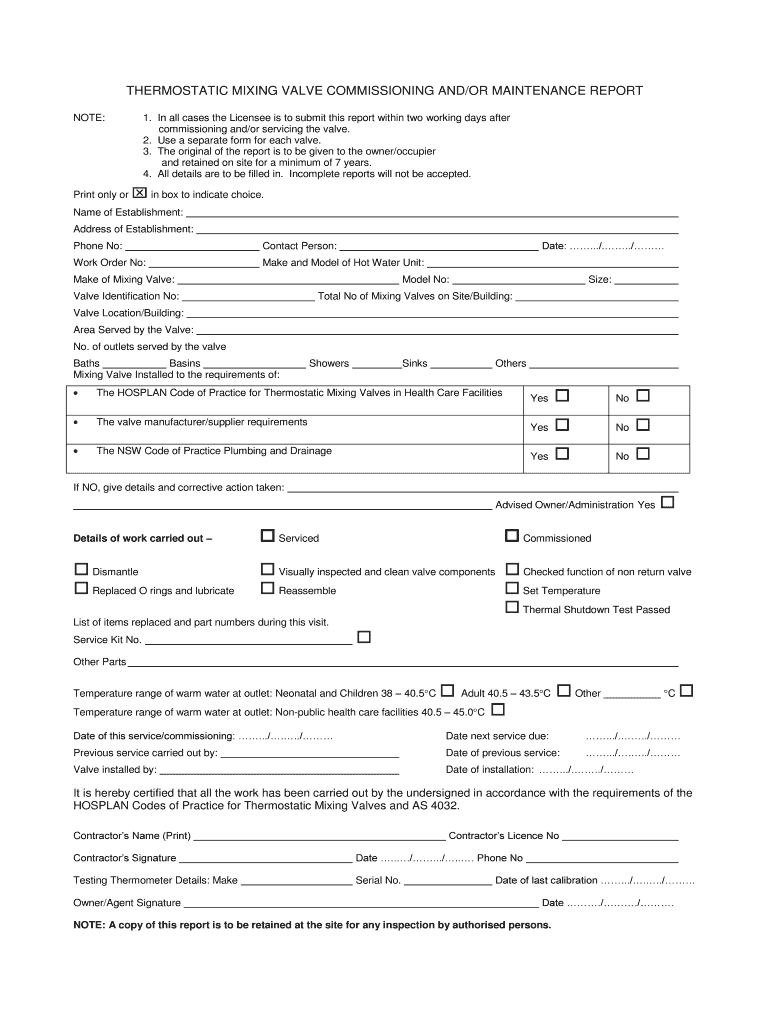
The Thermostatic Mixing Valve Commissioning and Maintenance Report serves as a crucial document that outlines the procedures and standards for ensuring the effective operation and safety of thermostatic mixing valves (TMVs) in healthcare facilities and other settings. A TMV is designed to blend hot and cold water to deliver water at a regulated temperature, thereby preventing scalding and ensuring safe water delivery, particularly in settings where vulnerable populations, such as children or the elderly, are present. This report is essential for documenting the commissioning process and ongoing maintenance, ensuring compliance with local regulations and best practices.
The commissioning process typically involves installing and testing the TMVs to verify their performance according to the manufacturer's specifications. The report should include comprehensive details such as the specific valve model, installation location, and the professionals responsible for the commissioning. Furthermore, it provides a structured format for periodic maintenance checks, ensuring valves remain functional over time.
Key Elements of the Thermostatic Mixing Valve Commissioning and Maintenance Report
A well-structured commissioning and maintenance report should include specific key elements to ensure thorough documentation and compliance:
- Identification Information: The report must capture details about the TMV, including its model number, serial number, and installation date.
- Facility Information: It should specify the name and address of the healthcare facility or establishment where the TMV is installed.
- Compliance Certifications: Documentation confirming that the installation meets relevant local and state codes of practice must be included.
- Inspection Records: Detailed notes on any inspections conducted, including findings and corrective actions taken, enhance accountability.
- Results of Testing: Results from any functionality tests performed on the valves, including temperature readings and flow rates, must be documented.
- Signature of Involved Professionals: A section for the signatures of the contractor or qualified professional who performed the commissioning and maintenance enhances legitimacy.
Each of these elements works together to formulate a comprehensive report that not only confirms compliance but also serves as a reference for future maintenance and inspections.
Steps to Complete the Thermostatic Mixing Valve Commissioning and Maintenance Report
Completing a Thermostatic Mixing Valve Commissioning and Maintenance Report requires careful attention to detail. Follow these steps:
- Gather Necessary Documentation: Collect all relevant information regarding the TMV, including manufacturer specifications and installation records.
- Conduct Initial Testing: Perform initial testing to ensure the TMV is functioning within specified parameters. Note down results in a clear and organized format.
- Fill Out Identification Section: Begin the report by entering identification details for the TMV and the facility.
- Document Inspection Findings: Include any observations made during the commissioning process, particularly any deviations from expected performance.
- Compile Compliance Certifications: Attach or reference any compliance certifications to ensure regulatory requirements are being met.
- Review and Sign: Have the report reviewed by a qualified professional familiar with the TMV system and secure their signature to validate the report.
Each step must be performed meticulously to guarantee the report reflects accuracy and compliance with regulatory standards.
Importance of the Thermostatic Mixing Valve Commissioning and Maintenance Report
The Thermostatic Mixing Valve Commissioning and Maintenance Report plays an integral role in maintaining safety and reliability in water delivery systems within healthcare environments. Its importance is highlighted through several key points:
- Regulatory Compliance: Submission of the report is often mandated by local health authorities and building codes, emphasizing its role in legal compliance.
- Safety Assurance: Regular commissioning and maintenance records provide evidence that TMVs are functioning as intended, reducing the risk of scalding incidents.
- Operational Efficiency: This documentation allows facilities to track the performance of their water systems, ensuring that they operate at optimal efficiency over time.
- Audit Readiness: Having up-to-date reports readily available can prepare facilities for inspections or audits by health regulators, demonstrating a commitment to safety standards.
By understanding the critical role of this report, facilities can prioritize their commissioning and maintenance activities, enhancing overall safety and compliance.
Who Typically Uses the Thermostatic Mixing Valve Commissioning and Maintenance Report
Various individuals and organizations are involved in the commissioning and maintenance process and subsequently utilize this report:
- Healthcare Facility Managers: Responsible for overseeing water systems in hospitals and clinics, ensuring compliance with safety regulations.
- Contractors and Engineers: Professionals involved in the installation and maintenance of TMVs who rely on this documentation for validating their work.
- Compliance Officers: Individuals responsible for ensuring that facilities adhere to state and federal regulations use the report as a verification tool.
- Maintenance Staff: Team members conducting regular checks and maintenance rely on the report to understand historical data and past maintenance efforts.
Understanding who utilizes the report can aid in drafting it appropriately to meet the needs of each stakeholder involved.