
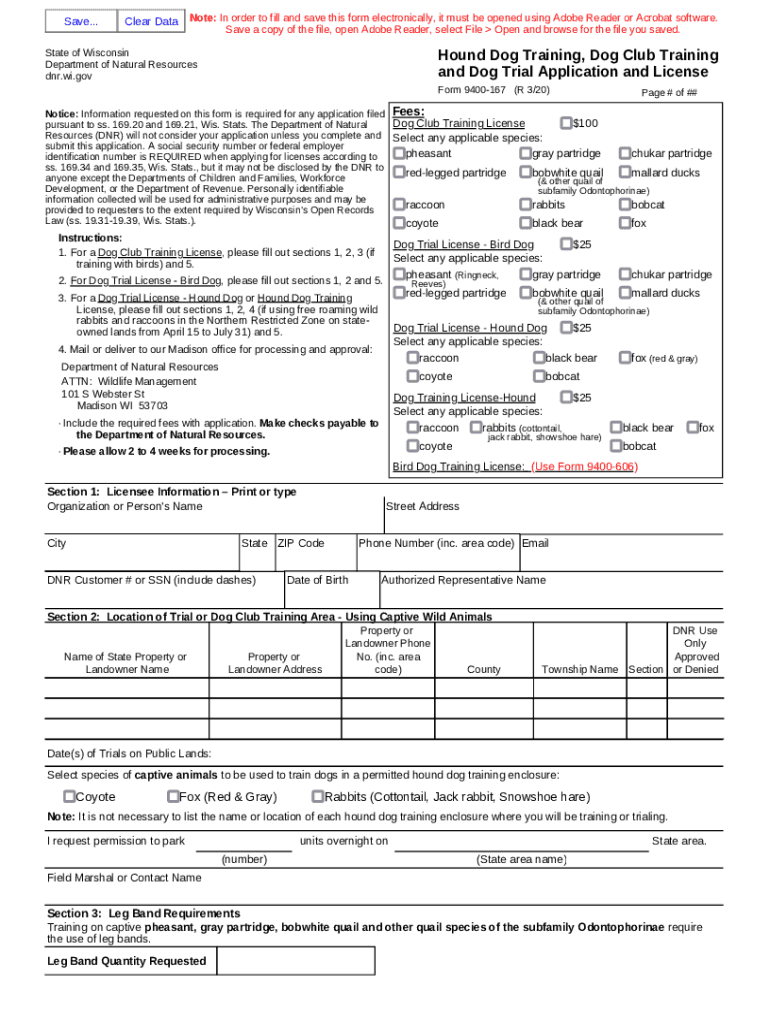







Definition and Purpose of Form 9400-167
Form 9400-167, also known as the "Hound Dog Training, Dog Club Training and Dog Trial Application and License," is used primarily in Wisconsin to regulate activities related to dog training and trials. This form is crucial for organizations and individuals who manage or participate in hound or bird dog training events. Its primary purpose is to ensure compliance with state regulations regarding the training and trialing of dogs in organized settings. By submitting this form, applicants can obtain the necessary license to conduct training classes or trials officially.
How to Use the Form 9400-167
Utilizing Form 9400-167 involves a series of steps designed to secure permission to host dog training and trial events. Applicants must first download the form from the Wisconsin Department of Natural Resources (DNR) website or request a physical copy. Upon receipt, it is essential to fill out all pertinent sections accurately. This includes specifying the type of event, location, dates, and dog breeds involved. Careful attention to detail is required to avoid processing delays.
- Specify the exact location of the event.
- Detail the breeds that will be participating.
- Ensure all applicant information is current and correct.
How to Obtain Form 9400-167
Form 9400-167 can be obtained via several methods. One convenient way is to visit the Wisconsin Department of Natural Resources' official website, where you can download the form directly. Alternatively, you may contact the DNR by phone or mail to request a paper copy. It is advisable to obtain the form well in advance of your planned event to allow ample time for completion and submission.
Steps to Complete Form 9400-167
Completing the Form 9400-167 involves several critical stages:
- Applicant Information: Begin by entering your personal or organization details, ensuring accuracy as this information is used for identification and contact purposes.
- Event Details: Clearly outline the type of event, including whether it is a training session or trial. Provide comprehensive information about the date, time, and location.
- Species Selection: Detail the species and number of dogs expected to participate.
- Fee Submission: Calculate the required fees based on the event type and include payment with your form submission.
- Review and Submit: Double-check all information before submission to the Wisconsin DNR according to the instructions specified on the form.
Who Typically Uses Form 9400-167
Form 9400-167 is typically used by dog training clubs, individual trainers, and organizations hosting trials for hound dogs and bird dogs in Wisconsin. This demographic includes trainers who specialize in competitive dog sports, hunting dog enthusiasts, and clubs organizing obedience or agility events. Compliance with this form ensures that their events meet regulatory standards set by state authorities.
Key Elements of Form 9400-167
The key elements of Form 9400-167 help applicants successfully navigate the licensing process:
- Event Type: Identifying whether your event is for training or a trial.
- Breed Information: Detailing the breeds involved ensures suitability for event type.
- Location and Timing: Accurate information is essential for logistical coordination.
These elements are critical for precise processing of your application by the DNR.
Important Terms Related to Form 9400-167
Understanding the specific terms associated with Form 9400-167 is crucial. Terms such as "hound dog," "bird dog," "trial," and "training event" have legal and procedural importance. Familiarity with these terms ensures that applicants accurately convey meaning and intentions when completing the form. Moreover, understanding the terminology aids in the smoother execution of the application process.
Legal Use of Form 9400-167
Form 9400-167 must be used in a legal context within Wisconsin's regulatory framework. It grants dog clubs and trainers the authority to conduct recognized and compliant training sessions and trials. Operating outside compliance parameters may result in penalties. Therefore, it is crucial to follow guidelines set forth by the DNR to avoid any legal repercussions.
State-Specific Rules for Form 9400-167
Form 9400-167 is subject to Wisconsin-specific regulations. Event organizers must abide by state-approved standards regarding dog training and trials. This includes obedience to wildlife management laws, species-specific rules, and adherence to conservation efforts. Understanding these parameters ensures environmental and community standards are maintained during dog-related events.
Required Documents for Submission
When submitting Form 9400-167, applicants must include several essential documents:
- Proof of Insurance: Documentation verifying liability coverage for the event.
- Event Schedule: A detailed timeline and description of activities planned.
- Payment Confirmation: Evidence of fee submission, based on DNR's requirements.
Supplementary materials aid in the timely processing and approval of your license and should be prepared and organized before submission.
Form Submission Methods
Individuals and organizations may submit Form 9400-167 through various channels. One option is submitting in person at a designated Wisconsin DNR office. Alternatively, submissions can be mailed directly to the DNR headquarters. Whichever method is chosen, ensure that all sections are completed correctly, and all necessary documents are enclosed to avoid processing delays.
Penalties for Non-Compliance
Failing to comply with regulations outlined in Form 9400-167 can have significant consequences. Potential penalties include fines, event cancellation, and suspension of future licensing rights. These repercussions underscore the importance of adhering to all licensing conditions and state laws governing dog training events and trials.
Versions or Alternatives to Form 9400-167
Though Form 9400-167 is specific to Wisconsin’s requirements, similar forms may exist in other states. It is essential for applicants moving or operating in another region to consult local wildlife or natural resource departments for equivalent documentation. Establishing which form is appropriate helps ensure compliance across different jurisdictions.




