
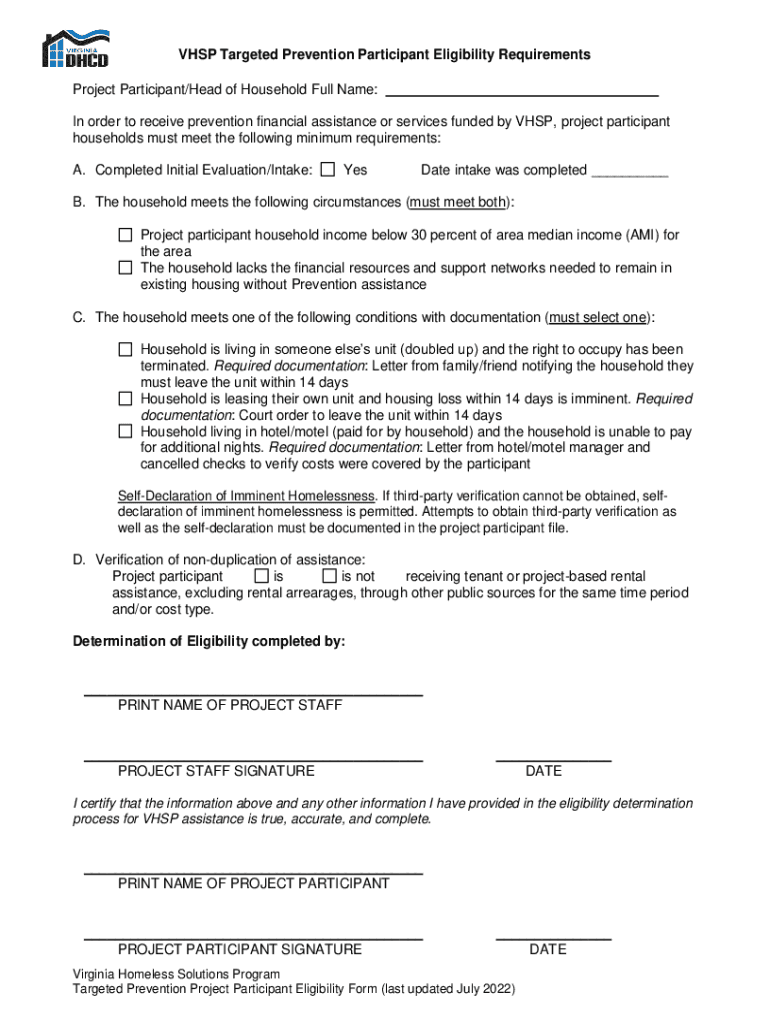







Definition and Scope of the Virginia Homeless and Special Needs Housing Funding
The Virginia Homeless and Special Needs Housing Funding is a state-level initiative aimed at providing financial assistance to address homelessness and special housing needs within Virginia. This funding supports programs targeting individuals and families facing imminent homelessness, allowing for various interventions tailored to diverse housing crises. The program encompasses a broad spectrum of aid, from emergency shelters to supportive housing services, addressing both immediate and long-term housing requirements. These efforts aim to create sustainable living conditions for vulnerable populations, thereby enhancing community stability and individual well-being.
Key Objectives
- To reduce homelessness through tailored support and interventions.
- To offer emergency and transitional housing solutions.
- To provide long-term affordable housing options.
Program Structure
- Emergency Assistance: Immediate housing solutions such as shelters.
- Transitional Programs: Supportive services aimed at transitioning individuals to stable housing.
- Permanent Housing Services: Long-term housing assistance for ongoing stability.
Eligibility Criteria for Funding
To qualify for the Virginia Homeless and Special Needs Housing Funding, applicants must meet specific criteria set by the Virginia Housing Development Authority. These criteria ensure the aid reaches those who need it the most. Understanding and meeting these conditions is crucial for applicants to receive assistance.


Basic Requirements
- Income Threshold: Applicants must have a household income below 30% of the area median income.
- Documented Homelessness: Potential beneficiaries must provide evidence of their homeless status or risk thereof.
- Non-Duplication of Benefits: Verification that the applicant isn't receiving similar financial assistance from other public sources.
Additional Specifications
- Residency in Virginia is required.
- Participants must undergo an initial eligibility assessment process.
- Documentation of financial need and housing status is mandatory.
Steps to Apply for Assistance
Applying for the Virginia Homeless and Special Needs Housing Funding involves several steps. It's important to follow the application process meticulously to ensure eligibility and expedite approval.
- Initial Evaluation: Conduct a preliminary assessment to determine eligibility based on income and housing status.
- Documentation Gathering: Collect necessary documents, including income statements, proof of residence, and evidence of homelessness.
- Application Submission: Submit the completed application form along with all required documentation.
- Interviews and Assessments: Participate in any required interviews or additional assessments as mandated by the program administrators.
- Approval and Allocation: Upon approval, funds are allocated as per the applicant's specific housing needs.
How to Successfully Use the Funding
Once approved for the Virginia Homeless and Special Needs Housing Funding, recipients can utilize it for various housing-related services. Understanding the permitted uses of these funds is essential for compliance and effective utilization.
Appropriate Uses
- Shelter Costs: Cover expenses for short-term and emergency sheltering.
- Rental Assistance: Aid in covering rent costs for transitional or permanent housing.
- Support Services: Include counseling, job training, and educational programs aimed at ensuring housing stability.
Compliance and Reporting
Recipients are often required to report how funds are used, ensuring compliance with program guidelines. This accountability helps in maintaining continued support and future funding eligibility.
Legal and Regulatory Considerations
The legal framework surrounding the Virginia Homeless and Special Needs Housing Funding is crucial for ensuring proper compliance and utilization of funds. Familiarity with these legal stipulations helps avoid penalties and ensures ongoing eligibility.
Regulatory Framework
- Adherence to the ESIGN Act ensures that all electronic documents and signatures are legally binding and secure.
- Compliance with housing laws and guidelines to prevent misuse of funds.
Penalties for Non-Compliance
- Misuse of funds or failure to adhere to spending guidelines can result in penalties, including the requirement to return funds or disqualification from future assistance.
- In severe cases, legal actions may be taken against those who knowingly misuse the funding.
Examples of Funding Impact
Real-world examples illustrate the significance of the Virginia Homeless and Special Needs Housing Funding. These cases demonstrate how the program effectively assists those in housing crises.
Case Studies
- Family Rehousing: A single-parent household previously living in a car received rental assistance which facilitated a move into a permanent home.
- Veteran Support: Housing funding helped a disabled veteran transition from a shelter to a supported living facility tailored to meet his needs.
- Youth Initiative: The funding supported a program aimed at providing stable housing for homeless youth, integrating educational and vocational training.
Important Terminology
A clear understanding of key terms used in the context of the Virginia Homeless and Special Needs Housing Funding is essential for effective application and communication about the program.
Key Terms
- Area Median Income (AMI): A measure used to determine eligibility based on local income levels.
- Emergency Shelter: Short-term accommodation for individuals and families in crisis.
- Supportive Housing: Long-term housing with additional services aimed at improving resident self-sufficiency.
Form Submission Methods and Formats
Understanding the available methods for submitting applications and related documents for the Virginia Homeless and Special Needs Housing Funding can streamline the application process.
Available Submission Methods
- Online Submission: Applications can be submitted electronically through the Virginia Housing Development Authority's online portal.
- Mail-In Applications: Physical copies of the application and supporting documents can be sent via post.
- In-Person Submission: Applicants may hand-deliver documents to designated local offices for processing.
Digital Compatibility
- All forms and submissions should be formatted consistently to ensure readability and compatibility with processing systems.
- Ensure electronic files use standard formats, such as PDF, to prevent issues with document accessibility.
By closely following these comprehensive guidelines and thoroughly understanding each section, applicants and administrators can effectively navigate the process of obtaining and utilizing the Virginia Homeless and Special Needs Housing Funding.




