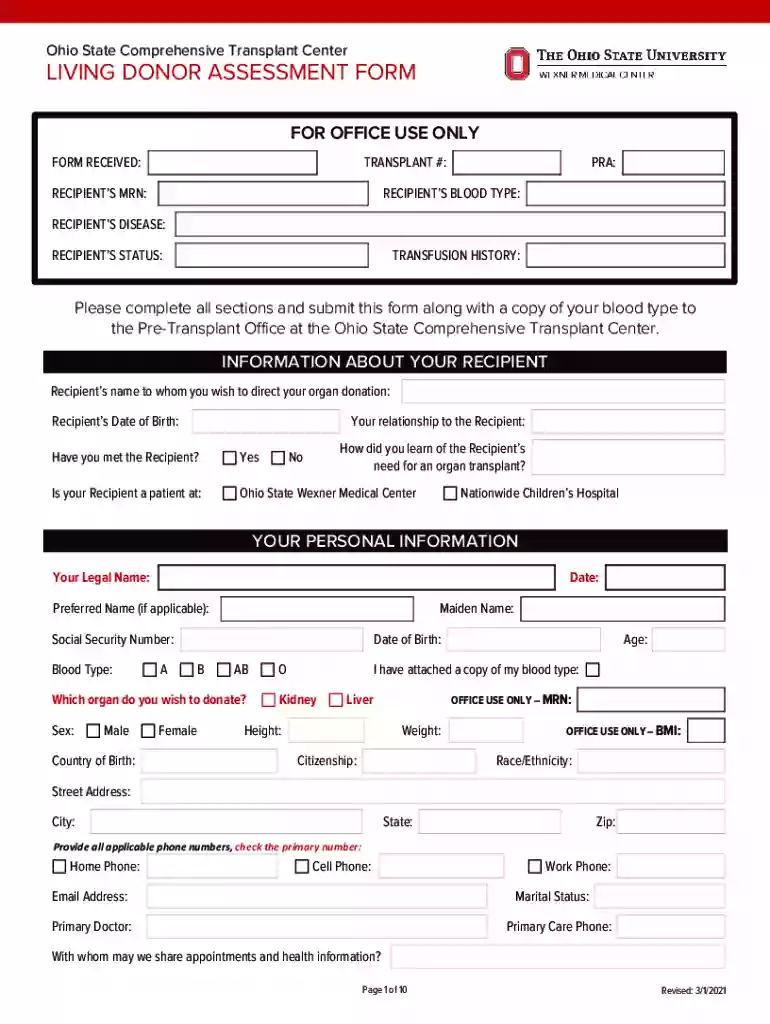
Definition and Purpose of the Donor Health History Form
The Donor Health History Form is a critical document used in the evaluation process for individuals considering organ donation. This form collects detailed personal and medical information to assess a potential donor's suitability for living organ donation. By gathering comprehensive data on a donor's health and lifestyle, the form aids healthcare professionals in determining the risk factors and compatibility for a successful transplant. The purpose of this form extends to ensuring the safety of both the donor and recipient by identifying any medical or social conditions that could affect the outcome of the donation.
Key Sections in the Donor Health History Form
General Health Overview
- The form begins with a section on general health, requiring donors to provide details about their current health status, including chronic conditions and recent medical treatments.
- Common inquiries include questions about any ongoing medical care, medications being taken, and any known allergies.
Medical History
- A comprehensive medical history is essential to evaluate the donor's overall health. This section asks for information about past surgeries, hospitalizations, and any serious illnesses.
- Donors are also required to report any history of infectious diseases, such as tuberculosis or HIV, which could impact their eligibility for donation.
Social and Lifestyle Factors
- The donor’s lifestyle habits, such as smoking, alcohol consumption, and recreational drug use, are assessed to understand their potential impact on organ compatibility.
- The donor’s occupation and social environment are also considered, as these factors can influence recovery post-donation and long-term health outcomes.
Consent for Pre-Evaluation Tests
- Potential donors must provide consent for various pre-evaluation tests required to determine their suitability for organ donation.
- These tests may include blood tests, imaging studies, and psychological evaluations to ensure a holistic assessment of the donor's health and readiness for surgery.
Steps to Complete the Donor Health History Form
- Gather Personal Information: Start by compiling personal data, including name, date of birth, and contact information.
- Collect Medical Records: Assemble relevant medical documents, such as previous test results and lists of current medications, to accurately fill out the medical history section.
- Complete Each Section Thoroughly: Answer all questions honestly and completely, as omitting details can lead to incomplete assessments.
- Consult with Healthcare Providers: If uncertain about any medical history aspects, consulting with a healthcare provider can ensure accurate information is recorded.
- Review and Submit: Before submitting, review the entire form to confirm all information is accurate and current. Ensure all consent sections are signed appropriately.
Electronic vs. Paper Submission
- Many medical centers offer the option to complete the form electronically, which can expedite processing and reduce paperwork.
- Some centers may still accept paper submissions, but electronic methods are generally preferred for efficiency and ease of access.
Legal Use of the Donor Health History Form
- The form must be used in compliance with federal and state regulations governing organ donation.
- Donors’ information is protected under the Health Insurance Portability and Accountability Act (HIPAA), ensuring confidentiality and privacy.
- Legal consent for pre-evaluation testing and eventual donation must be obtained and documented through the form, adhering to ethical guidelines and the donor's autonomy.
State-Specific Rules for the Donor Health History Form
- Different states might have unique requirements, such as additional consent forms or specific tests mandated by state health departments.
- Some states may require a witness signature or notarization for the form to be legally recognized.
By understanding the importance, components, and completion process of the Donor Health History Form, potential donors and medical professionals can ensure a smooth and thorough evaluation process, ultimately facilitating safe and effective organ donations.