




01. Edit your form online
Type text, add images, blackout confidential details, add comments, highlights and more.

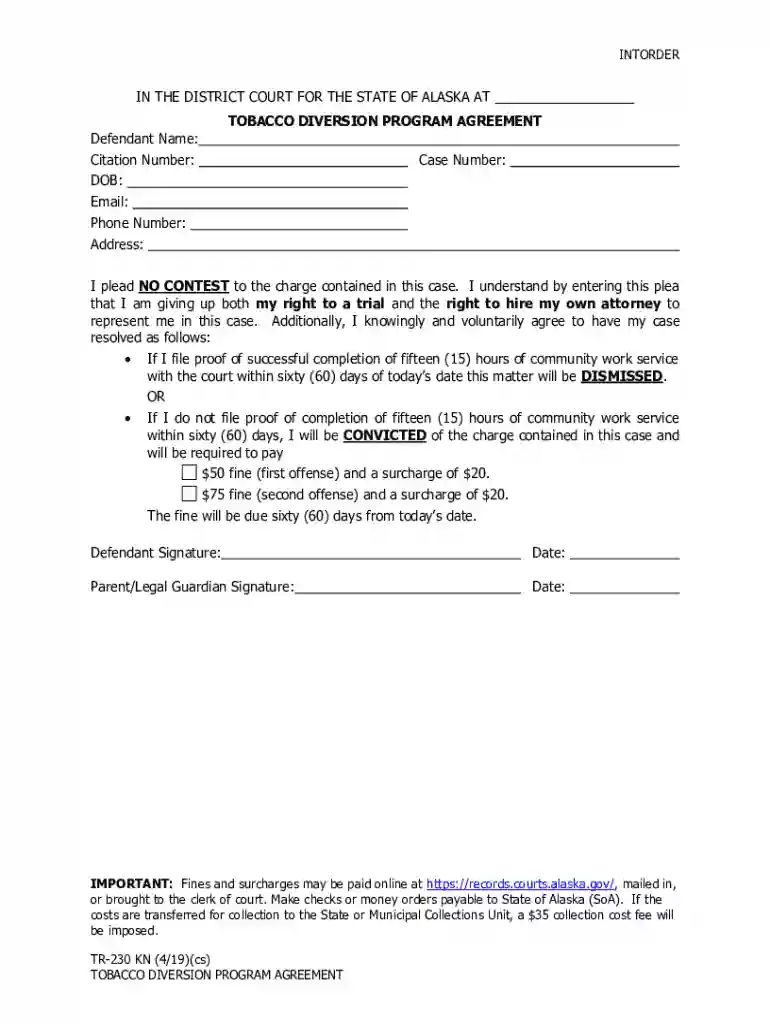
Type text, add images, blackout confidential details, add comments, highlights and more.

Draw your signature, type it, upload its image, or use your mobile device as a signature pad.

Send it via email, link, or fax. You can also download it, export it or print it out.
The "TR-200 Defendant's Request to Reschedule Hearing" is a formal legal document used within the U.S. legal system. This form allows a defendant to officially request a change in the schedule for a hearing. The hearing in question could be related to various legal proceedings and is typically part of the procedural rights granted to a defendant. The purpose of this form is to provide an organized method for defendants to communicate their need for rescheduling to the court, ensuring that their rights to due process and fair representation are maintained. Courts typically require valid reasons for such requests, which must be documented within the form.
Using the TR-200 form involves several straightforward steps, ensuring clarity and proper submission:
Obtaining the TR-200 form is a simple process:
Completing the TR-200 form involves a step-by-step approach to ensure accuracy and thoroughness:
Utilizing this form is critical for defendants facing unavoidable scheduling conflicts or emergencies:
This form is primarily used by:


The TR-200 form consists of several crucial components:
State laws and court procedures can significantly impact how the form is used:
Various scenarios illustrate when this form might be utilized:
Each of these sections comprehensively covers various aspects of the "TR-200 Defendant's Request to Reschedule Hearing" form, providing both general and specific insight into its usage and significance within the U.S. legal system.
We've got more versions of the TR-200 Defendant's Request to Reschedule Hearing form. Select the right TR-200 Defendant's Request to Reschedule Hearing version from the list and start editing it straight away!
Electronic document signing demands a software solution that complies with data security and eSignature standards. DocHub is a great tool for that, because it fulfills all the aforementioned requirements. Whatever method you prefer to sign your TR-200 Defendant's Request to Reschedule Hearing in DocHub, your electronic signature will be legally binding and court-admissible.
If you are using Chrome, there are two simple methods to edit your TR-200 Defendant's Request to Reschedule Hearing online. First, visit the DocHub site, add your document, and edit it utilizing our toolbar. You may also set up our Chrome extension and edit any document by dragging and dropping it in your web browser tab.
At DocHub, your data security is our priority. We follow HIPAA, SOC2, GDPR, and other standards, so you can work on your documents with confidence.
Original Brief Submitted to the Utah Court of Appeals; digitized by the Howard W. Hunter Law. Library, J. Reuben Clark Law School, Brigham Young University,Read more
I will not be available on the following dates: I understand that, under Minor Offense Rule 15, I have a right to have my trial within 120 days.Read more


