
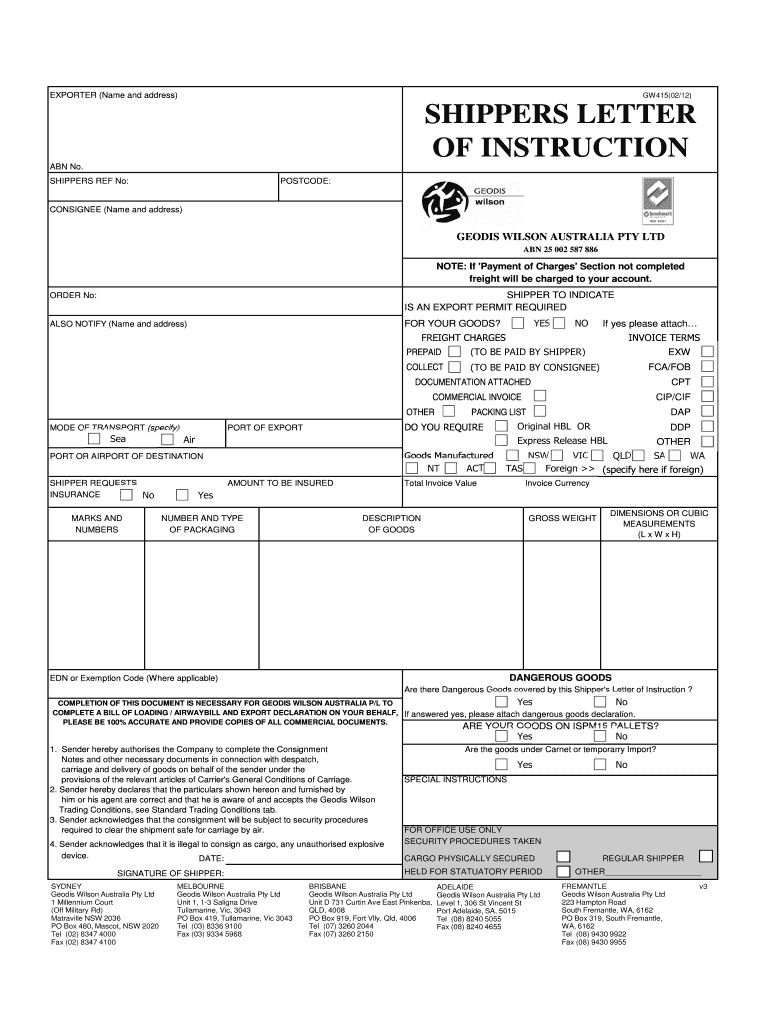







Definition & Meaning of Shipper's Letter of Instructions
The shipper's letter of instructions is a crucial document in the transportation and logistics industry. It acts as a formal directive from the shipper to the carrier, detailing essential information necessary for the shipping process. This document outlines instructions on how to handle the shipment, including documentation requirements, payment terms, and delivery instructions.
Key components of the shipper's letter of instructions may include:
- Shipper and Consignee Information: Names, addresses, and contact details of both the sender and the receiver.
- Routing Instructions: Specific directions regarding the preferred transport route or method.
- Payment Details: Instructions on how shipping costs will be covered, whether prepaid or collect.
- Handling Instructions: Any special requirements for handling the goods, particularly if they are fragile, hazardous, or perishable.
- Required Documentation: A list of necessary documents to accompany the shipment, such as bills of lading, customs declarations, or insurance certificates.
Understanding this document enhances compliance with logistics regulations and helps streamline the shipping process, minimizing delays and errors.
How to Use the Shipper's Letter of Instructions
Using the shipper's letter of instructions effectively is vital for seamless shipping operations. The process involves several key steps that can help ensure accuracy and efficiency.
- Gather Necessary Information: Before completing the letter, collect all relevant details about the shipment, including the type and quantity of goods, shipping dates, and recipient information.
- Fill Out the Document: Clearly input the shipper and consignee details, ensuring all contact information is correct. Include detailed routing, payment instructions, and special handling notes.
- Attach Required Documents: Reference any accompanying documents in the letter, making sure to include bills of lading or customs paperwork if needed.
- Review for Accuracy: Check for any errors or omissions. An accurate letter reduces the risk of shipping delays.
- Distribute the Letter: Send the completed letter to the carrier, and provide copies to relevant stakeholders, such as the consignee and customs broker.
Following these steps helps facilitate a smoother shipping experience, ensuring that all parties have the necessary information to process the shipment correctly.
Steps to Complete the Shipper's Letter of Instructions
Completing the shipper's letter of instructions involves a systematic approach to ensure that all required details are accurately captured. Here are the steps to effectively fill out this document:
-
Begin with Basic Information:
- Indicate the shipper's name and address.
- Provide the consignee's name and address.
-
Detail Shipment Information:
- Include specifics about the goods being shipped. This might involve product descriptions and itemized lists, particularly for complex shipments.
- Specify the total weight and volume of the shipment.
-
Outline Delivery Instructions:
- Clarify the preferred shipping method (air, sea, truck) and the desired delivery date.
- Mention any special handling requirements, such as "keep refrigerated" or "handle with care."
-
State Payment Instructions:
- Clearly indicate payment terms: whether the costs are prepaid, billed to the consignee, or paid upon delivery.
-
List Required Documentation:
- Identify all documents that must accompany the shipment, ensuring customs regulations and any necessary insurance are addressed.
-
Provide Signatures:
- Ensure that the shipper signs the document for validation, reflecting their agreement to the outlined instructions.
Each step contributes to a more organized shipping process, minimizing the potential for issues that may arise during transport.
Key Elements of the Shipper's Letter of Instructions
The shipper's letter of instructions contains several key elements essential for ensuring clarity and compliance during the shipping process. Understanding these elements is crucial for both shippers and carriers.
- Contact Information: Full details of the shipper and consignee, including names, addresses, and phone numbers.
- Shipment Details: Descriptions of the goods, including HS codes if applicable, quantity, and weight. This section helps carriers and customs officials assess the shipment.
- Routing and Delivery Instructions: Clear directives regarding how and where the shipment should be transported, including preferred routes and delivery deadlines.
- Payment Terms: Explicitly stating who is responsible for shipping costs reduces confusion and ensures proper billing.
- Documentation Reference: Listing required documents needed for shipment, such as import/export permits or insurance details.
By including these elements, the shipper ensures that all parties involved are informed and prepared, reducing the risk of complications during transport.
Examples of Using the Shipper's Letter of Instructions
Practical examples can shed light on the application of the shipper's letter of instructions in real-world scenarios.
- E-commerce Shipments: An online retailer shipping goods to various customers might use the letter to specify shipping methods and payment terms for each order. For instance, if shipping electronics, they would detail special handling requirements to prevent damage.
- Exporting Goods: A manufacturer exporting machinery overseas would document the necessary customs forms and specify a freight forwarder. The letter would include details on insurance coverage and routing instructions to ensure compliance with international regulations.
- Perishable Goods: A food distributor shipping fresh produce would clearly state temperature requirements in the letter of instructions. They might include instructions for expedited shipping to maintain product quality.
These examples illustrate how the shipper's letter of instructions serves different sectors and shipping needs while ensuring that critical information is shared with carriers and relevant parties.




