






Definition & Meaning of the Fetal Death Certificate
The fetal death certificate serves as an official document confirming the death of a fetus, providing may be necessary documentation for various legal, medical, and administrative processes. In the United States, this certificate is crucial for public health statistics and helps ensure accurate reporting of fetal deaths for analysis at state and national levels. It differs from a regular birth certificate, as it reflects that the fetus was not born alive, which holds importance for tracking health outcomes and trends within populations.
-
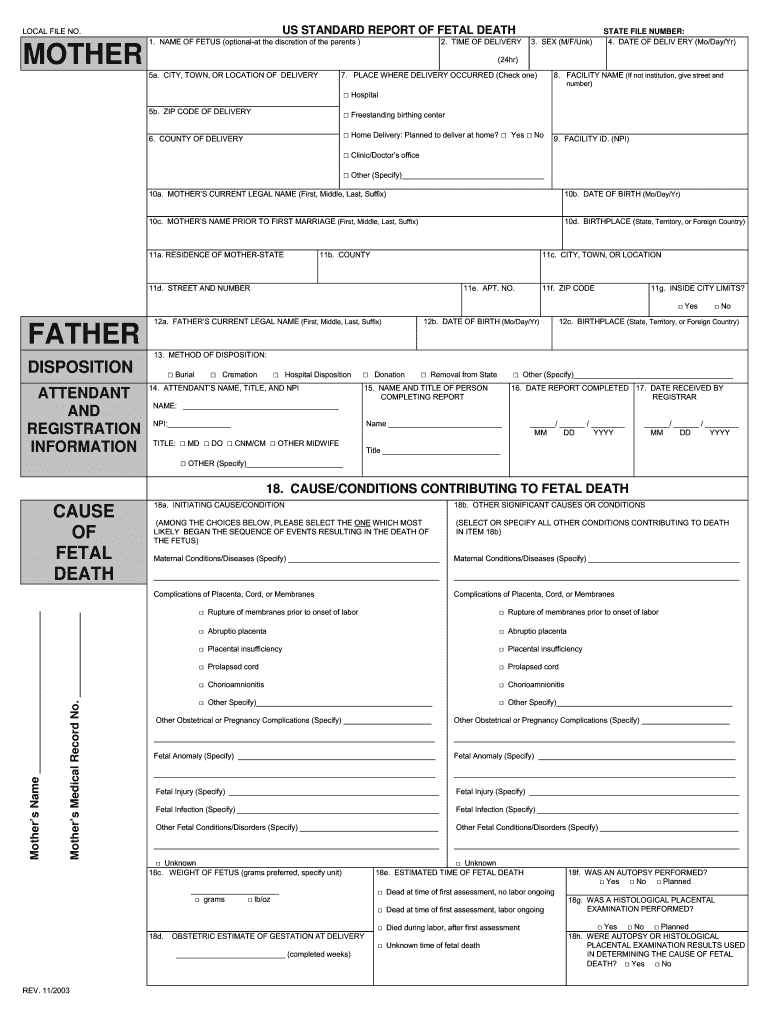
Key Components: The document typically includes essential information such as the gestational age, the cause of death, maternal and paternal details, and delivery circumstances. This comprehensive approach aids in evaluating factors contributing to fetal mortality.
-
Public Health Importance: Collecting and reporting data on fetal deaths can highlight possible areas for improvement in maternal care, public health initiatives, and access to healthcare services. This information can also inform policies that aim to prevent future occurrences through targeted interventions.
Steps to Complete the Fetal Death Certificate
Completing a fetal death certificate requires careful attention to detail to ensure accuracy and compliance with state regulations. The steps outlined below provide a clear process for filling out this important document.
-
Gather Necessary Information: Begin by collecting relevant details from the parents, including personal information, medical history, and particulars of the pregnancy. This data primarily includes:
- Mother’s full name, date of birth, and address
- Father’s full name, date of birth, and address
- Information about the pregnancy, including the estimated due date
-
Document Prenatal and Delivery Details: The next section should capture information related to medical care before and during delivery. Include details such as:
- Dates of prenatal visits
- Results of any relevant medical testing or conditions
- The location of delivery (hospital or other facility)
-
Complete the Cause of Death Section: This section should specifically outline the reason for the fetal death, including any diagnosed conditions or anomalies. Consider the following when detailing causes of death:
- Congenital anomalies or defects
- Maternal health issues or complications during pregnancy
- Environmental or external factors (e.g., accidents affecting maternal health)
-
Review for Accuracy: Before finalizing the document, verify all information for correctness. Ensure there are no spelling errors and that all required fields are filled out properly.
-
Signature Requirements: Finally, obtain the necessary signatures from the healthcare provider and, if required, the parents. Their signatures authenticate the information provided and finalize the document.
How to Obtain the Fetal Death Certificate
Securing a fetal death certificate involves navigating specific channels, typically beginning with the healthcare provider who attended to the case. The process generally involves the following steps:
-
Request from Healthcare Provider: The attending physician or healthcare facility that managed the pregnancy will usually fill out the fetal death certificate. They are responsible for ensuring that the details are correctly documented and signed.
-
Submission to Vital Records Office: Once completed, the healthcare provider submits the fetal death certificate to the state’s vital records office. This office maintains all birth and death records, including those relating to fetal deaths.
-
Receiving the Certified Copy: Family members can then request copies of the fetal death certificate through the vital records office. Often, this can be done online or by mail. Requirements may include:
- Proof of identification for the requester
- Payment of applicable fees
Important Terms Related to Fetal Death Certificate
Understanding the associated terminology is critical for navigating the fetal death certificate process effectively. Below are important terms to familiarize yourself with:
-
Gestational Age: Refers to the age of the fetus at the time of death, usually expressed in weeks.
-
Stillbirth: The term used when a fetus dies at or after twenty weeks of gestation and is delivered dead.
-
Antepartum Death: A fetal death that occurs before labor begins.
-
Intrapartum Death: A fetal death that takes place during the labor and delivery process.
-
Congenital Anomalies: Physical or structural abnormalities present at birth that can lead to mortality, influencing how the fetal death is recorded.
State-Specific Rules for the Fetal Death Certificate
Rules governing the fetal death certificate and its use can vary significantly across states in the U.S. Understanding these regulations ensures compliance and proper documentation. Some common aspects of these state-specific rules include:
-
Gestational Age Requirements: Many states stipulate a minimum gestational age (usually twenty weeks) for reporting fetal deaths.
-
Submission Deadlines: Each state has specific deadlines for when the certificate must be filed following the fetal death. This period may range from hours post-delivery to several days.
-
Required Signatures: Certain states may mandate signatures from both the attending physician and the parents, while others may allow the physician's signature alone.
-
Forms Availability: States provide their own templates or online forms for documenting fetal deaths, which may differ in layout and required information.
Understanding these state-specific regulations is essential for ensuring accurate reporting and processing of the fetal death certificate, which ultimately contributes to public health data collection and analysis.