
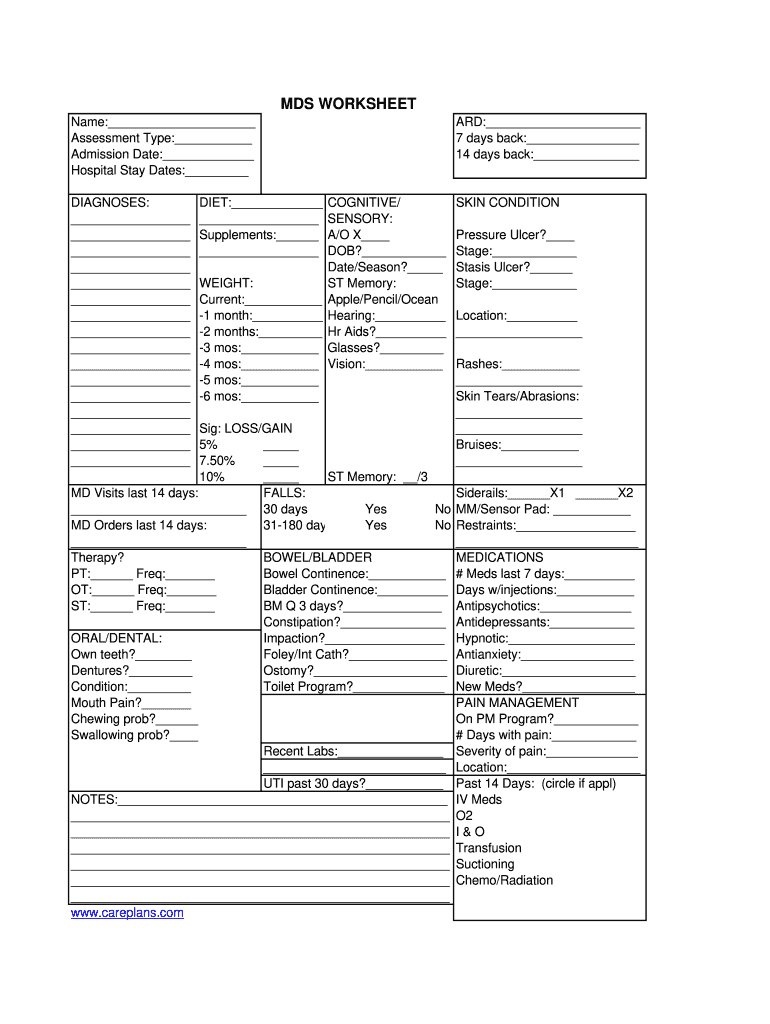







Definition and Significance of the MDS Worksheet
The MDS worksheet, also known as the Minimum Data Set worksheet, is a comprehensive assessment tool used primarily in healthcare settings, particularly skilled nursing facilities. It aims to collect uniform and standard information about residents' health status and needs, ensuring that they receive individualized care. The MDS assessment is essential for developing care plans and monitoring patient health over time, making it a critical component of quality healthcare delivery.
The data gathered in the MDS worksheet spans various areas, including patient identification, medical history, cognitive and sensory evaluations, dietary information, and medication records. This structured format ensures that all necessary information is systematically recorded, facilitating effective communication among healthcare professionals, including physicians, nurses, and therapists. The MDS 3.0 version, which is the current standard, has been developed to enhance the process by incorporating resident and family preferences and improving the accuracy of assessments.
Steps to Complete the MDS Worksheet
Completing the MDS worksheet requires a methodical approach to ensure accuracy and compliance with regulatory standards. Below are the key steps involved:
-
Patient Identification: Gather patient demographic information, including name, date of birth, and admission date.
-
Medical History: Document any pre-existing conditions, surgeries, or significant medical events that could affect the resident’s care plan.
-
Cognitive and Sensory Assessment: Evaluate the patient’s cognitive status and sensory functions to identify potential care needs in these areas.
-
Dietary and Nutritional Needs: Record dietary preferences and restrictions, ensuring that any specific health concerns related to nutrition are noted.
-
Medication Documentation: Capture a comprehensive list of all medications the patient is currently taking, including dosages and any side effects.
-
Therapy and Rehabilitation Requirements: Note any ongoing therapy needs based on physical, occupational, or speech therapy assessments.
-
Bowel and Bladder Management: Assess the individual’s needs regarding bowel and bladder care, documenting any issues and care instructions.
-
Oral and Dental Health: Include evaluations about the resident’s oral health and any necessary dental care.
-
Final Review and Submission: Once all sections are complete, cross-check the information for accuracy and submit the worksheet as per facility protocols.
Each step is crucial for ensuring comprehensive data collection that meets both the clinical needs of the patient and the regulatory requirements of the facility.
How to Obtain the MDS Worksheet
Obtaining the MDS worksheet is a straightforward process, primarily involving the following methods:
-
Direct Download: Many healthcare facilities or organizations that utilize the MDS framework provide downloadable versions of the MDS worksheet on their websites. Ensure you are accessing the most recent version, such as MDS 3.0, to stay compliant with current regulations.
-
From Regulatory Bodies: The Centers for Medicare & Medicaid Services (CMS) oversees the MDS framework and often provides access to necessary forms and resources. Their official website hosts the latest updates and downloadable templates.
-
Healthcare Software Solutions: Numerous electronic health record (EHR) systems include integrated MDS assessment tools. Users can easily access and complete the MDS worksheet within their existing healthcare software, streamlining the documentation process.
-
Training Resources: Health care institutions sometimes offer training sessions that include access to the MDS worksheet along with guidelines on completing it correctly. Engaging in these training opportunities can also provide further insights into the assessment process.
By utilizing these methods, healthcare professionals can ensure they have the appropriate resources at their disposal for accurate and effective patient assessments.
Key Components of the MDS Worksheet
The MDS worksheet comprises several essential sections, each designed to capture critical information necessary for patient assessment. These key components include:
-
Patient Demographics: Basic identification details including name, ID number, and facility information.
-
Diagnosis and Health Conditions: A section for documenting known diagnoses, as well as any changes in health status since admission.
-
Functional Abilities: An assessment area that looks into patient mobility, daily activities, and cognitive functions.
-
Nutrition and Dietary Needs: This includes evaluating dietary preferences and required modifications to meet health goals.
-
Medication Management: A comprehensive documentation portion that tracks all medications, dosages, and administration routes.
-
Rehabilitation Needs: A section that details ongoing rehabilitation processes and therapeutic interventions required by the resident.
These components work together to create a holistic picture of the resident’s health and needs, which informs tailored care planning and treatment strategies.
Examples of Using the MDS Worksheet
Practical applications of the MDS worksheet illustrate its importance in various scenarios:
-
Care Planning: A newly admitted resident's MDS worksheet is completed to inform the interdisciplinary care team about her diabetes management needs, ensuring that appropriate dietary plans and medication adjustments are made promptly.
-
Quarterly Reviews: Skilled nursing facilities use the MDS worksheet during quarterly assessments to track changes in patients’ health and functional status over time, enabling timely adjustments to care plans.
-
Regulatory Compliance: The worksheet serves as a documentation tool for inspections, demonstrating that the facility complies with federal requirements for patient assessments and individualized care.
-
Quality Improvement Initiatives: MDS data collected across a facility can drive quality improvement initiatives by identifying trends in health outcomes, such as hospitalization rates due to preventable conditions.
These examples showcase how the MDS worksheet not only serves administrative purposes but also plays a vital role in patient-centered care outcomes.




