
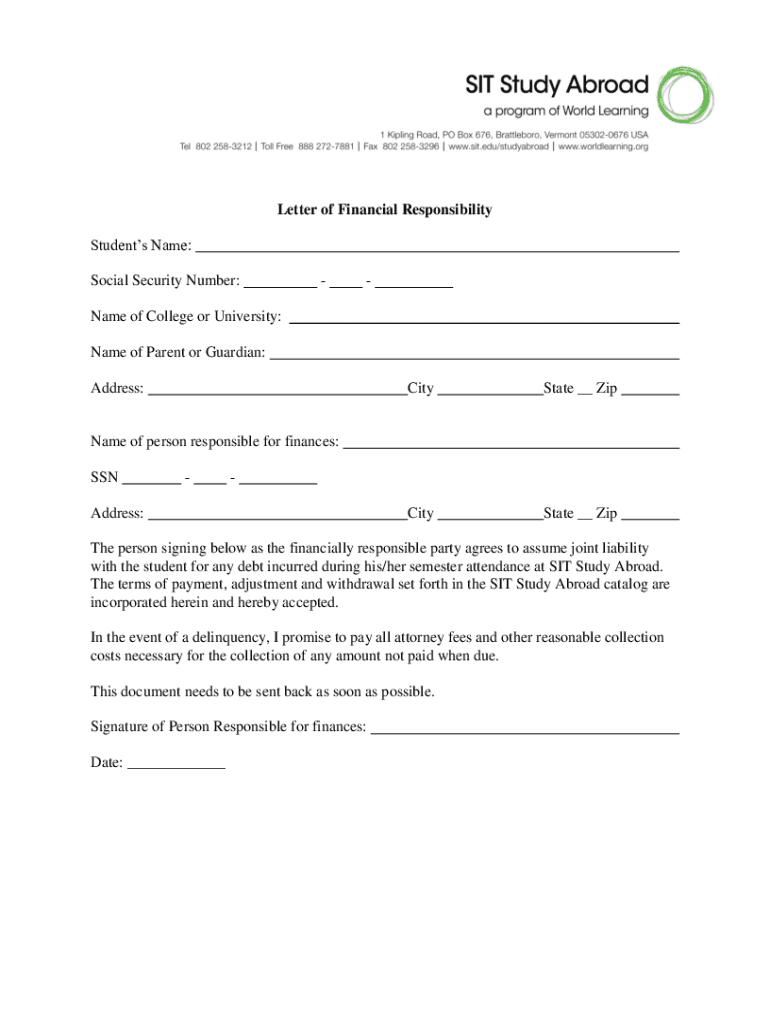







Definition and Purpose of the Financial Responsibility Letter
A financial responsibility letter serves as an official document that outlines an individual or entity's commitment to cover financial obligations, specifically relating to payments for services or debts incurred. This letter is often required in various contexts, such as educational programs, rental agreements, or loan applications. It clarifies the responsibilities of both parties, making it clear who is responsible for payments not received or debts incurred, often requiring the signature of the person taking on this responsibility.
Key Features of the Financial Responsibility Letter
-
Identification of Parties: The letter must include the names of all individuals involved in the financial arrangement. This typically includes the name of the student or party benefiting from services and the person or entity assuming financial responsibility.
-
Financial Obligations: A detailed list of the financial commitments being undertaken should be included. This may involve outlining specific payments, timelines, and any potential liabilities.
-
Signature Requirement: It's essential that the responsible individual signs the document to affirm their commitment. This is often a legal requirement for the letter to be considered binding.
How to Use the Financial Responsibility Letter
Using a financial responsibility letter effectively involves understanding its components and ensuring it meets specific requirements set by institutions or organizations.
Steps to Utilize the Financial Responsibility Letter
-
Gather Information: Collect all necessary details about the obligations to be covered, including names, amounts, dates, and the context of the agreement.
-
Draft the Letter: Use a template or create a new document that includes sections for both parties, the financial obligations, and any specific requirements related to the agreement.
-
Review and Finalize: Before signing, review the letter for accuracy and completeness. It may be beneficial to have another party review it as well to ensure clarity.
-
Obtain Signatures: Make sure that the individual assuming financial responsibility signs the letter. This step is vital for legal enforceability.
-
Distribute Copies: After obtaining signatures, distribute copies to all involved parties to ensure everyone has a record of the agreement.
Key Elements of the Financial Responsibility Letter
A comprehensive financial responsibility letter includes several crucial components that define the financial relationship between parties.
Essential Components
-
Date of Creation: The date when the letter is drafted should be visible, as it can affect the terms of the agreement.
-
Description of Financial Responsibilities: Clearly describe what debts or obligations are being covered by the responsible party.
-
Consequences of Non-Payment: Outline the potential repercussions if obligations are not met. This can include collection actions or legal consequences.
-
Confidentiality Clause: If sensitive financial information is included, a confidentiality agreement might also be warranted.
-
Contact Information: Include contact details for both parties for future communication regarding the obligations.
Examples of Using the Financial Responsibility Letter
Understanding how to implement the financial responsibility letter can be enhanced through various examples across different scenarios.
Common Scenarios Requiring a Financial Responsibility Letter
-
Educational Programs: Many study abroad programs or universities require students to submit a financial responsibility letter from a parent or guardian, ensuring that all costs associated with attendance will be met.
-
Rental Agreements: Landlords may request a financial responsibility letter from a guarantor when a tenant does not meet standard income requirements, ensuring that rent will be paid.
-
Loans and Financing Agreements: Financial institutions may require a letter to confirm that a third party will assume responsibility for loan repayment, thereby reducing risk for lenders.
Important Terms Related to the Financial Responsibility Letter
Familiarity with essential terms related to financial agreements enhances comprehension and proper usage of the financial responsibility letter.
Key Terms to Know
-
Guarantor: An individual who agrees to be responsible for the financial obligations on behalf of another person.
-
Liability: Legal responsibility for the payment of debts or damages incurred during the arrangement.
-
Indemnification: A provision that may be included to ensure one party will compensate another for any loss or damage incurred.
-
Limitations: Pertains to specific constraints on the obligations, such as timeframes or conditions under which debts are incurred.




