




01. Edit your cslb application online
Type text, add images, blackout confidential details, add comments, highlights and more.

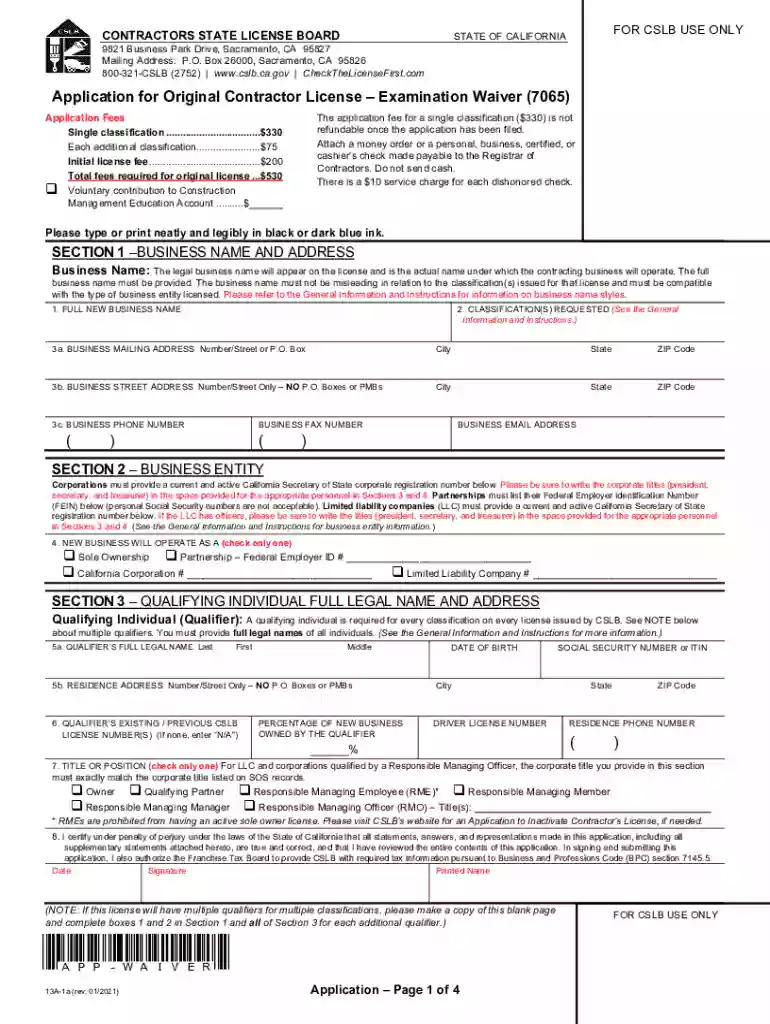
Type text, add images, blackout confidential details, add comments, highlights and more.

Draw your signature, type it, upload its image, or use your mobile device as a signature pad.

Send examination waiver 7065 via email, link, or fax. You can also download it, export it or print it out.
An application contractor license is essential for individuals or businesses looking to operate as licensed contractors within specific jurisdictions. This permit ensures that the contractor meets state-specific regulations and standards, allowing them to legally perform construction-related services. By securing this license, contractors affirm their adherence to the state's legal, safety, and ethical guidelines designed to protect clients and the general public.
The application contractor license serves various practical purposes. Licensed contractors utilize it to acquire new projects, bid for jobs, and demonstrate their credibility to clients. It can be displayed in business premises, featured on promotional materials, and listed in project proposals as proof of legitimacy. Furthermore, it enables contractors to access certain supplies, resources, and professional networks exclusively available to licensed operators.
Gather Required Documents: Collect all necessary paperwork, including proof of identity, business registration records, and prior work experience documentation.
Background Checks: Complete required background checks, such as fingerprinting and criminal history reports, as mandated by local authorities.
Fill Out the Application: Carefully complete the application form, ensuring accuracy in personal and business details. Refer to guidelines for some sections that may require additional information, such as previous licenses or certifications.
Submit Fees: Pay the designated filing fee as per the application instructions. Ensure all payment methods are accepted by the issuing authority.
Review and Correction: Before submission, review the entire application for any errors or omissions to avoid delays or rejections.
Submit the Application: Choose the appropriate delivery method—online, by mail, or in-person—to submit your application as per state regulations.
The documentation required for obtaining an application contractor license varies by state but generally includes:
To apply for an application contractor license, candidates must meet specific eligibility criteria:


The contractor license comprises several crucial components, including:
State regulations significantly influence the requirements and processes for obtaining an application contractor license. Different regions may:
Prospective licensees must familiarize themselves with their specific state's guidelines, often available on the state's licensing board website.
Maintaining a contractor license requires adhering to renewal protocols, which typically involve:
Regularly reviewing and complying with these requirements helps avoid penalties or license suspension.
Non-compliance with licensing requirements can result in serious consequences, such as:
Contractors should diligently adhere to all regulatory obligations to maintain their legal standing and professional credibility.
We've got more versions of the cslb application form. Select the right cslb application version from the list and start editing it straight away!
At DocHub, your data security is our priority. We follow HIPAA, SOC2, GDPR, and other standards, so you can work on your documents with confidence.
Application for Authorization to Register. Electronic Data Transfer (EDT). History of NB Registration. Manufacturer Repair Directory. NBIC Report Forms. OrderRead more
The Application for Original Contractor License - Examination Waiver (7065) form is to be used for all business entity types, including limited liabilityRead more
This completed application along with a copy of license issued by the state licensing board showing you have an electrical contractors license in the categoryRead more


