
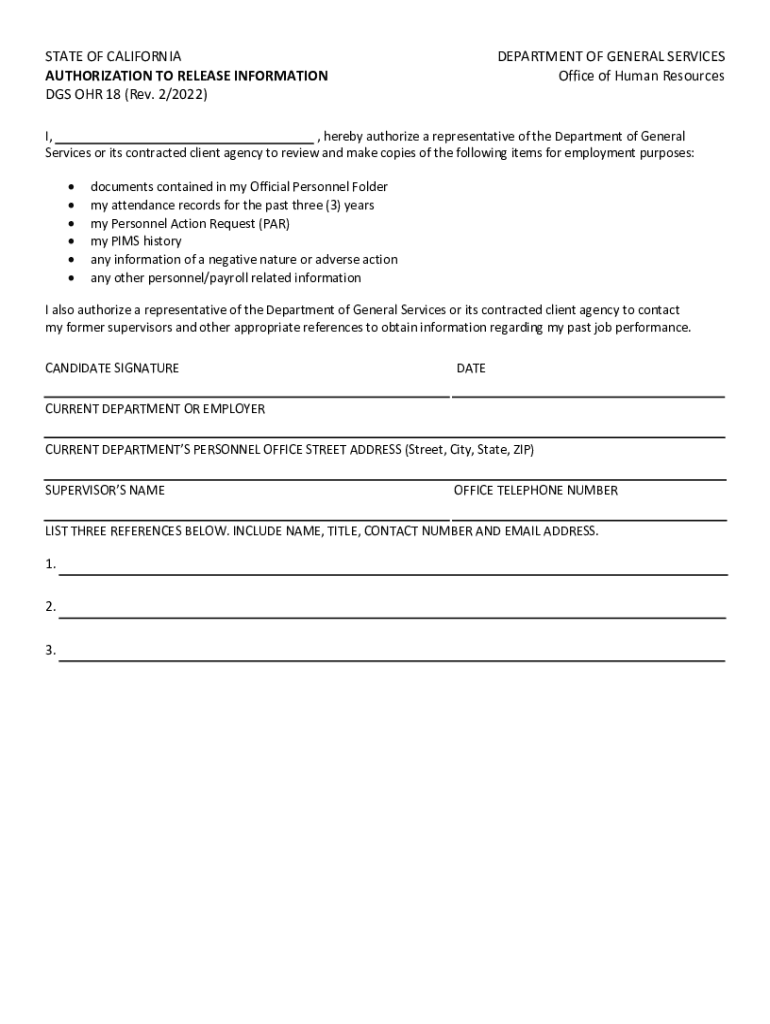







Definition & Meaning
The "Authorization to Release Information" is a legal document that permits an individual or organization to share personal or sensitive information with a specified third party. This form is often employed in situations where a person needs to grant permission for their information to be accessed, reviewed, or communicated between institutions or individuals. This is particularly relevant in employment scenarios where a candidate might need to authorize past employers to disclose performance records to a prospective employer or during legal proceedings where confidential data must be shared.
In practical terms, this form functions as a bridge, facilitating the legal and ethical sharing of data while ensuring that all parties involved have a clear understanding of what information can be shared, with whom, and for what purpose. The effectiveness of the authorization relies heavily on its precise language and clearly defined scope, outlining the specific data to be released and any limitations or conditions.
How to Use the Authorization to Release Information
To effectively utilize the Authorization to Release Information form, the individual granting access should follow a series of steps to ensure all necessary details are appropriately documented:
-
Identify the Requestor and Recipient: Clearly specify who is requesting the information and who will receive it. Include full names, addresses, and contact details for accurate identification.
-
Detail the Information: Explicitly outline the type of information being authorized for release. This could include employment records, medical data, or financial information, depending on the form's purpose.
-
State the Purpose: Clearly describe the reason for the information release. This ensures that the information is shared only for the intended purposes and prevents misuse.
-
Set Time Limits: Specify the duration for which the authorization is valid. This could range from a specific date to a period such as one year, after which the authorization will expire.
-
Sign and Date: Ensure that the form is signed and dated by the individual granting the authorization. This step is crucial as it legally validates the entire process.
The correct completion and submission of this form is essential to protect both the subject's privacy rights and the legal standing of the requesting entity.
Key Elements of the Authorization to Release Information
Several critical components must be included in an Authorization to Release Information form to ensure its efficacy and legality:
-
Personal Details: Collect comprehensive information about the individual authorizing the release, including name, date of birth, and contact information.
-
Detailed Description of the Information: Clearly define the category and scope of data to be released.
-
Authorized Recipient Information: Include detailed information about the person or organization authorized to receive the information.
-
Purpose of Disclosure: Articulate the specific reasons for which the information is being disclosed.
-
Duration of Validity: State how long the authorization remains in effect.
-
Signatures: Obtain the necessary signatures along with the date, which serves as a legal acknowledgment of consent.
Having these components clearly outlined ensures all parties involved are aware of their rights and obligations, minimizing the risk of disputes or misunderstandings.
Steps to Complete the Authorization to Release Information
Successfully completing this form involves several steps, each designed to ensure thoroughness and legal compliance:
-
Provide Personal Information: Fill out the requester’s name, date of birth, and contact details.
-
Identify the Recipient: Specify who is authorized to receive the information, including their full contact details.
-
Define the Scope of Release: Clearly list the specific documents or types of information subject to release.
-
Clarify Purpose: State the exact purpose for which the information is being disclosed.
-
Set Expiry Date: Determine an expiration date for the authorization.
-
Sign and Date: Finalize the form with signatures and dates by the authorizing individual, and if applicable, a witness or notary.
Following these steps ensures the process is conducted legally and ethically, providing a transparent framework for information sharing.
Legal Use of the Authorization to Release Information
The legal use of the Authorization to Release Information is governed by various federal and state laws designed to protect individual privacy. It is imperative to ensure the scope and purpose of information release adhere to legal standards, such as complying with the Health Insurance Portability and Accountability Act (HIPAA) for medical records or Fair Credit Reporting Act (FCRA) for employment-related information.
The document serves as a vital protective measure, providing clear consent from the individual, which mitigates legal risks for both the disclosing party and the recipient. By defining specific terms of release within the boundaries of the law, all involved parties are safeguarded against unauthorized use or disclosure of sensitive information.
Who Typically Uses the Authorization to Release Information
Different entities across various sectors regularly use the Authorization to Release Information form to facilitate the ethical and legal exchange of information. Typical users include:
-
Healthcare Providers: To obtain consent for sharing patient medical data with other healthcare facilities or insurance companies.
-
Employers: To verify employment history or obtain performance evaluations from past employers during the hiring process.
-
Educational Institutions: To release academic records or transcripts to prospective employers or other educational entities.
-
Government Agencies: To share or verify information pertinent to social services, immigration, or citizenship status.
These users rely on the form to ensure compliance with legal and ethical standards in information sharing practices.


State-Specific Rules for Authorization to Release Information
Understanding that state-specific laws may influence the use and formulation of the Authorization to Release Information is essential. These variations can impact:
-
Format and Language Use: Certain states may require specific wording or additional clauses.
-
Witness or Notarization Requirements: Some states may necessitate a witness signature or notarization for the form to be valid.
-
Age of Consent: The legal age at which one can authorize the release of their information without parental consent may vary by state.
-
Data Protection Laws: State-level data protection regulations might impose additional restrictions or guidelines on how information is handled and shared.
Being aware of these state-specific nuances helps in customizing the form to meet legal demands within particular jurisdictions, ensuring compliance and validity.
Examples of Using the Authorization to Release Information
To fully understand the application and importance of the Authorization to Release Information form, several real-world examples can be considered:
-
Employment Verification: An applicant signs the form to allow a prospective employer access to previous employment records, validating work history and experience.
-
Medical Treatment: A patient authorizes sharing of their medical records between healthcare providers to facilitate continuity of care and accurate treatment planning.
-
Educational Transcript Sharing: A graduating student grants permission for their academic records to be sent to potential employers or graduate schools.
-
Legal Proceedings: Parties involved in a lawsuit may need to use the form to allow sharing relevant personal data or records with legal representatives or courts.
These scenarios illustrate the broad utility and necessity of this form across various sectors, underscoring its critical role in facilitating informed communication while maintaining legal and ethical integrity.




