



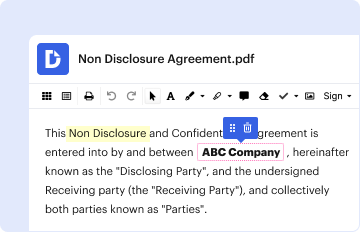
01. Edit your form online
Type text, add images, blackout confidential details, add comments, highlights and more.

Type text, add images, blackout confidential details, add comments, highlights and more.
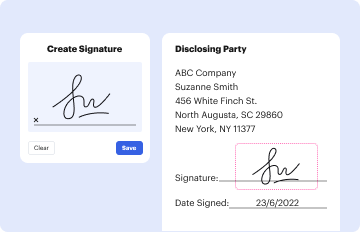
Draw your signature, type it, upload its image, or use your mobile device as a signature pad.

Send it via email, link, or fax. You can also download it, export it or print it out.
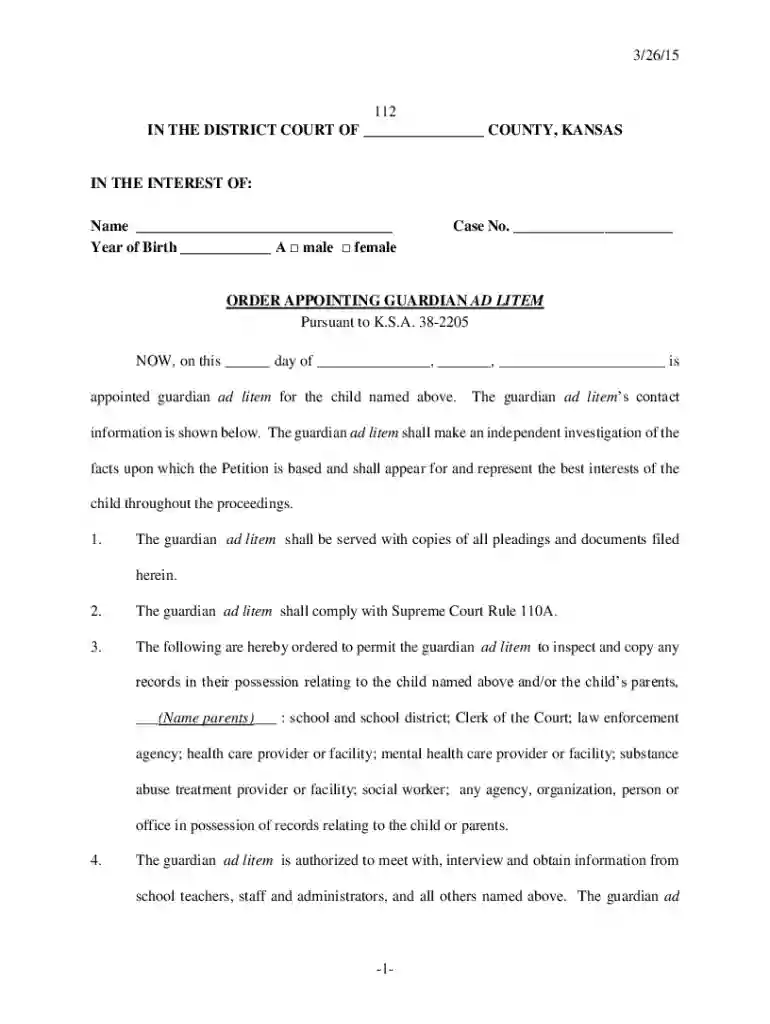
The term "In the District Court of ______ County, Kansas" refers to the legal documentation and proceedings that occur within the jurisdiction of a specific county's district court in Kansas. This includes various types of cases such as civil, criminal, and family law matters. Each document filed in the court will start with this standard heading, followed by the specific details that outline the nature of the case, involved parties, and relevant legal proceedings.
Identify the Type of Case: Determine whether the case is civil, criminal, or related to family law, as procedures may vary slightly depending on the category.
Gather Necessary Information: Collect all required information about the parties involved, case specifics, and any prior relevant legal documentation.
Fill Out the Required Forms: Use the standard templates provided by the court for your specific case type. Pay careful attention to each section, ensuring accuracy in all details.
Attach Supporting Documents: Include all necessary supplementary documentation such as evidence, witness statements, or any prior court orders.
Submit the Form to the Court: Depending on court rules, you can submit your documents either online through the court's electronic filing system, by mail, or in person at the court clerk’s office.
Legal use of this form involves filing accurate legal documents for cases under the court’s jurisdiction. Proper completion and timely submission of these documents are crucial for maintaining the legal proceedings. They ensure that all parties have a clear understanding of the case details and responsibilities. Failure to comply with court requirements can result in delays or dismissal of the case.
Each county in Kansas may have its own specific procedures and filing requirements. Familiarity with local rules, deadlines for submissions, and proper formatting is essential. Legal professionals in Kansas should be consulted to ensure compliance with all state-specific regulations. Local courts often provide resources or legal guides to assist with these details.
Documents for the District Court of any County in Kansas can usually be submitted in three primary ways:
When submitting the form, ensure you include:
Non-compliance with filing requirements can result in various penalties, including but not limited to:
We've got more versions of the IN THE DISTRICT COURT OF COUNTY, KANSAS IN THE form. Select the right IN THE DISTRICT COURT OF COUNTY, KANSAS IN THE version from the list and start editing it straight away!
At DocHub, your data security is our priority. We follow HIPAA, SOC2, GDPR, and other standards, so you can work on your documents with confidence.


