







Definition and Meaning of the Money Order Transaction Log - MoneyGram
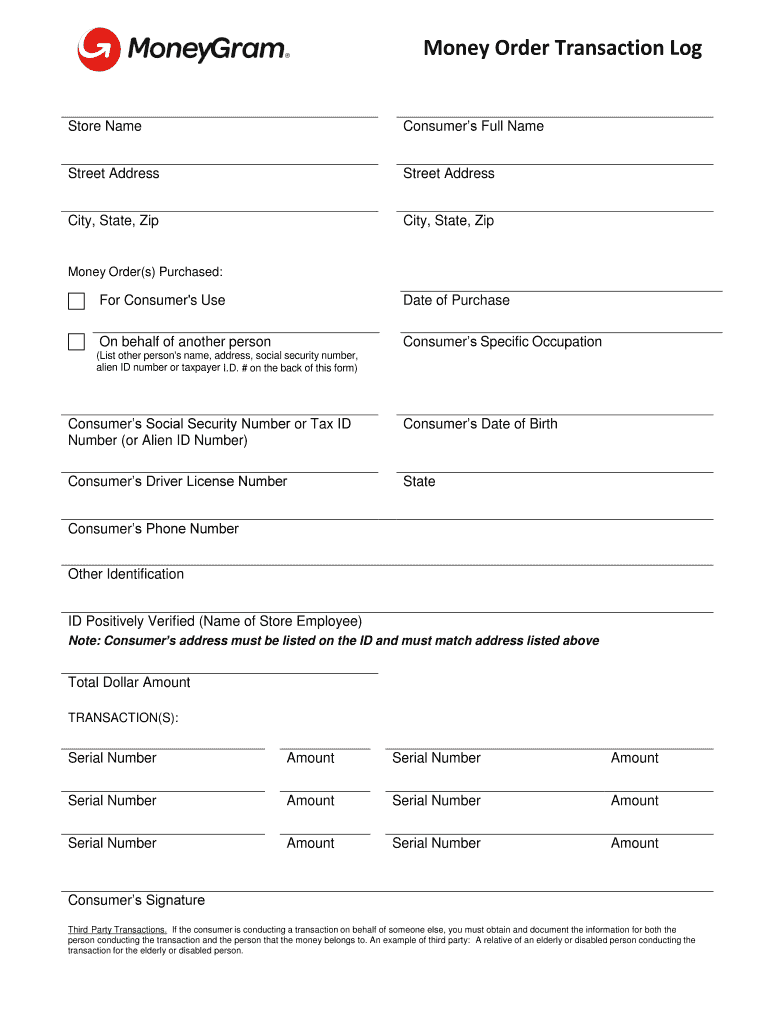
The "Money Order Transaction Log - MoneyGram" is a formal record used to capture essential details of money order purchases through MoneyGram. This document serves as a critical tool for tracking consumer information, transaction specifics, and third-party transaction requirements. It is designed to ensure compliance with the necessary identification and verification processes, safeguarding both the consumer and the issuing entity against potential fraud or non-compliance with financial regulations. The transaction log thus plays an integral role in maintaining transparency and accountability for all parties involved.
Importance of Accurate Record-Keeping
Accurate record-keeping within the Money Order Transaction Log is vital as it documents the entire flow of a financial transaction. By maintaining meticulous records, businesses can demonstrate compliance with legal and regulatory standards and provide transparency in financial dealings. This record serves as a verifiable history of transactions that can resolve disputes, facilitate audits, or clarify transaction details if questions arise.
How to Use the Money Order Transaction Log - MoneyGram
Using the Money Order Transaction Log - MoneyGram involves capturing and recording transaction details systematically. The following steps can guide users in using this form effectively:
- Input Consumer Information: Begin by noting the consumer's full name, address, and contact information. This data is crucial for authentication and future reference.
- Record Transaction Details: Document the date and time of the transaction, the amount of the money order, and any associated fees. Ensure all fields are completed accurately to reflect the transaction correctly.
- Third-Party Transaction Requirements: Indicate if a third-party recipient is involved and provide their identification details. This step ensures clarity regarding the ultimate recipient.
- Security Measures: Utilize sections designed for identification verification to record the type and identification number of the provided ID, ensuring that all regulatory requirements are met.
Benefits of Detailed Entries
The effectiveness of the Money Order Transaction Log lies in the details. Providing comprehensive entries for each transaction aids in robust documentation, which is beneficial for audits and reviews. It is essential to ensure that each section of the log is filled out meticulously to maintain a reliable record.
Why Use the Money Order Transaction Log - MoneyGram
The Money Order Transaction Log - MoneyGram holds significant value for several reasons, particularly in enhancing operational efficiency and compliance:
- Compliance and Legal Assurance: Ensures adherence to financial regulations and serves as a verifiable document in audits.
- Fraud Prevention: Provides a comprehensive trail of transactions that can be referenced in case of fraudulent claims.
- Operational Efficiency: Streamlines transaction documentation processes, facilitating easier data retrieval and analysis.
Use Cases
- Financial Institutions: Utilize the log to enforce regulatory standards and protect against fraudulent activities.
- Retail Businesses: Track and verify transaction details to improve customer service and deal dispute resolutions efficiently.
Key Elements of the Money Order Transaction Log - MoneyGram
The core components of the Money Order Transaction Log include several crucial elements that combine to form its comprehensive structure:
- Consumer Information Section: Captures the buyer’s personal details, ensuring a point of reference for each transaction.
- Transaction Details Block: Consists of fields for recording the date, time, amount, and fees associated with the transaction.
- Third-Party Verification Fields: Used to document details if the money order involves multiple parties.
- Identification Verification: Ensures regulatory compliance by noting down identification numbers and types used in the verification process.
Steps to Complete the Money Order Transaction Log - MoneyGram
Filling out the Money Order Transaction Log - MoneyGram requires attention to detail to ensure all relevant information is documented accurately:
- Collect Consumer Information: Gather requisite details from the consumer. Use identification to verify their authenticity.
- Detail the Transaction: Clearly note the transaction specifics, including amount, date, and any fees.
- Verify Identity: Record the type of identification used and its details, ensuring compliance with legal standards.
- Document Third-Party Details: If a third-party is involved, capture their information accurately.
Real-World Scenario
In a scenario involving third-party transactions, the log serves as a crucial record, ensuring all parties are informed and accountable for their role within the transaction.
Legal Use of the Money Order Transaction Log - MoneyGram
The Money Order Transaction Log is a legally recognized document utilized across financial transactions, primarily aimed at:
- Regulatory Compliance: Meets state and federal laws concerning financial transactions.
- Audit Trails: Provides a detailed history of transactions for audit purposes, ensuring all financial dealings are legitimate and above board.
- Consumer Protection: Safeguards consumer rights by maintaining transparent records of their transactions.
Importance of Compliance
Using this log adheres to compliance requirements, safeguarding businesses from potential legal issues and aiding in the swift resolution of any compliance audits.
State-Specific Rules Governing the Money Order Transaction Log - MoneyGram
Different states may have specific regulations regarding the use of the Money Order Transaction Log. Understanding these nuances is crucial for ensuring compliance:
- Differing Identification Requirements: States might require varied forms or levels of identification.
- Transaction Limits: Certain states might impose limits on transaction amounts documented within a single log entry.
Navigating State Laws
Adherence to varying state guidelines ensures that users remain compliant and aware of any specific legal requirements related to using the Money Order Transaction Log in different jurisdictions.
Form Variants and Alternatives to the Money Order Transaction Log - MoneyGram
There are alternative forms and versions which may serve similar purposes in tracking and documenting transactions:
- Digital Versions: Some might prefer a digital alternative to the traditional paper-based log for ease of use and accessibility.
- Regional Variations: Forms may differ slightly in structure according to regional financial regulations and practices.
Choosing the Right Format
Deciding between digital and paper can depend on the business's needs or consumer preference. Digital versions often facilitate ease of integration with other electronic document management systems.




